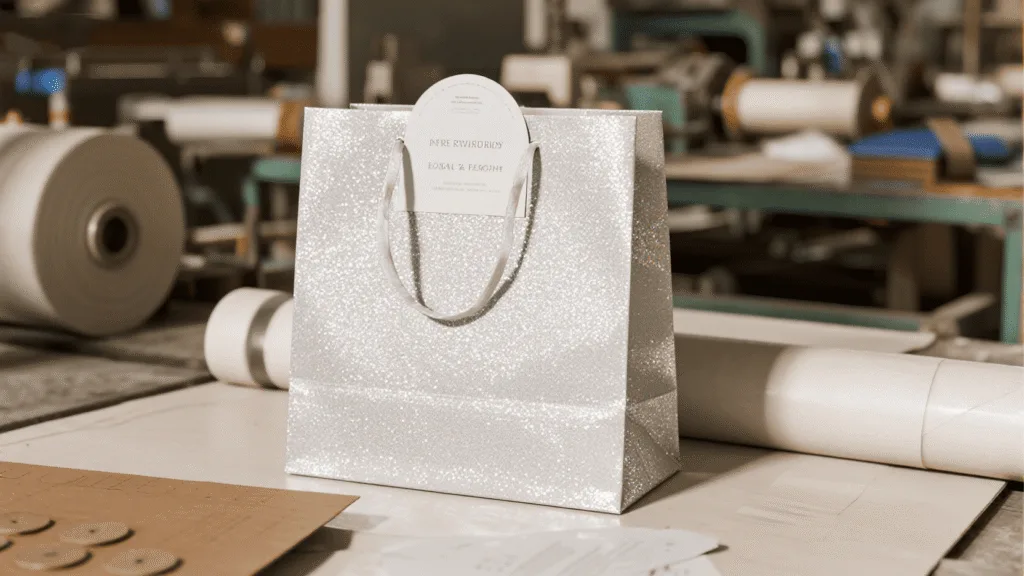
You want to elevate your brand with eye-catching glitter bags. But you’re worried about hidden costs and production delays when you need to order thousands, not just hundreds of bags.
Manufacturing glitter paper bags at scale involves higher raw material costs for specialty glitter paper, potential supply chain volatility, and specialized production line adjustments. These factors require careful planning to manage expenses and ensure a consistent, reliable supply for your brand’s growth.
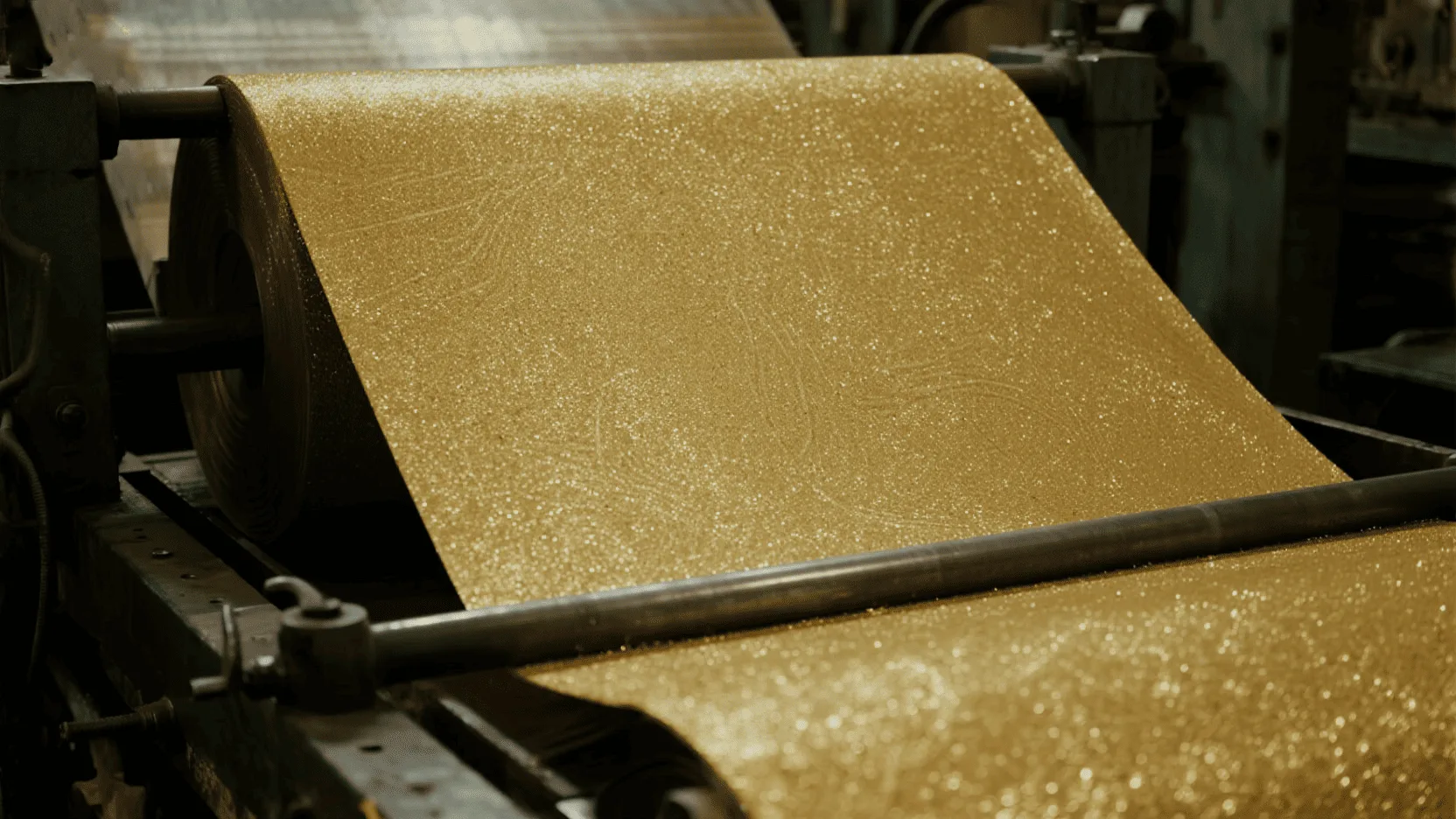
I remember a client, a fast-growing cosmetics brand, who wanted to switch their entire product line to glitter bags for the holiday season. Their initial small batches were a huge success. But when they placed an order for 200,000 units, the realities of scaling hit hard. The specific gold glitter paper they loved was only produced by two mills in the world, and one was already at capacity. It was a wake-up-call that scaling specialty packaging isn’t just about placing a bigger order. It’s about securing an entirely different level of supply chain.
How Does Sourcing Specialty Materials Impact Your Supply Chain?
You found the perfect glitter paper that embodies your brand’s aesthetic. But can your supplier get enough of it consistently? The fear of a "sold out" notice on your key packaging component is real, especially when you have a launch date looming.
Sourcing specialty glitter paper involves fewer suppliers, longer lead times, and higher minimum order quantities (MOQs) compared to standard art paper. This requires proactive procurement and building strong relationships with mills to avoid bottlenecks that can halt production.
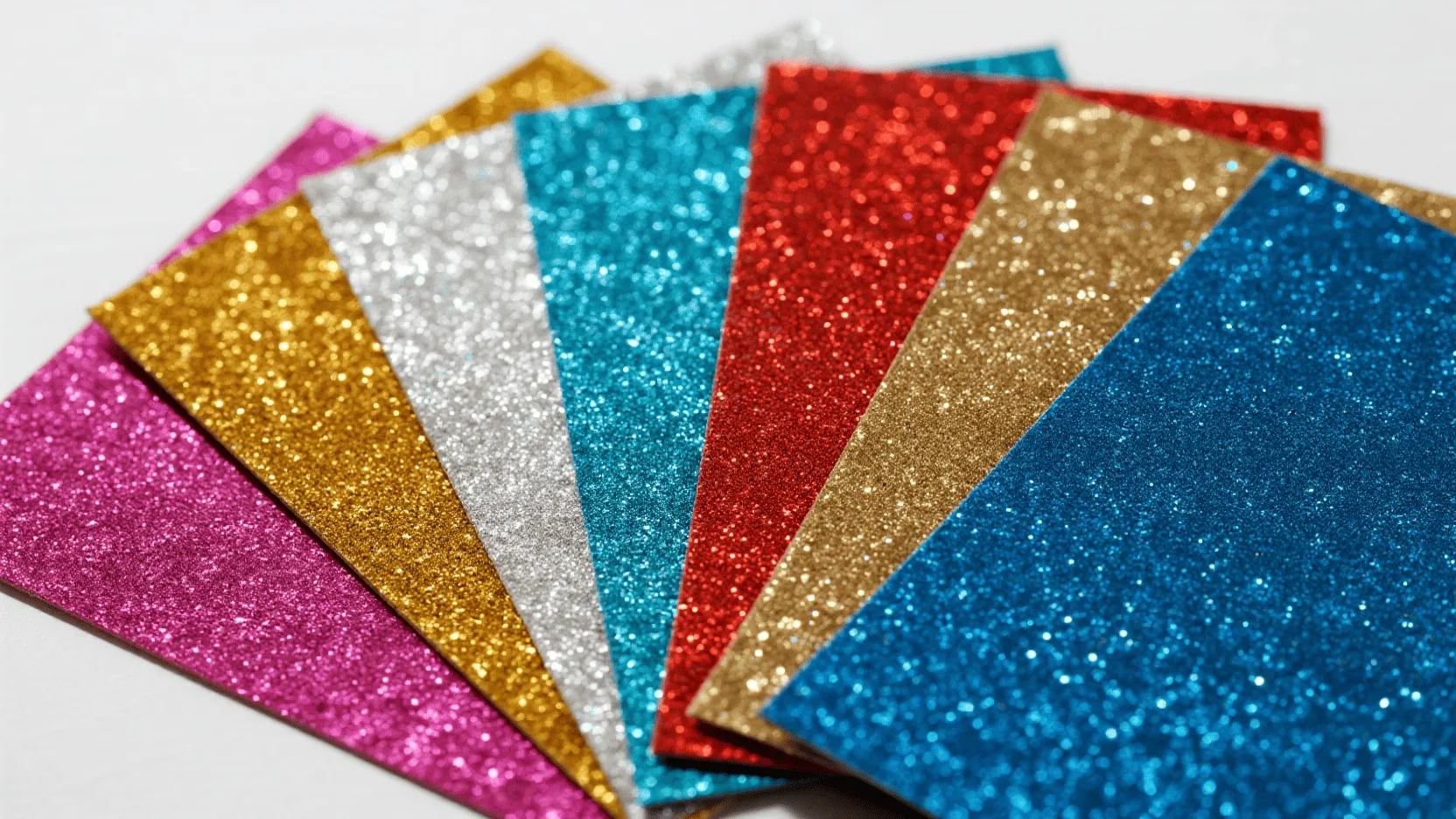
The supply chain for glitter paper is fundamentally different from that for standard packaging materials. Basic art paper is a commodity; dozens of mills produce it, keeping the market competitive and the supply stable. Glitter paper, however, is a specialty product. The process of manufacturing it—laminating a glitter film or applying and sealing loose glitter particles onto heavy-gauge paper—is complex and requires specific equipment. This means only a handful of mills globally produce high-quality, non-shedding glitter paper. This scarcity creates supply chain vulnerability. If your primary mill has a production delay or a raw material shortage, finding a last-minute alternative that matches your exact color and quality specifications is incredibly difficult. This is why at Omet Packaging, we cultivate long-term relationships with a portfolio of trusted specialty mills. We don’t just place an order; we forecast our clients’ needs months in advance to reserve production capacity, ensuring the material is ready when they need to scale.
Mills do not produce specialty paper continuously. They schedule production runs based on demand, and these runs have high minimum order quantities (MOQs), often measured in tons of paper, not sheets. This means a brand must commit to a very large volume to even get a custom glitter paper produced. Lead times are also longer, often taking 6-8 weeks for the paper alone, before the bag manufacturing even begins.
The Rise of Sustainable Glitter
The growing demand for eco-friendly packaging1 adds another layer of complexity. Sourcing biodegradable glitter, which is typically made from plant-based cellulose, narrows the supplier pool even further. Vetting these suppliers for certifications like our FSC certification is an essential step that adds to the initial procurement timeline. While it’s the responsible choice, it requires even more rigorous supply chain management.
| Sourcing Factor | Standard Art Paper | Traditional Glitter Paper | Eco-Friendly Glitter Paper |
|---|---|---|---|
| Supplier Availability | High (Many Mills) | Low (Few Specialty Mills) | Very Low (Niche Suppliers) |
| Typical Lead Time | 2-4 Weeks | 6-8 Weeks | 8-12 Weeks |
| Minimum Order Quantity2 | Low to Moderate | High | Very High |
| Cost Volatility | Low | Moderate | Moderate to High |
What are the Real Manufacturing Costs When Scaling Up?
You’ve budgeted for the specialty paper, so you think you have the main expense covered. But hidden factory costs can quickly erode your margins, turning a profitable product line into a financial headache if you haven’t accounted for them.
Scaling glitter bag production involves more than just material costs. It requires specialized machinery adjustments for handling thicker paper, slower run speeds to ensure quality, and meticulous quality control, all of which increase labor and operational expenses.
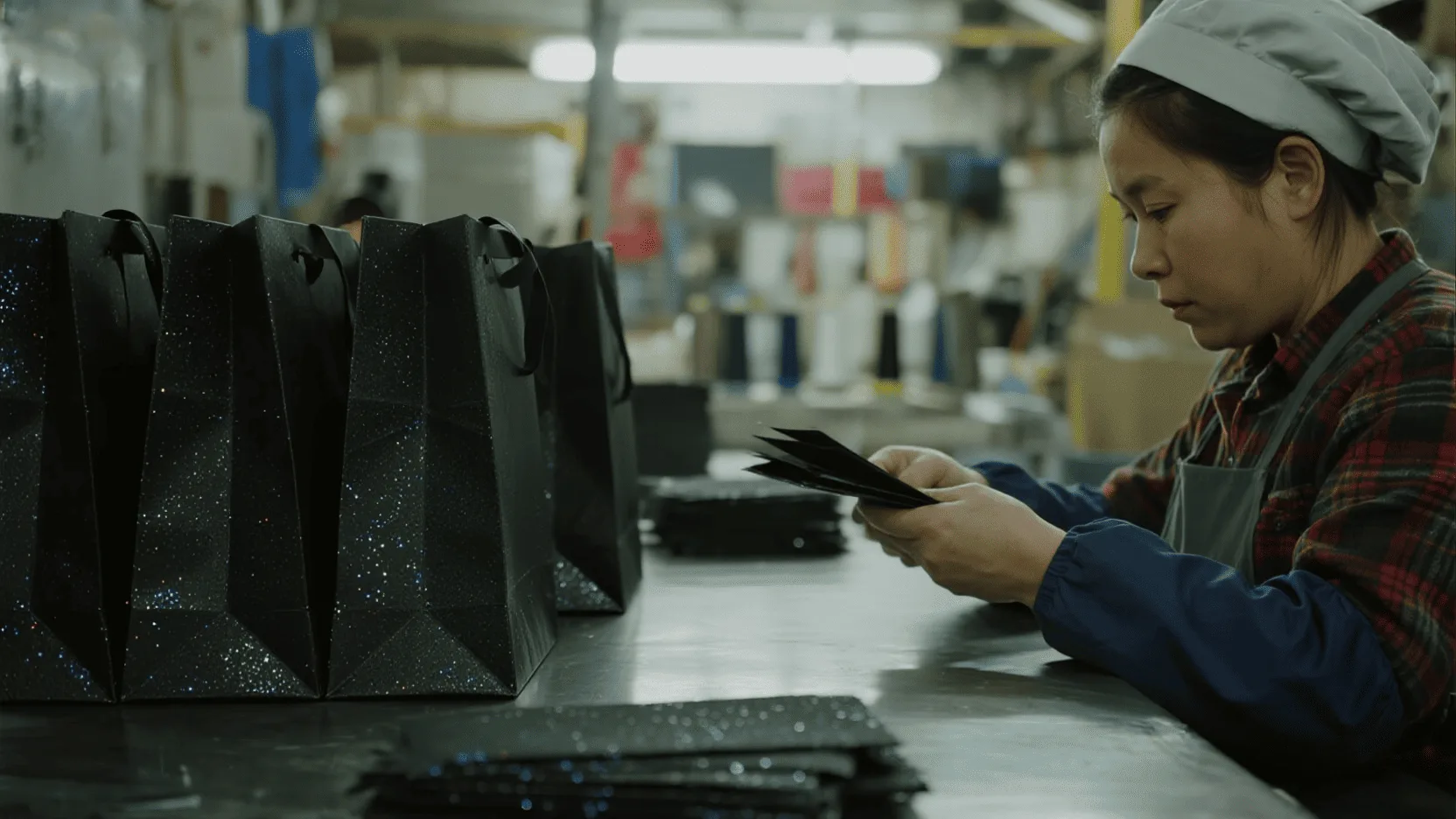
Glitter paper is not just prettier than standard paper; it’s also tougher, heavier, and more abrasive. This has a direct impact on the manufacturing process and its associated costs. On our factory floor, we can’t simply swap a roll of art paper for a roll of glitter paper and expect the same results. The entire production line needs to be adjusted. Die-cutting blades, which are used to cut the bag shape, dull much faster on the abrasive glitter surface and need to be replaced more frequently. This downtime and material cost adds up. The paper’s thickness and rigidity also mean our automated folding machines must run at a slower speed to create crisp, clean folds without cracking the glitter surface or causing misalignment. A slower run means fewer bags produced per hour, which increases the labor cost attributed to each bag.
Impact on Machinery and Labor
Our seven fully automated bag & box production lines are built for efficiency, but specialty materials demand a specialist’s touch. Our technicians are trained to handle the unique challenges of glitter paper1. This includes fine-tuning the glue application, as standard adhesives may not bond as effectively to the textured surface, and calibrating the pressure for finishing processes like hot stamping. This expertise is a crucial part of the "hidden" cost—you are paying for the experience to get it right the first time.
Quality Control at Scale
Quality control becomes exponentially more critical when manufacturing thousands of units. A minor imperfection—an uneven glitter patch, a slightly off-center foil stamp, or a weak handle attachment—is unacceptable. With glitter bags, the visual standard is incredibly high. This is why we have a multi-stage QC process2. We inspect the raw paper as it arrives, check bags at various points on the production line, and perform a final detailed inspection before packing. This rigorous process requires more labor, but it prevents costly errors and ensures every single gift bag that leaves our facility meets the luxury standard our clients expect.
Can Economies of Scale Actually Lower Your Costs?
You assume that ordering more units will always be cheaper per unit. But with specialty packaging like glitter bags, the math isn’t that simple, and unexpected costs for storage or logistics can quickly erase your anticipated savings.
Yes, economies of scale can significantly lower the per-unit cost of glitter bags, but the savings are primarily realized in very large volumes. High initial MOQs for raw materials and one-time tooling costs can make smaller-scale production disproportionately expensive.
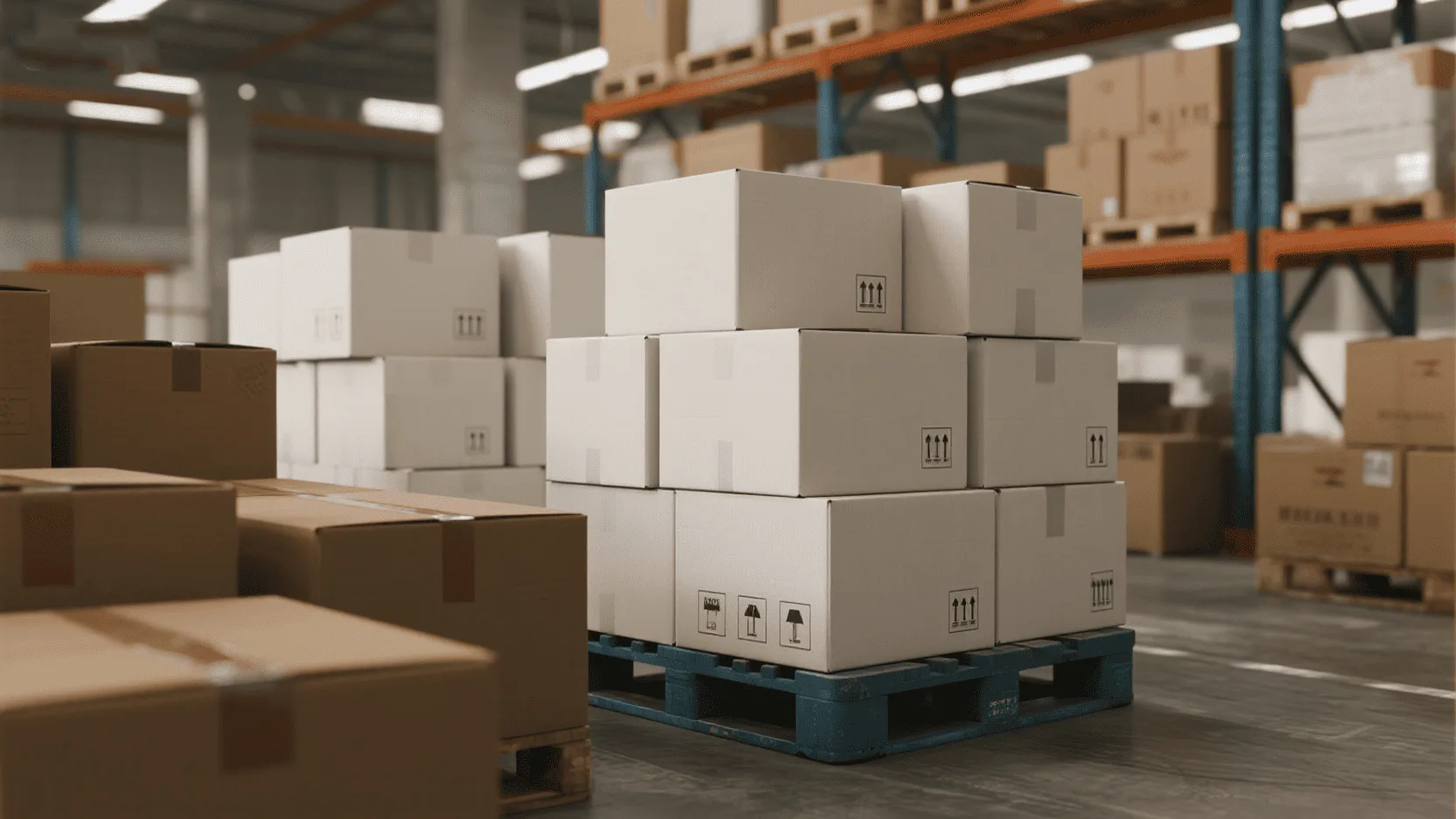
The principle of economies of scale definitely applies to glitter bag manufacturing, but the entry point is high. The most significant savings come from purchasing the raw material. Buying a full container of custom glitter paper directly from a mill will yield a much lower price per square meter than buying a few pallets from a distributor. This is where a large-scale manufacturer like Omet Packaging provides a huge advantage. Our purchasing power allows us to secure top-tier pricing, and we pass those savings on to our clients. Similarly, the setup costs for printing plates, die-cutting tools, and machine calibration are fixed. Spreading these one-time costs over an order of 100,000 bags results in a much lower amortized cost per bag compared to an order of 5,000.
Illustrative Cost Breakdown by Volume
This table gives a simplified example of how costs change with volume. Note how the fixed costs, when spread over a larger order, dramatically reduce the final price per bag.
| Cost Item | Cost Per Bag (5,000 Unit Order) | Cost Per Bag (100,000 Unit Order) |
|---|---|---|
| Specialty Paper | $0.80 | $0.55 |
| Production & Labor | $0.40 | $0.25 |
| Tooling & Setup (Amortized) | $0.15 | $0.01 |
| Quality Control | $0.05 | $0.03 |
| Total Estimated Cost/Bag | $1.40 | $0.84 |
The Hidden Costs: Storage and Logistics
Achieving these economies of scale1 means producing and receiving a large volume of bags at once. This introduces new logistical challenges2. Where will you store 100,000 bags? Warehouse space has a cost, whether it’s your own or a third-party service. Shipping in bulk via sea freight is far cheaper per unit than air freight, but it requires longer lead times and careful planning. Our role as a one-stop solution provider includes managing these logistics. We help clients plan their inventory flow and arrange global shipping to ensure their beautiful new bags arrive safely and cost-effectively, without creating a storage nightmare.
Conclusion
Scaling up production of glitter paper bags is a complex balance of supply chain management, manufacturing precision, and financial planning. It requires a deep understanding of specialty material markets and production nuances to avoid costly pitfalls. With the right strategy and an experienced manufacturing partner, it is a powerful and achievable way to build an unforgettable brand experience.
Ready to explore scaling your premium packaging without the headaches? Contact our team for a detailed consultation.
For more packaging ideas, check out our full range of custom paper products.
FAQ
What is a typical Minimum Order Quantity (MOQ) for custom glitter bags?
While it varies, a true factory-direct order leveraging custom-milled paper often starts at 10,000 to 20,000 units. This is driven by the high MOQs from the paper mills themselves. Smaller quantities are possible using stock glitter paper, but offer fewer customization options.
How much more expensive are glitter bags than standard printed paper bags?
Generally, you can expect a high-quality glitter paper bag to cost 30% to 70% more than a standard art paper bag of the same size. The final cost depends heavily on the glitter paper quality, order volume, bag size, and any additional finishes like foil stamping or embossing.
How long does it take to manufacture and receive a large order of glitter bags?
For a large, custom order, you should plan for a total lead time of 10-14 weeks. This includes 6-8 weeks for sourcing and producing the custom glitter paper, 2-3 weeks for bag manufacturing and quality control, and 3-5 weeks for sea freight and logistics.