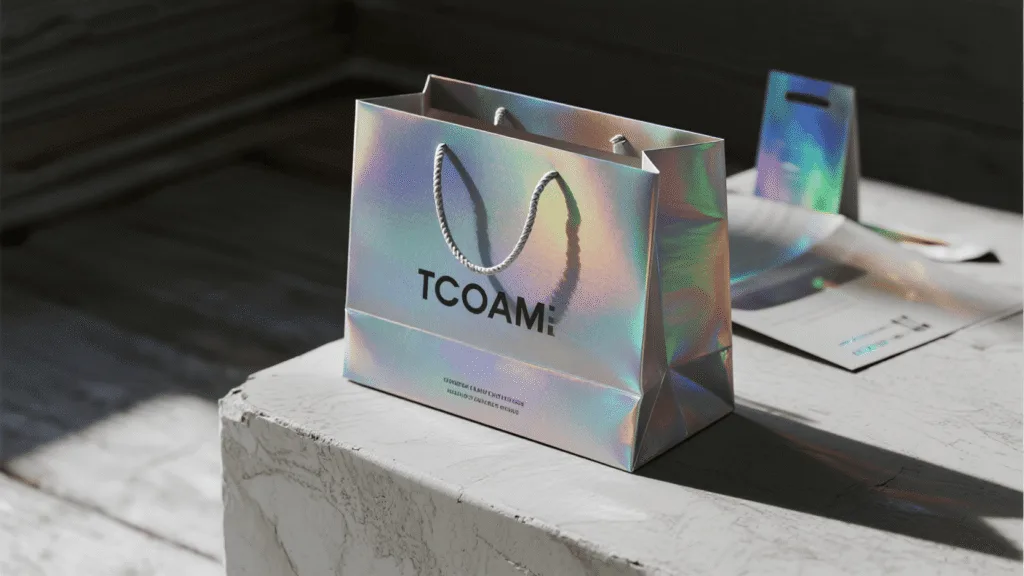
You’re planning your brand’s future, but the packaging landscape is changing fast. You see eye-catching trends but wonder which ones have the staying power to deliver real ROI for years to come.
Looking ahead to 2025–2030, the demand for holographic paper bags will be driven by the cosmetics, luxury retail, premium e-commerce, and specialty food industries, all seeking to create unforgettable, "shareable" brand experiences.
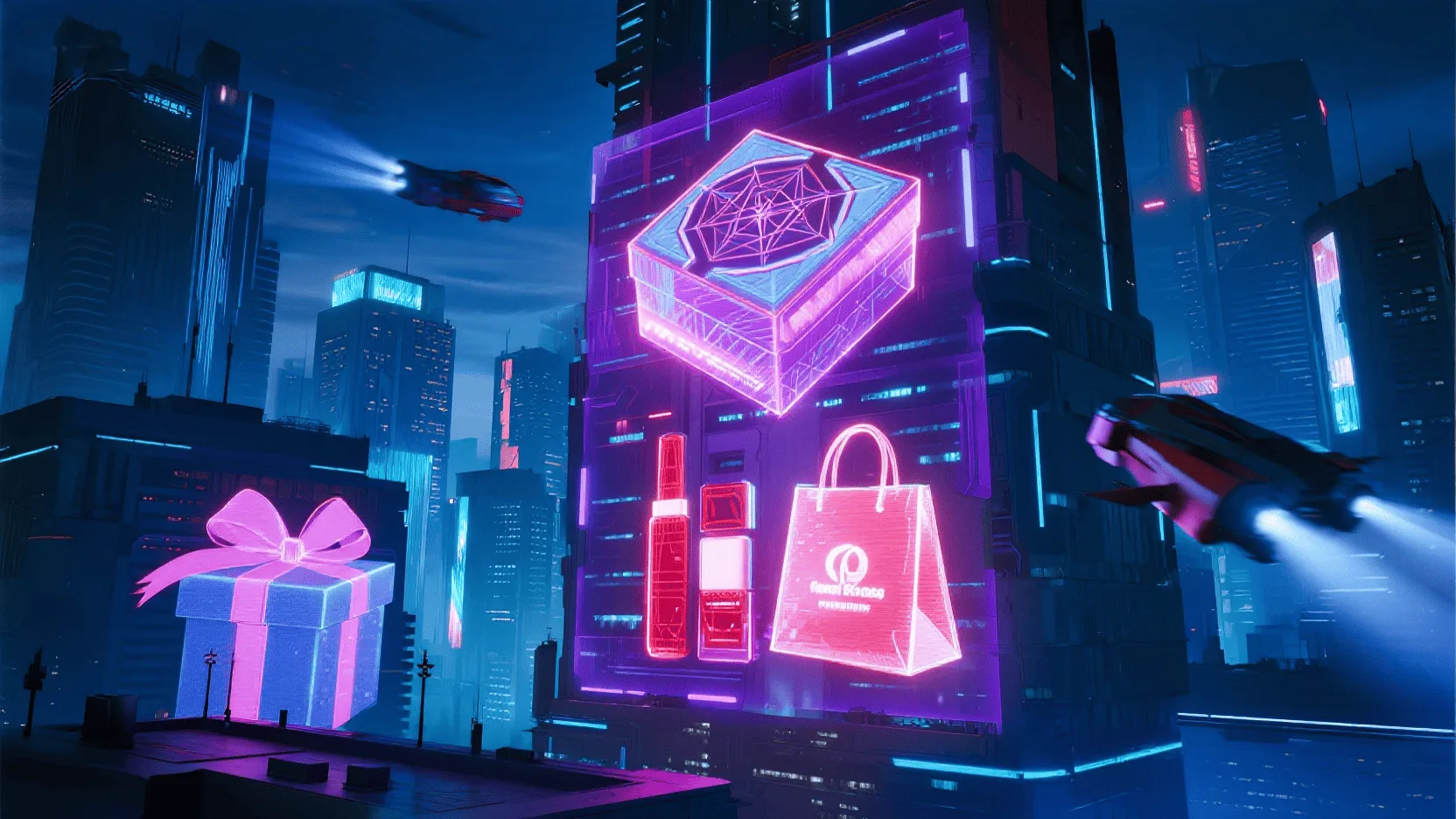
I was at a global packaging expo last year, and the energy around advanced finishes was undeniable. While matte and gloss options had their place, the booths drawing the biggest crowds were the ones showcasing dynamic materials. I watched as brand managers from completely different sectors—from skincare to gourmet chocolates—all picked up the same holographic bag, captivated by how it performed under the lights. It was a clear signal. This isn’t just a fleeting design choice; it’s a strategic response to a market where visual appeal, social media presence, and a premium unboxing experience are no longer optional.
Why Is the Cosmetics and Beauty Industry the Biggest Driver?
Your beauty product is innovative, but its packaging looks dated and gets lost on the shelf. You need a way to visually communicate the quality and excitement of what’s inside to a young, trend-aware audience.
The cosmetics industry is the top driver because holographic packaging perfectly mirrors the product’s promise of transformation and radiance, while also being incredibly "Instagrammable," turning customers into organic marketers.
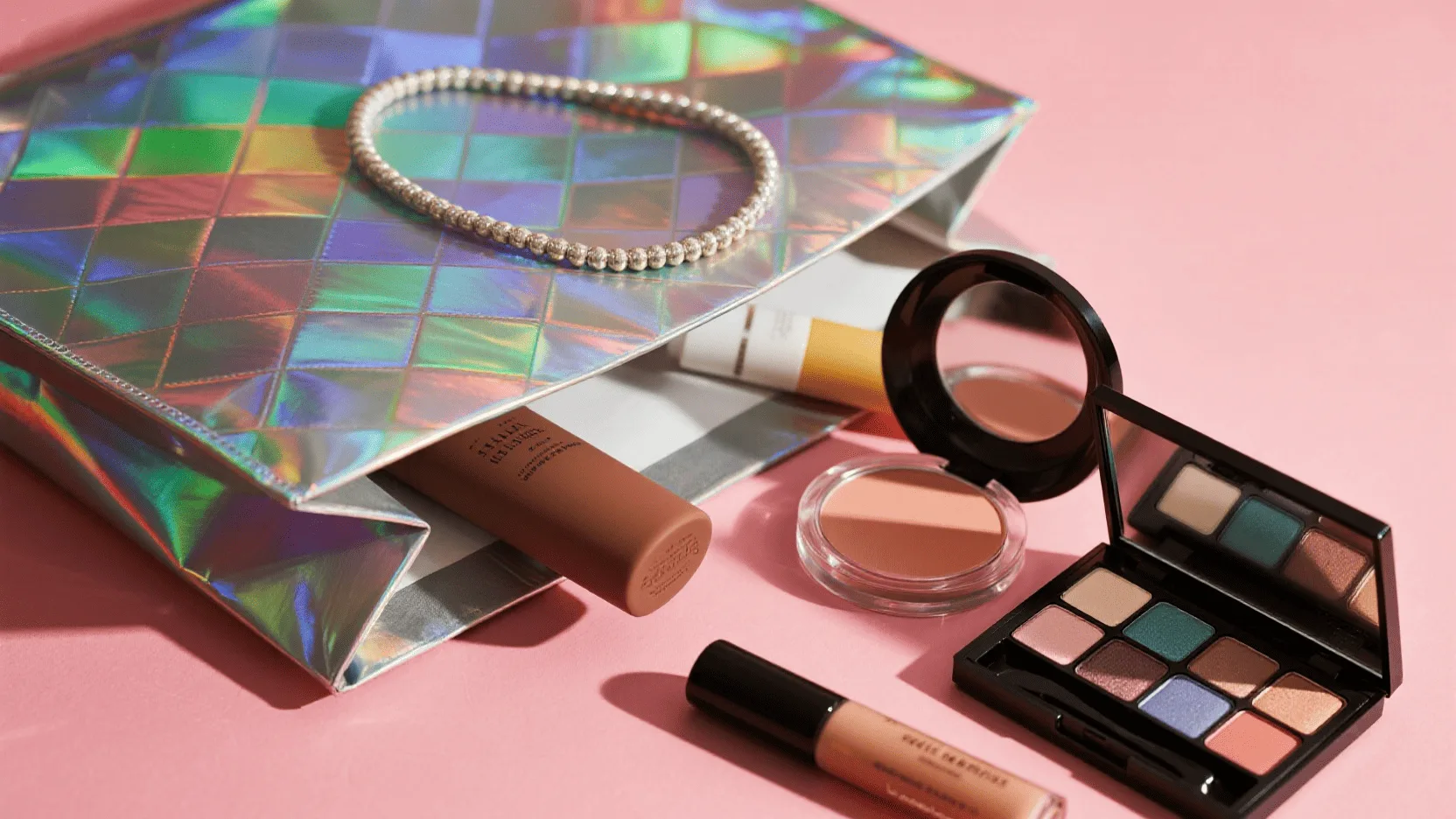
The beauty market, projected to reach over $750 billion by 2026 (Statista), is intensely competitive and visually driven. Brands are no longer just selling a product; they are selling a look, a feeling, and an experience. I’ve worked directly with several emerging cosmetics brands, and their primary marketing channel is social media. They need packaging that doesn’t just look good in a photo but begs to be photographed and shared. Holographic effects do exactly that. They align perfectly with the aesthetic of iridescent highlighters, multi-chrome eyeshadows, and shimmering lip glosses. The packaging becomes a seamless part of the product’s story of light and color. This creates a powerful, cohesive brand statement that resonates deeply with an audience that discovers and validates trends through visual platforms like TikTok and Instagram. It’s a self-perpetuating marketing cycle powered by the packaging itself.
The "Unboxing" as a Key Marketing Moment
For beauty influencers and everyday customers alike, the unboxing is content. A holographic bag or box turns a simple reveal into a visually dynamic event. The shifting colors and light create a sense of magic and anticipation that a static box cannot replicate, leading to more engaging user-generated content1 and wider brand reach.
Aligning with Youth and Innovation
The core demographic for many cosmetic brands is young, digitally native, and drawn to novelty. A holographic finish2 signals that a brand is modern, on-trend, and innovative—qualities that are essential for capturing and retaining the loyalty of this powerful consumer group.
How Is Luxury Retail Using Holographics to Redefine Premium Experiences?
You run a luxury brand, but the traditional, understated look feels stale. You want to attract a new generation of high-end consumers without alienating your core identity of quality and exclusivity.
Luxury retail is adopting holographic elements to create a "modern premium" feel, especially for limited-edition product drops and collaborations, signaling exclusivity and generating hype in a competitive market.
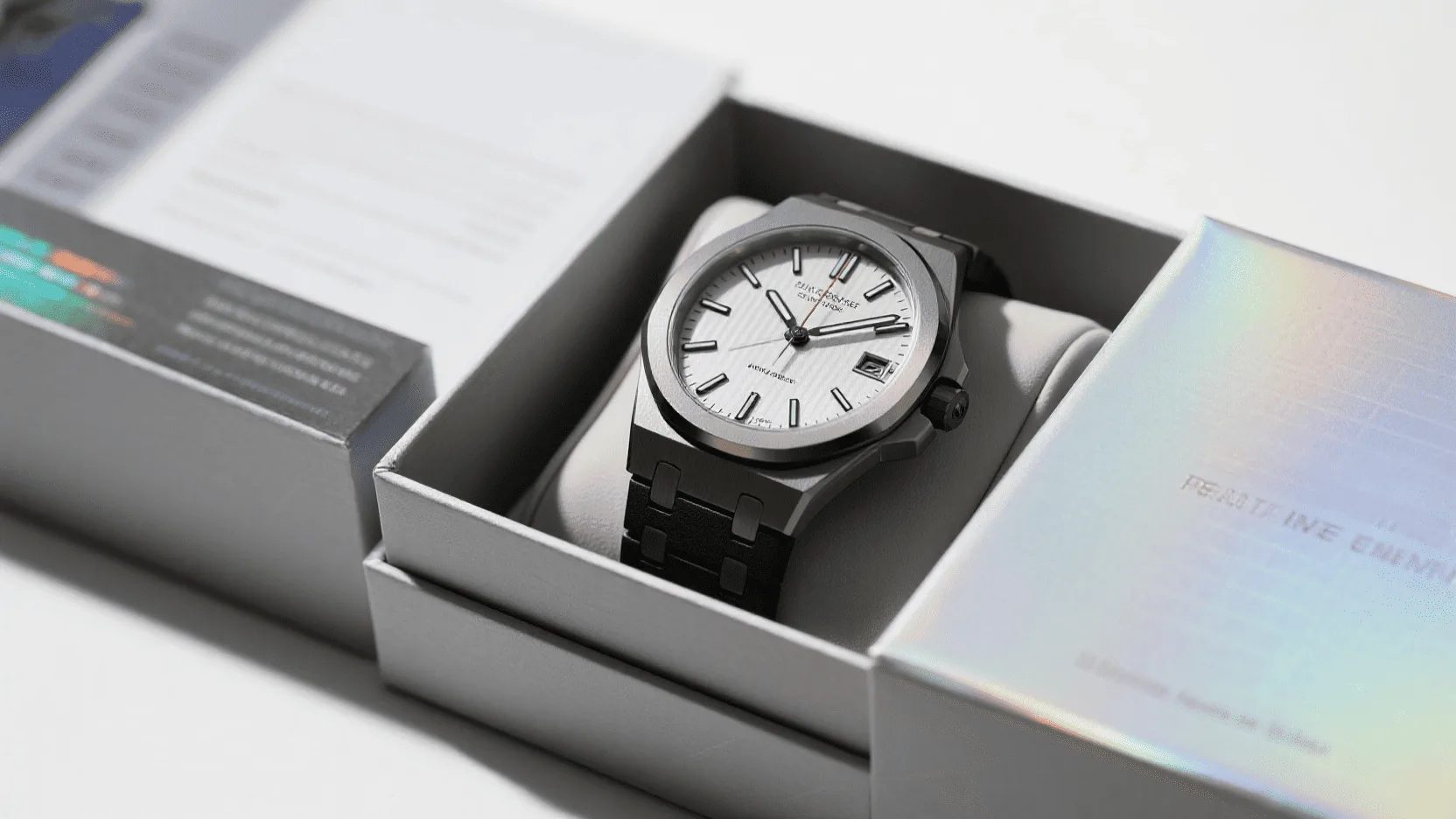
The definition of luxury is expanding. While classic elegance will always have its place, a growing segment of the luxury market is driven by "hype culture" and the desire for unique, statement-making pieces. Think high-end sneakers, limited designer apparel, and exclusive accessories. I had a fascinating conversation with a creative director for a fashion house that was launching a capsule collection. They chose gift bags with a subtle, dark holographic foil for the logo. "It’s about a ‘flash of the future’," he explained. "It gives that sense of rarity and being ahead of the curve." This is the new language of luxury. It’s not about being loud, but about being distinctive. Holographic finishes, when used thoughtfully, provide that distinction. They transform a simple shopping bag into a collectible item, an extension of the exclusive product inside. It tells the customer that they have purchased something special, rare, and part of a forward-thinking brand story.
Creating Scarcity and Urgency
For limited releases, holographic packaging1 serves as a visual cue that the item is not part of the standard collection. This enhances its perceived value and creates a sense of urgency, encouraging immediate purchase from fear of missing out (FOMO).
The Bridge Between Physical and Digital
Luxury brands are increasingly focused on creating seamless omnichannel experiences2. A stunning, photogenic bag encourages customers to share their in-store purchase online, effectively bridging the gap between the physical retail experience and the digital brand ecosystem.
| Industry Driver | Primary Motivation for Using Holographic Packaging | Target Audience |
|---|---|---|
| Cosmetics & Beauty | Social Media Shareability & Product Aesthetic Alignment | Gen Z & Millennials, Trend Followers |
| Luxury Retail | Exclusivity, Modernization, Hype for Limited Editions | Affluent Consumers, Hypebeasts, Collectors |
| E-commerce & Sub Boxes | Memorable Unboxing & Brand Differentiation | Online Shoppers, Subscription Members |
| Specialty Foods | Shelf Impact & Justification of Premium Price | Gourmet Consumers, Gift Buyers |
What Makes Holographic Packaging Essential for E-commerce and Subscription Box Brands?
Your e-commerce brand offers an amazing product, but it arrives in a plain brown box. The first physical interaction your customer has with your brand is underwhelming, failing to build excitement or loyalty.
For direct-to-consumer brands, the shipping package is the new storefront. Holographic mailers or product boxes create a memorable and exciting unboxing experience that differentiates the brand and encourages repeat business.
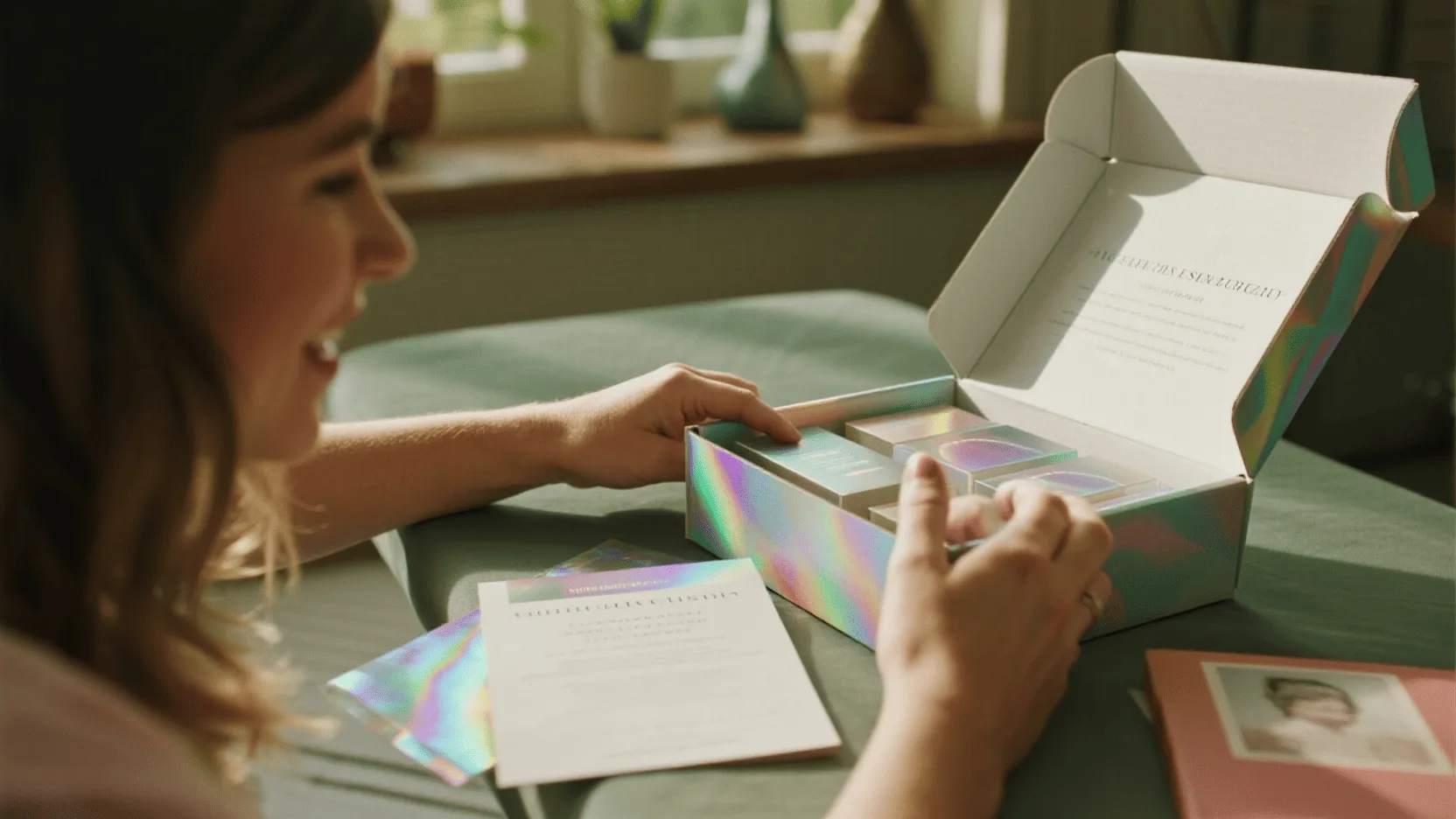
When you sell exclusively online, you lose the opportunity to create a brand atmosphere through a physical store. The only chance you have to make a physical impression is when your package arrives at the customer’s doorstep. This is a critical moment. In my experience helping dozens of e-commerce startups with their shipping packaging, the ones who grow fastest are those who invest in this moment. A standard cardboard box is a utility; a holographic mailer is an event. It transforms the mundane act of receiving a package into a moment of delight and discovery. For subscription box services, this is even more critical. The packaging is a core part of the value proposition. It needs to feel like a curated gift every single month, and a holographic design immediately elevates that perception. It makes the customer feel valued and excited for the reveal, strengthening their emotional connection to the brand and making them more likely to continue their subscription.
From Brown Box to Brand Ambassador
A distinctive holographic package1 turns every delivery into a moving advertisement. It gets noticed by neighbors, in apartment building mailrooms, and on the recipient’s desk at work, sparking curiosity and conversation about the brand.
Encouraging Customer Loyalty
A superior unboxing experience2 reinforces the customer’s purchase decision and leaves a lasting positive impression. This positive emotional response is a key driver of customer loyalty and word-of-mouth referrals, which are far more valuable than paid advertising. A recent report highlighted that 40% of consumers would share an image of a delivery on social media if it came in unique packaging (Dotcom Distribution).
Why Are Even Food and Gifting Brands Adopting This Trend?
You sell high-quality gourmet food or gift items, but your packaging blends in with dozens of similar products on the shelf. You need to catch a shopper’s eye and instantly communicate that your product is special.
Specialty food and gifting brands are using holographic details to break through visual clutter on retail shelves, elevate the perceived value of their products, and position them as premium, gift-worthy items.
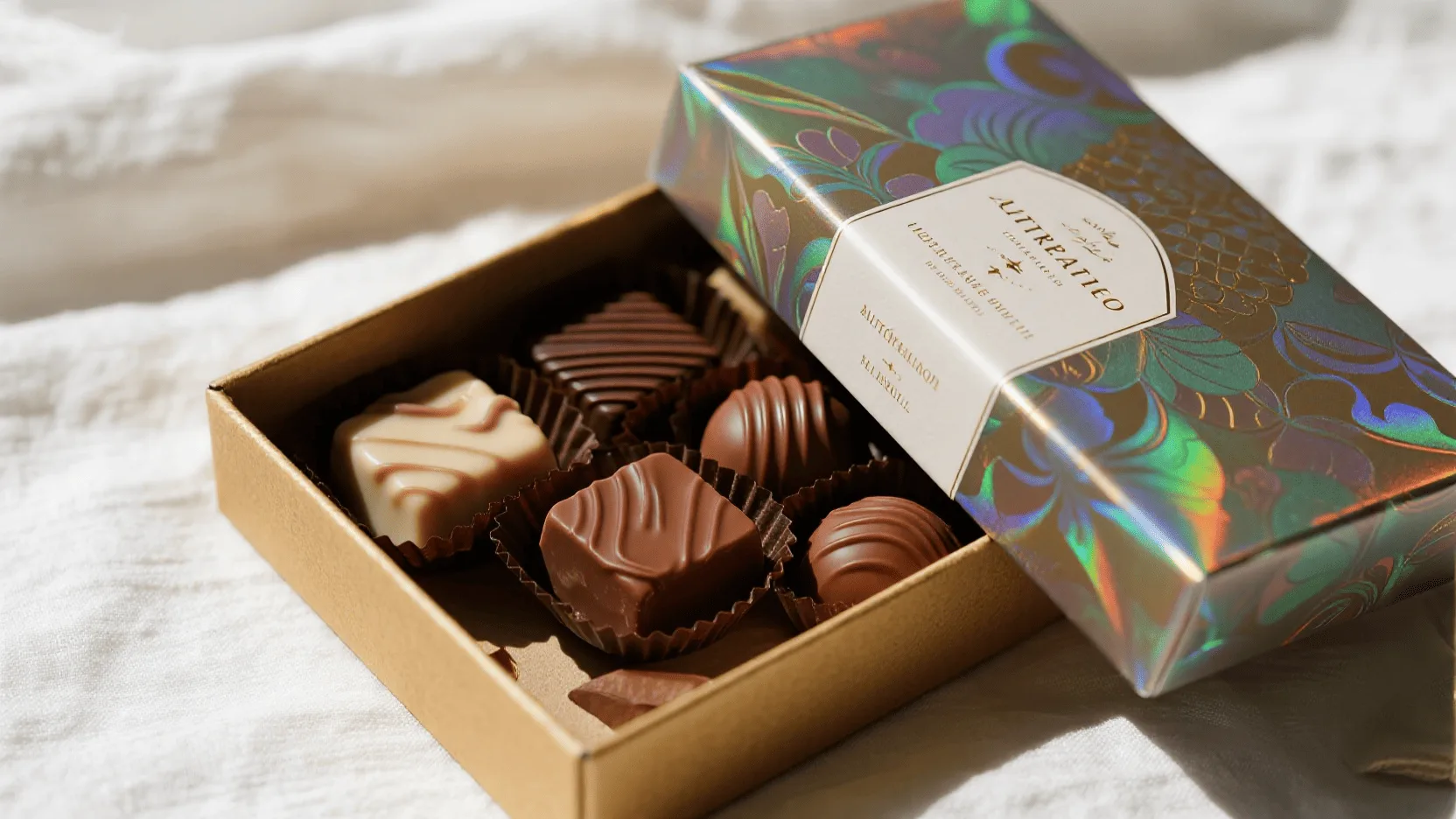
We eat with our eyes first, and the same is true for gifting. When a customer is browsing a crowded aisle of chocolates, teas, or specialty snacks, their decision is often made in seconds. The package that grabs their attention is the one they will pick up. I worked with a confectionery company that introduced a holographic foil element to their food packaging for a new line of premium truffles. Sales for that line outperformed their traditional packaging by over 30% in the first quarter. Why? Because the holographic detail acted as a shortcut for "premium." It subtly communicated that this product was different, more luxurious, and worth the higher price point. In the gifting world, this effect is magnified. People want to give gifts that look impressive and special. A gift box with a holographic finish feels more celebratory and thoughtful, enhancing the entire gift-giving experience for both the giver and the receiver. It’s a small investment in packaging that pays huge dividends in shelf presence and consumer perception.
Justifying a Premium Price
In a saturated market, premium packaging1 is a key tool for justifying a higher price. The visual appeal and perceived quality of a holographic finish make customers more willing to pay a premium, as the packaging itself becomes part of the product’s value.
The Perfect Choice for Seasonal and Limited Editions
The celebratory and eye-catching nature of holographic designs2 makes them perfect for holiday seasons, special occasions, and limited-edition flavor releases. It creates a sense of festivity and urgency that drives seasonal sales.
Conclusion
The demand for holographic paper bags from 2025 to 2030 is not a single trend but a strategic movement across key industries. Cosmetics, luxury, e-commerce, and gourmet foods are all leveraging this finish to meet the modern consumer’s desire for visual excitement, exclusivity, and shareable experiences.
Ready to position your brand for the future? Contact us to explore our custom holographic packaging solutions.
Check out our full range of innovative paper boxes and bags to elevate your brand.
FAQ
1. Is the holographic trend just a fad, or does it have long-term potential?
While trends evolve, the underlying drivers—the need for social media visibility, memorable unboxing experiences, and brand differentiation—are here to stay. Holographic packaging is a powerful tool that serves these core marketing needs, giving it long-term strategic relevance beyond just being a fad.
2. Are there sustainable options for holographic packaging?
Yes. The industry has made significant progress. Options like film-free transfer metallization and compostable holographic films allow brands to achieve the stunning visual effect without the environmental drawbacks of traditional plastic lamination, aligning luxury aesthetics with corporate responsibility.
3. Can a smaller brand afford to use holographic bags?
While holographic materials are more expensive than standard paper, strategic use can provide a high return on investment. Smaller brands can incorporate holographic elements cost-effectively through foil stamping on logos or specific design features, rather than producing a fully holographic bag, to achieve a premium look on a budget.