

What is GSM (Grams per Square Meter) in Packaging?
GSM (Grams per Square Meter) is the standard measurement used to indicate the weight of paper and paperboard in the packaging industry. It shows how much one square meter of material weighs, helping buyers evaluate paper thickness, strength, durability, and suitability for different packaging applications.
Also Known As
Paper Weight, Grammage, Paper GSM, GSM Paper
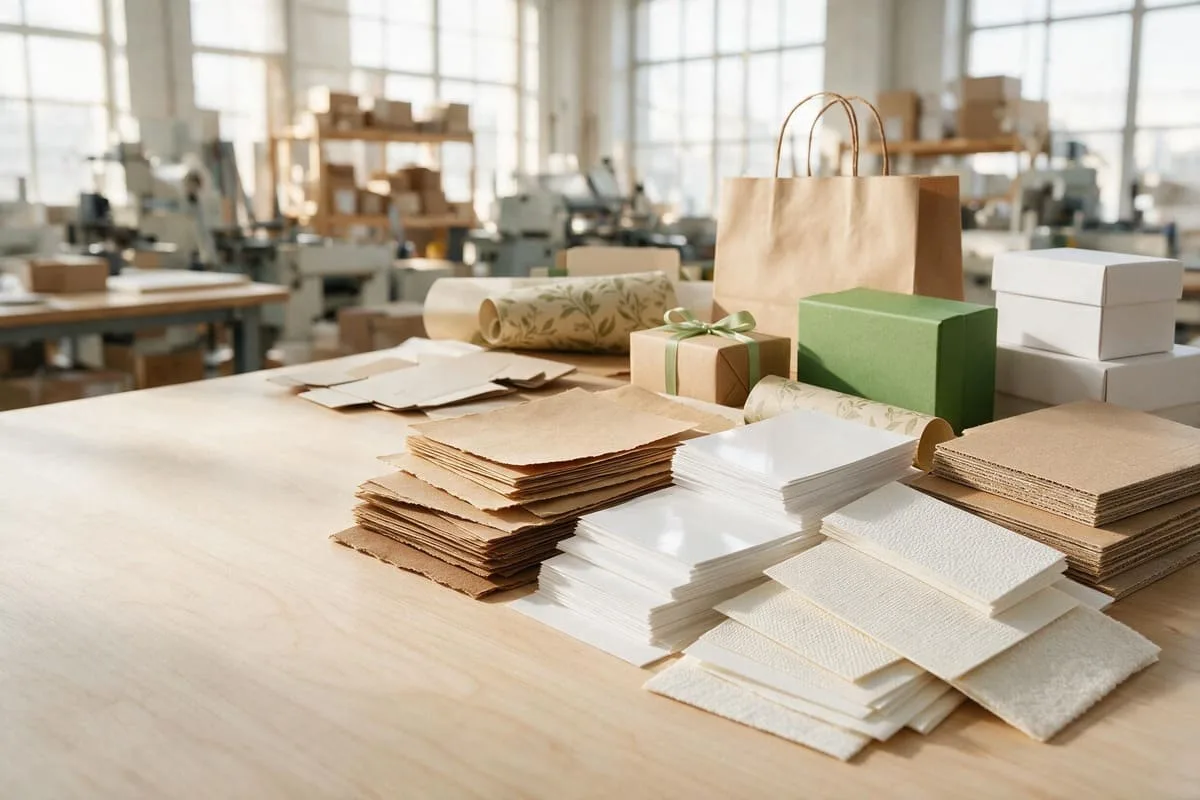
Materials
Definition
GSM (Grams per Square Meter) is the standard measurement used to indicate the weight of paper and paperboard in the packaging industry. It shows how much one square meter of material weighs, helping buyers evaluate paper thickness, strength, durability, and suitability for different packaging applications.
Understanding GSM (Grams per Square Meter)
What is GSM in Packaging?
GSM (Grams per Square Meter) is the standard measurement used to define the weight and density of paper, paperboard, and other paper-based packaging materials.
In the packaging industry, GSM indicates how much one square meter of paper weighs in grams. A higher GSM value generally means a thicker, heavier, and stronger paper material, while a lower GSM usually represents a lighter and more flexible paper.
For custom packaging such as paper bags, gift boxes, wrapping paper, and greeting cards, GSM is one of the key specifications used by packaging manufacturers and buyers to evaluate:
- Paper thickness and durability
- Printing performance
- Structural strength
- Premium appearance
- Product protection requirements
At Omet Pack, GSM selection is always evaluated together with paper type, packaging structure, printing method, finishing options, and end-use requirements to achieve the right balance between quality and cost.
GSM Meaning: How Is Paper Weight Measured?
GSM stands for:
Grams per Square Meter
The calculation is:
GSM = Weight of Paper (grams) ÷ Area of Paper (square meters)
For example:
A paper sheet measuring 1 square meter that weighs 250 grams has:
250 GSM paper
This measurement is internationally used by paper mills, packaging manufacturers, printers, and designers to specify paper materials.
Why Does GSM Matter in Packaging?
Choosing the correct GSM is important because paper weight directly affects the performance and appearance of packaging.
1. Strength and Durability
Higher GSM paper usually provides:
- Better tear resistance
- Higher stiffness
- Improved load-bearing capability
- Stronger protection for products
For example:
A luxury gift bag carrying heavy items usually requires higher GSM paper compared with a lightweight promotional paper bag.
2. Premium Appearance
Higher GSM materials often create:
- A thicker hand feel
- More premium appearance
- Better folding quality
- Stronger shelf presence
This is why luxury brands often select heavier paperboards for:
- Beauty packaging
- Jewelry boxes
- Premium gift packaging
3. Printing Performance
Paper GSM affects how colors and finishes appear.
Higher GSM paper generally provides:
- Better surface stability
- Reduced paper deformation
- Improved performance during lamination and foil stamping
However, GSM alone does not determine print quality. Paper coating, fiber structure, and surface treatment are also important factors.
Common GSM Range for Packaging Materials
Different packaging products require different GSM specifications.
| Packaging Material | Common GSM Range | Typical Applications |
|---|---|---|
| Tissue Paper | 17-40 GSM | Gift wrapping, inner protection |
| Wrapping Paper | 60-120 GSM | Gift wrapping, retail packaging |
| Kraft Paper | 80-200 GSM | Eco paper bags, natural packaging |
| Paper Bag Paper | 100-250 GSM | Shopping bags, gift bags |
| Art Paper | 128-300 GSM | Printed packaging, cards |
| Paperboard | 250-600 GSM | Folding boxes, rigid packaging |
| Premium Board | 600+ GSM | Luxury packaging structures |
Recommended GSM for Different Packaging Applications
Paper Bags
The suitable GSM depends on:
- Bag size
- Handle type
- Product weight
- Brand positioning
| Paper Bag Type | Recommended GSM |
|---|---|
| Small gift bags | 100-140 GSM |
| Retail shopping bags | 120-180 GSM |
| Luxury gift bags | 180-250 GSM |
| Heavy-duty bags | 250 GSM+ |
Paper Boxes
Paper boxes normally use thicker paperboard rather than regular paper.
| Box Type | Recommended GSM |
|---|---|
| Folding carton boxes | 250-400 GSM |
| Cosmetic boxes | 300-450 GSM |
| Premium gift boxes | 350-600 GSM |
| Rigid luxury boxes | 1000 GSM+ (grey board + wrapped paper) |
Wrapping Paper
Wrapping paper requires flexibility rather than maximum strength.
| Application | Recommended GSM |
|---|---|
| Lightweight wrapping | 50-70 GSM |
| Standard gift wrapping | 80-100 GSM |
| Premium wrapping paper | 100-140 GSM |
Does Higher GSM Always Mean Better Packaging?
Not necessarily.
A higher GSM does not always create better packaging.
The best material choice depends on:
- Packaging structure
- Product weight
- Shipping conditions
- Printing requirements
- Budget
- Sustainability goals
For example:
A 120 GSM premium kraft paper may perform better than a 180 GSM low-quality paper because fiber quality and manufacturing process also influence strength.
GSM vs Paper Thickness: What Is The Difference?
GSM measures paper weight.
Paper thickness measures caliper, usually expressed in:
- Microns (μm)
- Millimeters (mm)
Two papers can have the same GSM but different thickness because of differences in:
- Fiber density
- Paper composition
- Coating
- Manufacturing process
Example:
| Material | GSM | Thickness |
|---|---|---|
| Coated art paper | 300 GSM | Thinner and smoother |
| Kraft paper | 300 GSM | Thicker and more natural feel |
Therefore, packaging buyers should evaluate GSM together with paper thickness and material type.
How To Choose The Right GSM For Custom Packaging?
When selecting paper GSM, professional packaging buyers usually consider the following factors:
1. Product Weight
Heavy products require stronger paper structures.
Examples:
- Jewelry boxes → higher GSM board
- Cosmetic packaging → medium/high GSM
- Lightweight gifts → lower GSM paper
2. Packaging Style
Different structures require different material strength.
Examples:
- Flat gift bags
- Rope handle bags
- Folding cartons
- Rigid boxes
3. Printing and Finishing
Some premium finishes perform better on suitable GSM materials:
- Hot foil stamping
- Embossing
- Spot UV
- Lamination
- Soft-touch coating
4. Sustainability Requirements
Many brands now consider:
- FSC-certified paper
- Recycled paper content
- Lower material consumption
- Responsible sourcing
The right GSM should balance durability, appearance, and environmental impact.
Omet Pack Manufacturing Insight: Choosing GSM For Packaging Projects
In real packaging production, GSM selection is not decided by paper weight alone.
Our packaging engineers evaluate:
- Product application
- Bag or box structure
- Printing method
- Surface finishing
- Transportation requirements
- Customer brand positioning
For example:
A luxury retail gift bag may use:
- 180-250 GSM specialty paper
- Premium lamination
- Hot foil stamping
- Reinforced bottom structure
while an eco-friendly promotional bag may use:
- 100-140 GSM kraft paper
- Natural texture finishing
- Water-based printing
The correct GSM specification helps achieve the expected appearance, strength, and customer experience.
Frequently Asked Questions About GSM
What does GSM mean in paper packaging?
GSM means Grams per Square Meter. It measures the weight of paper per square meter and is commonly used to describe paper thickness and strength in packaging production.
Is higher GSM paper stronger?
Generally, higher GSM paper is heavier and often stronger, but strength also depends on paper type, fiber quality, coating, and packaging structure.
What GSM paper is best for paper bags?
Most paper bags use approximately 120-250 GSM paper. Lightweight bags may use 100-140 GSM, while luxury gift bags commonly use 180-250 GSM.
What GSM is used for luxury packaging?
Luxury packaging often uses 300-600 GSM paperboard for folding cartons and premium gift boxes. Additional materials such as grey board may be used for rigid boxes.
Is GSM the same as paper thickness?
No. GSM measures paper weight, while thickness measures the physical thickness of the material. They are related but not identical.
How do I choose GSM for custom packaging?
Choose GSM based on product weight, packaging structure, printing requirements, finishing options, sustainability goals, and desired brand positioning.
Related Packaging Terms
- Paper Thickness
- Paperboard
- Kraft Paper
- FSC Paper
- Coated Paper
- Folding Carton
- Rigid Box
- Offset Printing
- Hot Foil Stamping
Related Products
View All
Related Solutions
Gift Packaging
Gift & Seasonal Packaging Catalog Discover seasonal packaging collections, gift boxes, gift bags, wrapping paper and custom packaging...
Flower Packaging
Floral Packaging Catalog – Custom Flower Packaging Solutions | Omet Pack Home / Catalogs / Flower Packaging Floral...
Beauty Packaging
Beauty & Personal Care Packaging Portfolio | Omet Packaging Beauty & Personal Care Packaging Portfolio Explore luxury skincare,...
Food Packaging
Food & Beverage Packaging Catalog Explore premium retail packaging and food service packaging solutions for chocolate, tea, coffee,...
Related Resources
More GuidesMaterials & Printing & Finishes
Home › Resources › Materials, Printing & Finishes 📐 DECISION SUPPORT TOOL Materials, Printing & Finishes Guide Choose...
Read Guide
Logistics & Trade Terms
↑ Home › Resources › Logistics & Trade Terms Logistics & Shipping Guide: Incoterms, Landed Cost & Delivery...
Read GuideMOQ, Lead Time & Sampling
Home / Resources / MOQ & Lead Time Guide 📦 Buyer's Planning Guide MOQ, Lead Time & Sampling...
Read GuideRelated Catalogs
Need Help Choosing the Right Packaging Solution?
Our packaging specialists can help you select materials, structures, printing and finishes based on your product requirements. Tell us your needs -- we deliver surprises.