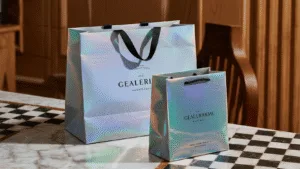
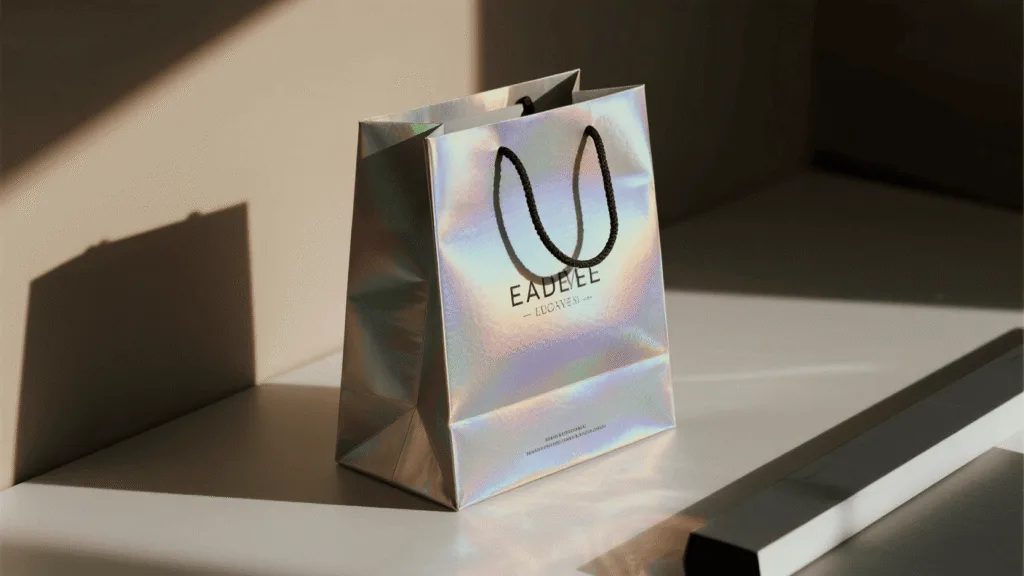
You’ve decided to invest in holographic paper bags to make your brand pop. But now you’re facing a wall of technical jargon—GSM, PET film, offset printing—and you’re worried about making a costly mistake.
B2B buyers should demand specific paper weights (190-250 GSM), clarify the holographic material type (eco-friendly transfer vs. PET film), and specify premium finishing options like UV printing, protective laminations, and reinforced, high-quality handles for durable and impressive results.
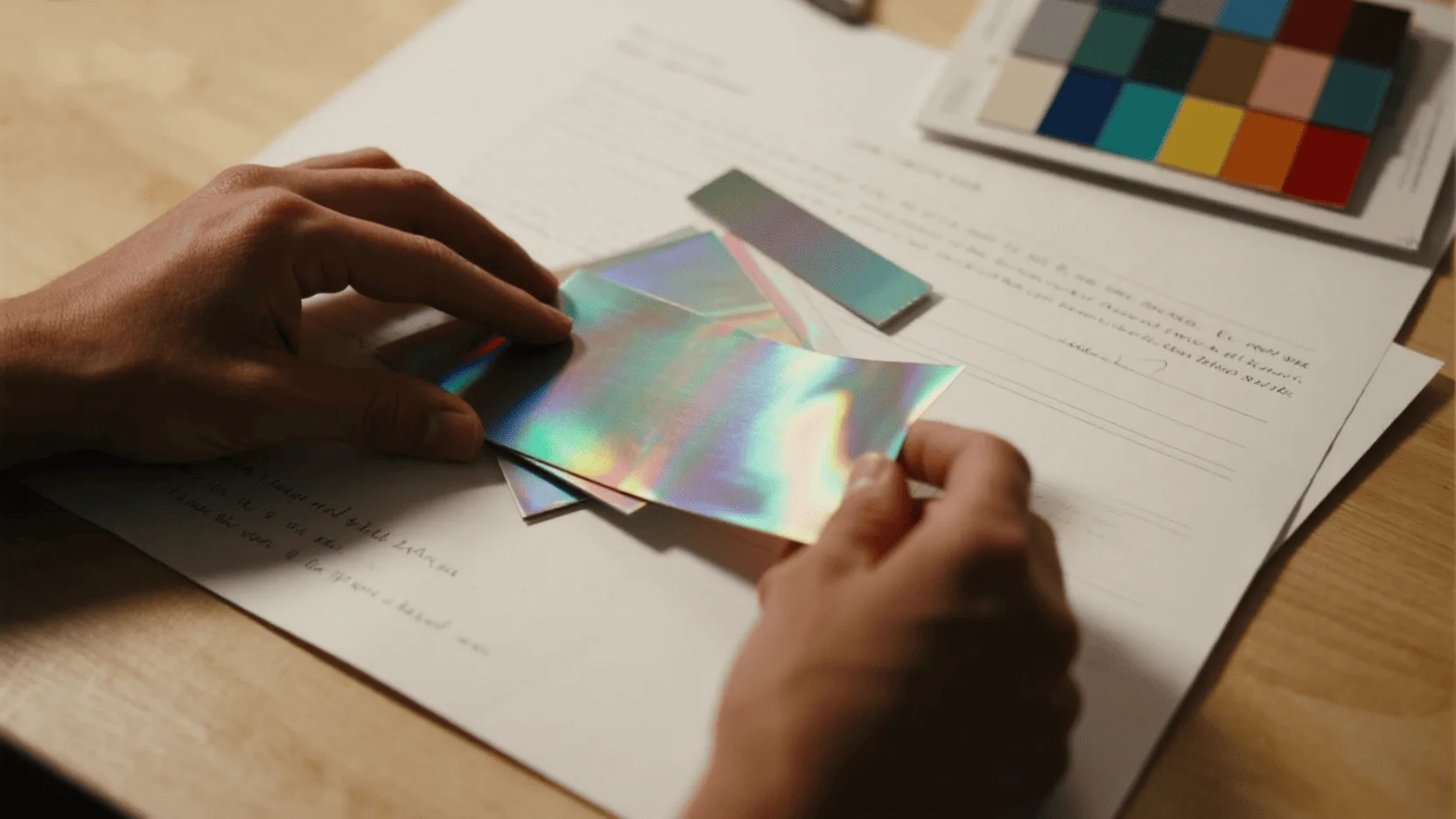
I remember a few years ago, a new client came to us in a panic. They had ordered 10,000 holographic bags from another supplier for a major product launch. The initial samples looked great, but when the bulk order arrived, the bags were a disaster. The holographic layer was peeling at the corners, and the paper felt flimsy. They had focused on the price but overlooked the material specifications. That experience was a powerful reminder for me: in custom packaging, the details you demand upfront are what protect your investment and your brand’s reputation.
What Are the Critical Paper Material Specifications?
You’re excited about the dazzling holographic effect, but you overlook the paper it’s on. The bags arrive, and they tear easily under the weight of your products, creating a poor customer experience.
The foundation of a quality holographic bag is the paper itself. You must specify a high paper weight (GSM) and the correct paper type to ensure the bag is durable and feels substantial.
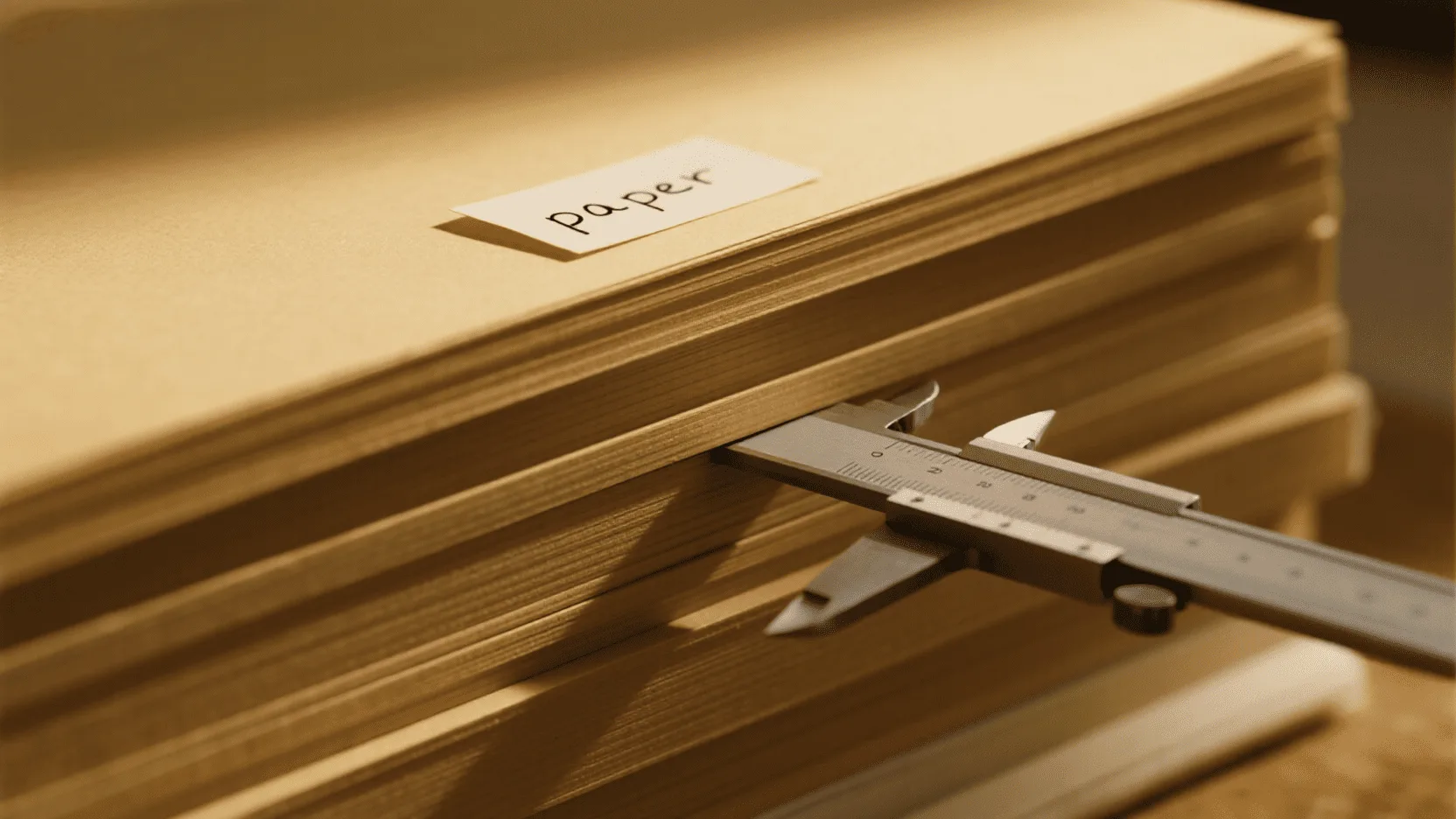
The "wow" factor of a holographic finish is completely lost if the bag feels cheap or rips before your customer even gets home. The two most critical specifications to demand are paper weight, measured in Grams per Square Meter (GSM), and the paper type. For a premium gift bag that needs to hold its shape and convey quality, I always advise my clients to start at a minimum of 190 GSM. For true luxury applications, especially for heavier items like candles or cosmetic sets, pushing this to 210 GSM or even 250 GSM makes a world of difference. The second piece is the paper type. Art Paper (or C2S) is coated on both sides, providing an exceptionally smooth surface that is ideal for vibrant printing. Ivory Board (or C1S) is coated on one side and is known for its stiffness and durability, making it a workhorse for reliable, sturdy packaging. Choosing the right combination is not a guess; it’s a strategic decision based on your product, brand positioning, and budget.
Understanding Paper Weight (GSM)1
GSM is a direct measure of a paper’s density and, by extension, its perceived quality and durability. A low GSM (e.g., 120-150 GSM) might be suitable for a small, lightweight item, but it will feel flimsy and crease easily. Insisting on a higher GSM ensures your bag has structural integrity.
Choosing the Right Paper Type: Art Paper vs. Ivory Board2
Your choice here affects both the look and feel. Art Paper is your go-to for complex, colorful designs printed on the bag, as its smooth surface ensures crisp details. Ivory Board is the choice for strength and a premium, rigid feel.
| Paper Specification | Recommended Range/Type | Why It Matters for Holographic Bags |
|---|---|---|
| Paper Weight (GSM) | 190–250 GSM | Ensures durability, prevents tearing, provides a substantial, premium feel. |
| Paper Type | Art Paper (C2S) or Ivory Board (C1S) | Art Paper offers a superior surface for printing; Ivory Board provides extra stiffness and strength. |
| Reinforcement | Cardboard inserts at top and base | Prevents handles from tearing out and stops the base from sagging under weight. |
How Do You Choose the Right Holographic Material?
You requested "holographic" and assumed all options were the same. The final product uses a thick plastic film that makes recycling impossible, clashing with your brand’s sustainability goals and disappointing eco-conscious customers.
You must specify whether you want a standard PET/BOPP holographic film lamination for maximum shine or an eco-friendly, film-free transfer metallization to ensure recyclability and a modern, sustainable appeal.
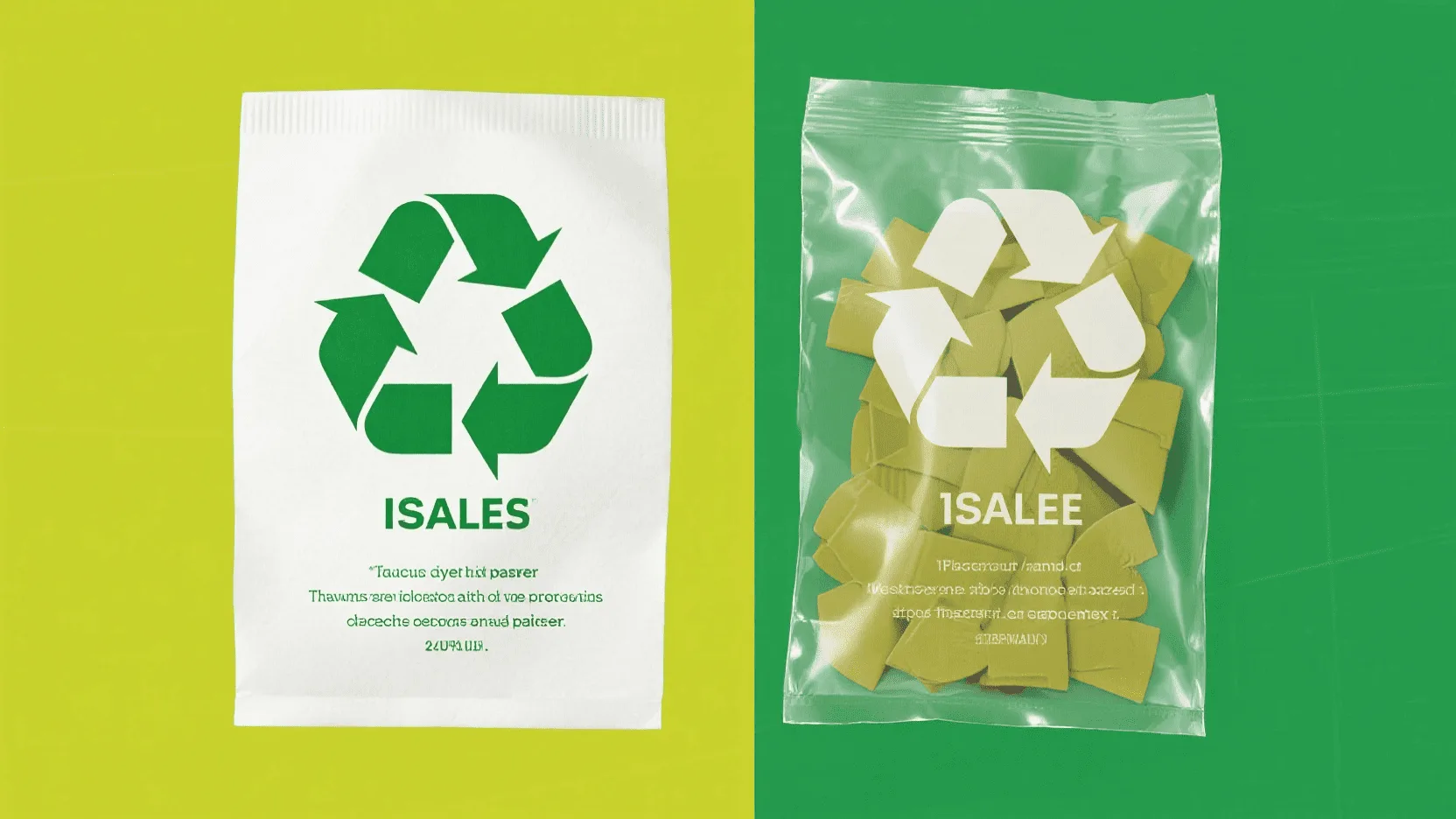
This is probably the most important—and most overlooked—specification today. The term "holographic" can refer to two very different processes. I had a client, a clean beauty brand, who was about to approve a bag made with a standard PET holographic film. I stopped the process and showed them our film-free options. Their relief was palpable. Using a plastic-laminated bag would have directly contradicted their brand ethos. The standard method involves laminating a plastic (PET or BOPP) holographic film onto the paper. This method is durable and incredibly vibrant, but it makes the bag difficult to recycle. The modern, more responsible alternative is film-free transfer metallization. This process transfers a microscopic layer of holographic material directly onto the paper and then vanishes, leaving no plastic film behind. The result is a beautiful holographic effect on a paper bag that remains fully recyclable. As a B2B buyer, demanding clarity on this point is crucial for aligning your packaging solutions with your company’s environmental commitments.
The Standard: PET/BOPP Holographic Film
This is the traditional method. It creates a very bright, high-gloss1, and durable finish that is resistant to scuffs and water. However, the plastic content is a significant environmental drawback for many brands today.
The Sustainable Choice: Film-Free Transfer Metallization2
This is the future of premium, eco-conscious packaging. It provides a sophisticated holographic effect without compromising the recyclability of the paper bag. It signals to your customers that you care about sustainability as much as you care about aesthetics. It’s the choice for brands building a legacy.
Which Finishing Options Elevate Your Holographic Bag?
Your holographic bag is made from the right materials, but the printed logo looks faded and the handles feel cheap. The final product lacks the cohesive, high-end feel you were aiming for.
To complete the premium experience, you must specify the right finishing touches: UV printing for sharp graphics on the holographic surface, a protective lamination, and strong, comfortable handles like cotton or ribbon.

The difference between a good holographic bag and a great one lies in the finishing. A holographic surface is non-absorbent, so standard inks can smudge or appear dull. You must demand UV printing, where the ink is cured instantly by ultraviolet light, resulting in sharp, vibrant graphics that adhere perfectly to the slick surface. Another detail I always discuss with clients is the use of a secondary lamination. It might sound strange to laminate over a holographic surface, but a matte lamination can be applied over certain areas to create a stunning contrast between the soft matte and the bright hologram. Finally, the handles. A cheap, twisted paper handle can completely undermine the luxury feel. Specifying soft cotton, smooth satin ribbon, or sturdy grosgrain ribbon handles elevates the tactile experience and reinforces the premium quality of the product inside. These are not afterthoughts; they are essential components of the overall design.
Printing Methods for Holographic Surfaces
Don’t just send a logo file; specify the printing method. UV printing1 is non-negotiable for achieving crisp, durable graphics on a holographic background. It prevents smudging and ensures your branding looks professional.
Handle Selection: The Tactile Component
The handle is the primary point of physical interaction. Choosing a material that is comfortable to hold and securely attached is critical.
| Handle Type | Material | Best For | Feel & Perception |
|---|---|---|---|
| Satin Ribbon | Woven Polyester | Cosmetics, Jewelry, Luxury Apparel | Silky, elegant, classic luxury |
| Cotton Rope2 | Natural Cotton | Eco-conscious, Organic Brands | Soft, natural, comfortable |
| Grosgrain Ribbon | Ribbed Fabric | High-End Retail, Gifting | Textured, strong, sophisticated |
| Twisted Paper | Kraft Paper | Fast-moving retail, budget-conscious | Simple, functional, basic |
Conclusion
Creating an effective holographic paper bag requires more than just a design idea; it demands precise technical specifications. By demanding the right paper weight, holographic material, and finishing details, you ensure your investment results in packaging that is not only beautiful but also durable and brand-aligned.
Ready to create a holographic bag that reflects your brand’s true quality? Contact us to discuss your specifications.
Explore our gallery of custom paper bags for more inspiration.
FAQ
1. What is the typical minimum order quantity (MOQ) for custom holographic bags?
For fully custom holographic bags with specific materials and finishes, the MOQ at factories like ours is typically between 1,000 and 2,000 units. This quantity is needed to efficiently set up the specialized printing, lamination, and die-cutting machinery.
2. How should I prepare my artwork for printing on a holographic surface?
Your artwork should be in a vector format (like .AI or .EPS). It’s crucial to separate the layers clearly: one layer for the background holographic area and separate layers for the elements you want to print on top. This allows us to apply the UV printing and any other finishes correctly.
3. Are holographic bags significantly more expensive than standard printed bags?
Yes, there is a premium cost associated with holographic materials and the specialized processes required. However, the cost can be managed. Using holographic foil stamping for just a logo or pattern is a more budget-friendly way to incorporate the effect compared to making the entire bag holographic.