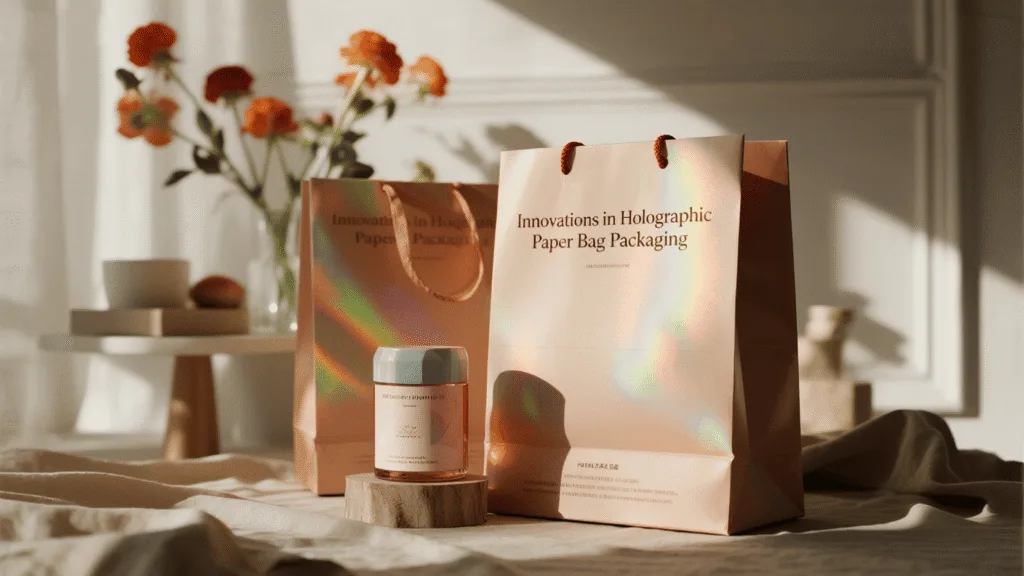
You’re using holographic paper bags, and they look great. But you have a nagging feeling that what’s innovative today will be standard tomorrow, and you worry about falling behind on sustainability and technology.
The most important innovations will be eco-friendly materials that make holographic effects recyclable, smart packaging integrations like AR, and advanced printing technologies that allow for deep, cost-effective customization and security.
A few months ago, I was in our R&D lab reviewing a new material from a supplier. It was a holographic paper, but it felt different—lighter, more pliable, and strangely, it didn’t have that familiar plasticky feel. It was a "film-free" holographic transfer paper. The supplier explained that it was fully repulpable, meaning it could be recycled just like any other paper product. Holding it, I realized this wasn’t just another pretty finish. This was a game-changer. It addressed the single biggest objection our clients had about holographic packaging: its environmental impact. That moment crystalized for me that the future of this packaging isn’t just about a better shimmer; it’s about making that shimmer smarter, greener, and more connected to the brand’s story.
Will Sustainable Materials Make Holographic Bags Eco-Friendly?
You love the premium look of holographic bags, but you can’t ignore the growing customer demand for sustainable packaging. You’re stuck between choosing a stunning aesthetic and upholding your brand’s commitment to the environment.
Yes, new materials are solving this problem. Innovations like film-free holographic transfer and compostable substrates are making these bags fully recyclable and biodegradable, aligning their eye-catching look with modern environmental standards.
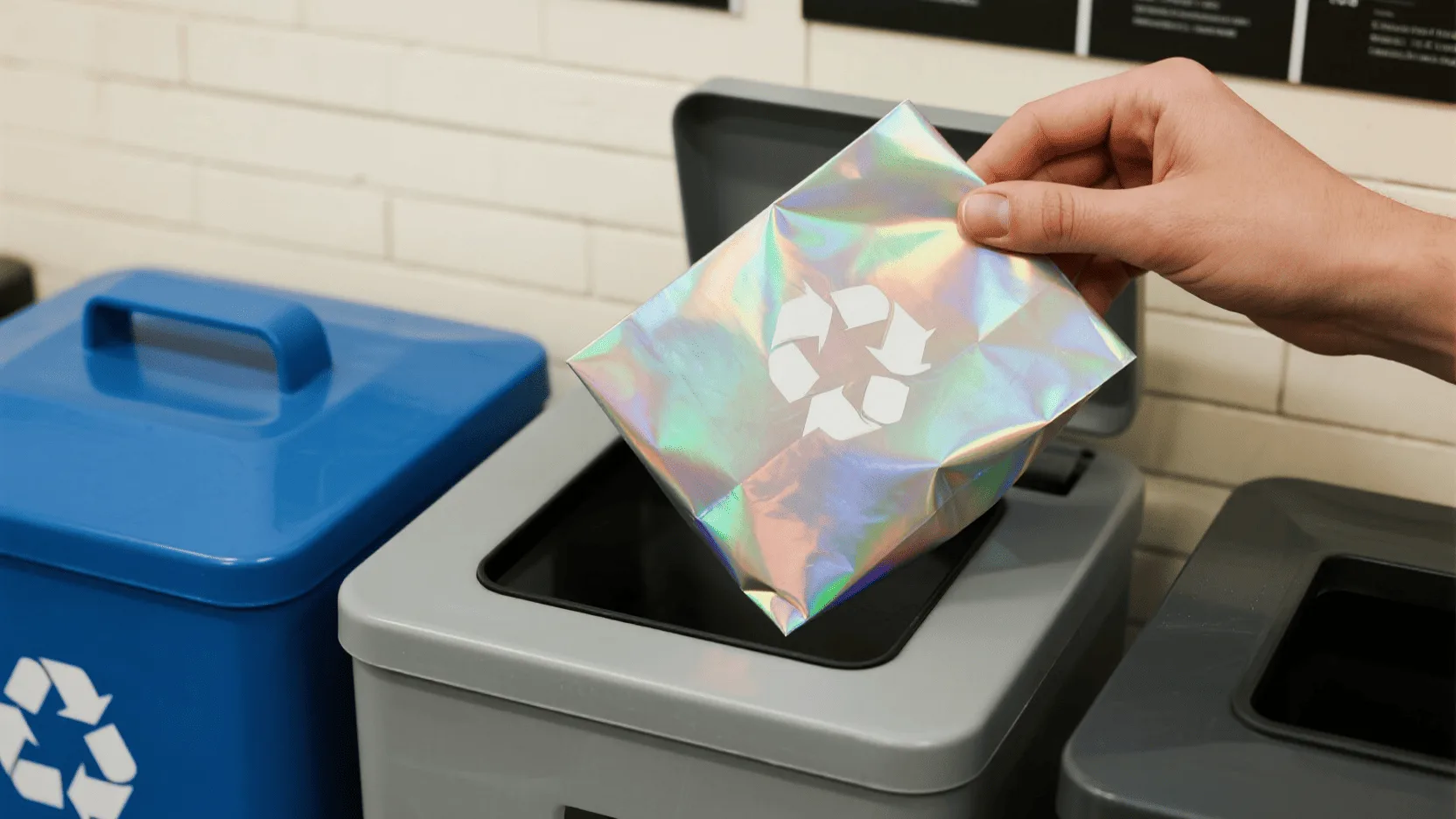
For years, the stunning effect of holographic packaging came at a cost. The classic method involved laminating a thin layer of PET (plastic) film onto the paper. While beautiful, this process created a mixed-material product that was notoriously difficult, if not impossible, to recycle. It went straight to the landfill. This created a major conflict for brands wanting to be both premium and responsible. However, the next five years will be defined by materials that eliminate this compromise. The most significant of these is film-free holographic technology. Instead of a plastic film, a micro-thin metallic layer is transferred directly onto the paper and can be removed during the repulping process. This means the final paper bag is 100% recyclable. We’re also seeing the development of compostable and biodegradable holographic films, often made from plant-based materials like cellulose. According to a 2023 Trivium Packaging report, 71% of consumers are more likely to buy from brands that use sustainable packaging (Trivium Packaging), making this innovation not just an ethical choice, but a powerful business one.
Comparing Holographic Material Technologies
Understanding the shift from old to new materials is key for any procurement manager or brand owner.
| Feature | Traditional PET Lamination | Film-Free Transfer Technology1 |
|---|---|---|
| Recyclability2 | No (Mixed-material waste) | Yes (Fully repulpable) |
| Core Material | Paper + Plastic Film | 100% Paper Base |
| Environmental Impact | High (Contributes to landfill) | Low (Part of circular economy) |
| Consumer Perception | Potentially negative | Highly positive |
How Will Smart Technology Transform the Holographic Bag?
Your packaging currently serves one purpose: to carry a product. But in a digital world, this feels like a missed opportunity to engage with your customers, who put the bag aside the moment they get home.
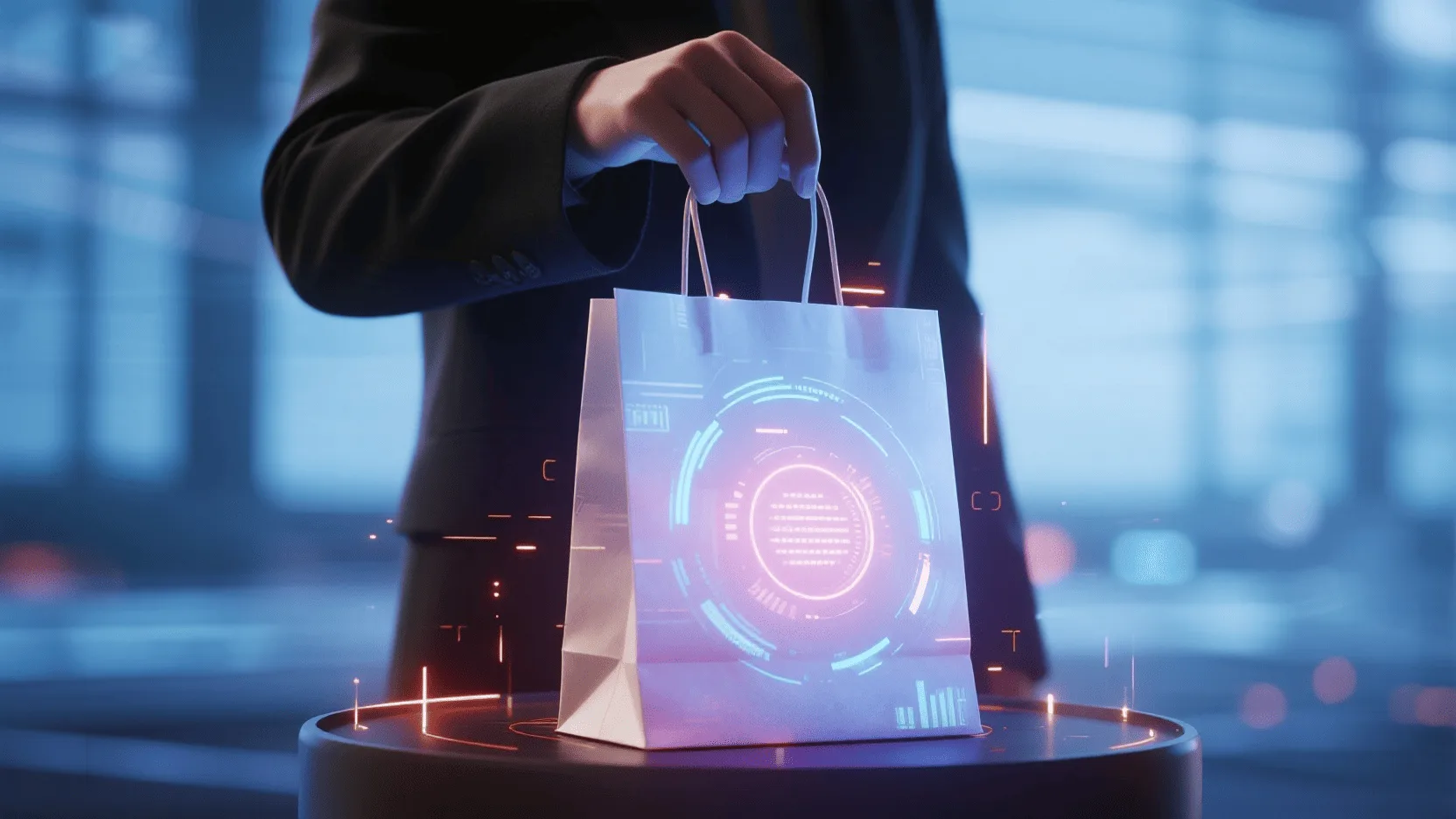
Smart technology will turn holographic bags into interactive digital portals. By integrating features like Augmented Reality (AR) and NFC, brands can deliver exclusive content, verify authenticity, and create immersive experiences that begin with the bag itself.
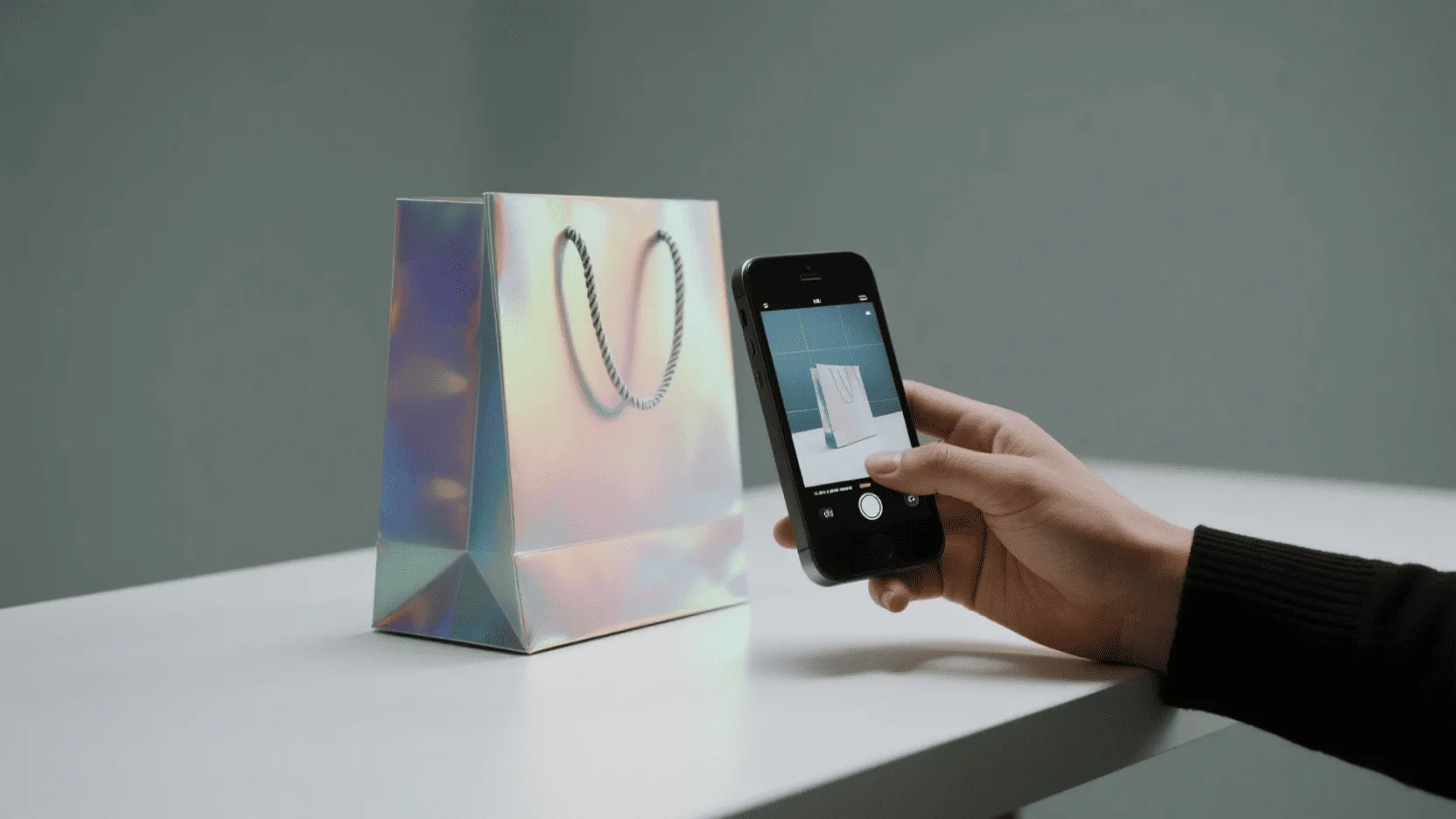
Imagine a customer pointing their phone at your holographic gift bag. Instantly, a 3D animation of the product inside appears on their screen, or a video message from your founder begins to play. This is the power of Augmented Reality integrated into packaging. While QR codes are a simple starting point—linking to a website or social media page—AR creates a truly memorable "wow" moment that deepens brand engagement. This technology is becoming increasingly accessible and doesn’t require a special app anymore, thanks to web-based AR. Another key innovation is Near Field Communication (NFC). A small, invisible NFC chip embedded in the bag allows a customer to simply tap their phone to it to launch a specific experience, such as registering their product, accessing a special offer, or confirming its authenticity—a crucial feature for luxury goods. For a brand in the cosmetic packaging space, this could mean an instant link to a video tutorial for the makeup inside. This transforms the bag from a passive carrier into an active, post-purchase marketing tool that adds value long after the sale.
Can Advanced Printing Make Holographic Designs Truly Unique?
You’ve noticed that many holographic bags on the market use the same generic "rainbow oil slick" pattern. You want a design that is truly yours, but you assume that creating a custom holographic effect is prohibitively expensive.
Absolutely. Digital printing and selective finishing techniques now allow for cost-effective customization of holographic effects. Brands can create unique patterns, embed their logos into the shimmer, and apply holographic details with precision.
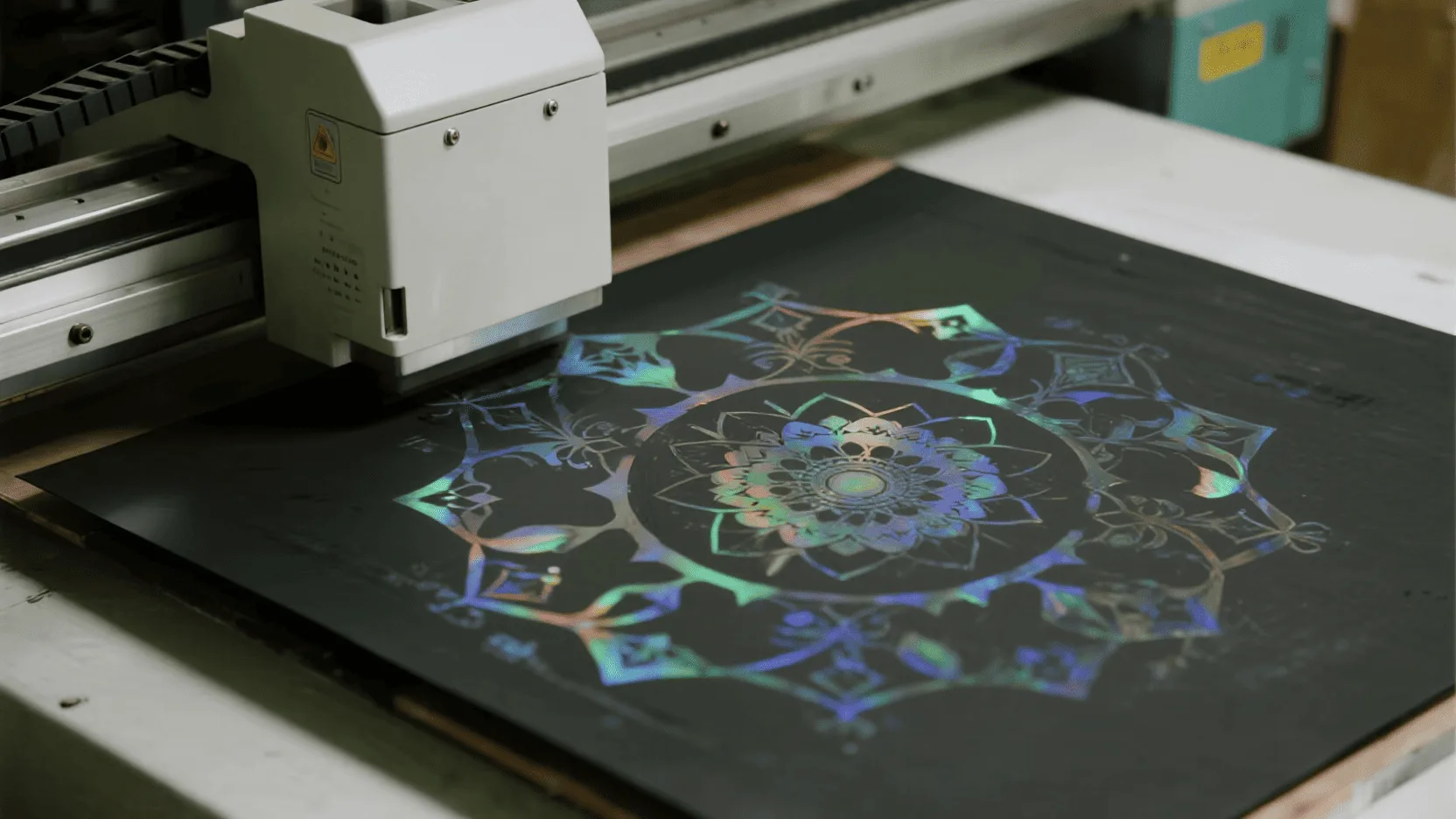
The days of being limited to off-the-shelf holographic patterns are ending. The rise of advanced digital printing technologies is a revolution for custom packaging. Unlike traditional offset printing, which requires huge order volumes to be cost-effective, digital printing makes short, customized runs affordable. This means brands can now create their own bespoke holographic patterns. Instead of a standard rainbow, imagine a holographic effect composed of your brand’s micro-logo or a signature geometric pattern that shifts in the light. This creates a proprietary look that is impossible to replicate and strengthens brand identity. Another key innovation is "selective holography" or "spot holography." This technique allows us to apply the holographic effect to very specific areas of a design, much like a spot UV finish. For example, on a matte black bag, only the brand name and a few key graphic elements could be holographic. This creates a sophisticated, high-contrast look that feels incredibly premium and intentional. These technologies move holographic design from a simple material choice to a true art form.
Conclusion
The future of holographic paper bags is bright and full of potential. Innovations in sustainable materials, interactive smart technology, and advanced custom printing will transform them from a simple trend into a powerful, multi-functional tool for building modern brands.
Ready to explore how these future-forward innovations can elevate your packaging strategy? Contact our team today to discuss the possibilities.
Explore our full range of innovative paper box solutions to complement your bags.
FAQ
1. Are these new eco-friendly holographic materials much more expensive?
While some new materials may have a slightly higher upfront cost than traditional plastic-laminated versions, the price gap is narrowing quickly as technology scales. Many brands find the return on investment in customer loyalty and positive brand perception far outweighs the minor cost difference.
2. How complex is it to add AR or NFC to our packaging?
It’s becoming simpler than ever. Many specialized agencies and packaging partners, like us, can manage the technical side for you. The brand’s main role is to decide on the digital experience you want to provide to your customers, while we handle the implementation.
3. Which innovation—sustainability, smart tech, or custom printing—should my brand prioritize?
This depends entirely on your brand’s core values and goals. If your brand has a strong environmental commitment, sustainability is non-negotiable. If you’re a tech or youth-focused brand, smart features offer the most engagement. For luxury brands, custom printing provides the exclusivity you need.