
You want your brand’s packaging to look premium, but you’re worried about the environmental impact. Traditional glossy, glittery wrapping paper feels festive but often ends up in a landfill, creating waste that conflicts with modern consumer values.
White kraft wrapping paper is the superior choice for modern brands because it delivers a trifecta of benefits: exceptional sustainability, a versatile canvas for custom branding, and superior strength for a premium unboxing experience. Its clean appearance also makes it particularly effective for fashion, cosmetics, giftware, and e-commerce brands that want to combine modern aesthetics with responsible packaging.

I’ve seen packaging trends come and go over the last decade, but the shift toward sustainability is the most powerful and permanent change I’ve witnessed. I remember when clients would come to our factory demanding the glossiest, most foil-stamped wrapping paper possible. Flashiness was the goal. Today, the conversation has completely changed. A client in the organic skincare industry recently told me, "I can’t put my natural products in a plastic-coated paper. It sends the wrong message." She was right. We switched her entire gift packaging line to a custom-printed white kraft paper, and her customers noticed immediately. The positive feedback was overwhelming. This experience showed me that choosing the right material isn’t just a technical decision; it’s a core part of building a brand that people trust.
How Does White Kraft Paper Champion Environmental Responsibility?
You know that tons of wrapping paper get thrown away every holiday, but you’re not sure which materials are the real culprits. Choosing the wrong one can associate your brand with wastefulness, undermining your sustainability efforts.
White kraft paper is inherently eco-friendly when sourced and finished responsibly because it is recyclable, biodegradable, and can be sourced from sustainably managed forests. Unlike traditional gift wrap laden with plastic, glitter, and complex composite materials, an appropriately designed kraft paper wrap can maintain a much cleaner end-of-life pathway.
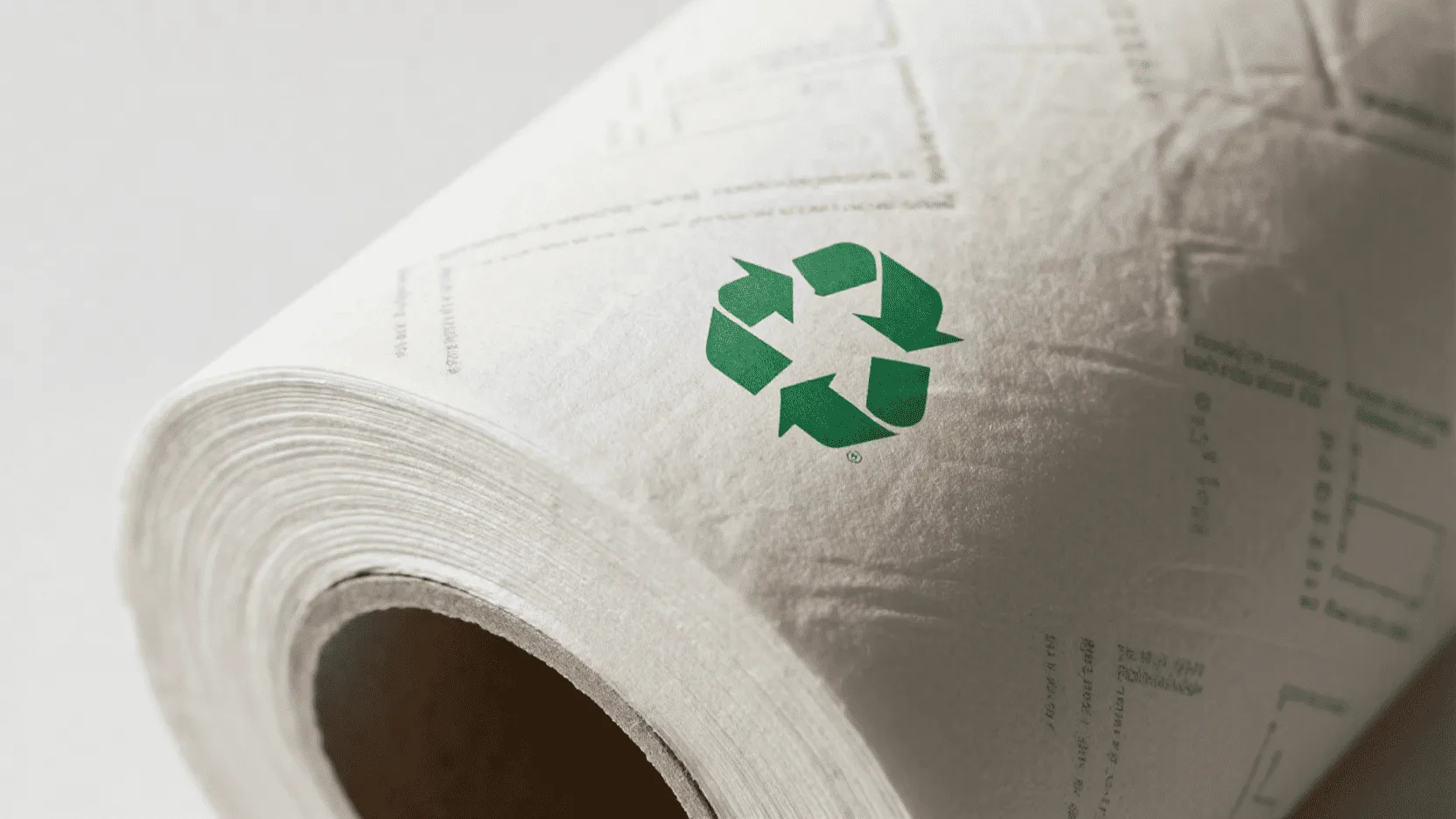
The sheer amount of waste generated by conventional wrapping paper is staggering. Many people don’t realize that the moment you add glitter, metallic foil, or a glossy plastic coating to paper, recycling can become more difficult or impossible in some local systems. It’s destined for the landfill. In the UK alone, it’s estimated that enough wrapping paper is thrown out each year to circle the globe nine times Source: GWP Group. As a manufacturer, this is a problem my team and I are committed to solving.
This is why we champion materials like white kraft paper. It encourages a move away from the "single-use" mindset toward a more circular approach. When a customer receives a package wrapped in our white kraft paper, they can admire the beautiful print, easily unwrap their gift, and, where accepted by their local recycling system, place the paper in the recycling stream.
The Problem with Conventional Gift Wrap
Traditional wrapping paper is often a composite material. It’s paper bonded with non-paper elements that make it appealing but also problematic.
- Plastic Lamination: That glossy finish comes from a thin layer of plastic, which must be separated from the paper fiber. Many municipal recycling facilities cannot process these composite materials.
- Foil and Metallic Finishes: Depending on the type and amount used, these materials can complicate paper recycling and act as contaminants in some recycling processes.
- Glitter: Glitter is typically made from plastic and can introduce microplastic particles into the environment when discarded.
- Heavy Coatings: Full-surface coatings and varnishes can make otherwise recyclable paper more difficult for recycling systems to process.
The Kraft Paper Advantage1
White kraft paper, by contrast, maintains the fundamental paper fiber structure. It gets its strength from a production process that uses long wood fibers, resulting in high tear resistance. The "white" version is bleached, but modern environmentally-conscious processes can be used. Most importantly, a paper-based, mono-material construction provides a strong foundation for recyclability.
At Omet Packaging, we ensure our kraft paper is sourced from FSC-certified forests, guaranteeing it comes from responsibly managed sources.
Biodegradability and a Clean End-of-Life
Beyond just being recyclable, untreated kraft paper is also biodegradable and compostable. If it accidentally ends up in the natural environment, it will break down far more readily than persistent plastic films. This cleaner end-of-life profile provides peace of mind for both brands and their customers.
However, sustainability does not stop with the paper itself. Printing methods, coatings, foils, and other finishes should also be considered. Choosing recyclable or water-based finishes and using decorative treatments selectively can help brands maintain the balance between premium appearance and environmental responsibility.
Why is White Kraft the Perfect Canvas for Your Brand’s Identity?
You need your packaging to stand out, but flashy, generic designs feel cheap and don’t represent your brand’s quality. You’re looking for a solution that feels premium and can be customized to tell your unique story.
White kraft paper offers a clean, bright, and versatile surface that makes custom designs pop. Its minimalist, high-end aesthetic acts as a perfect "blank canvas," allowing your branding to take center stage without distraction.
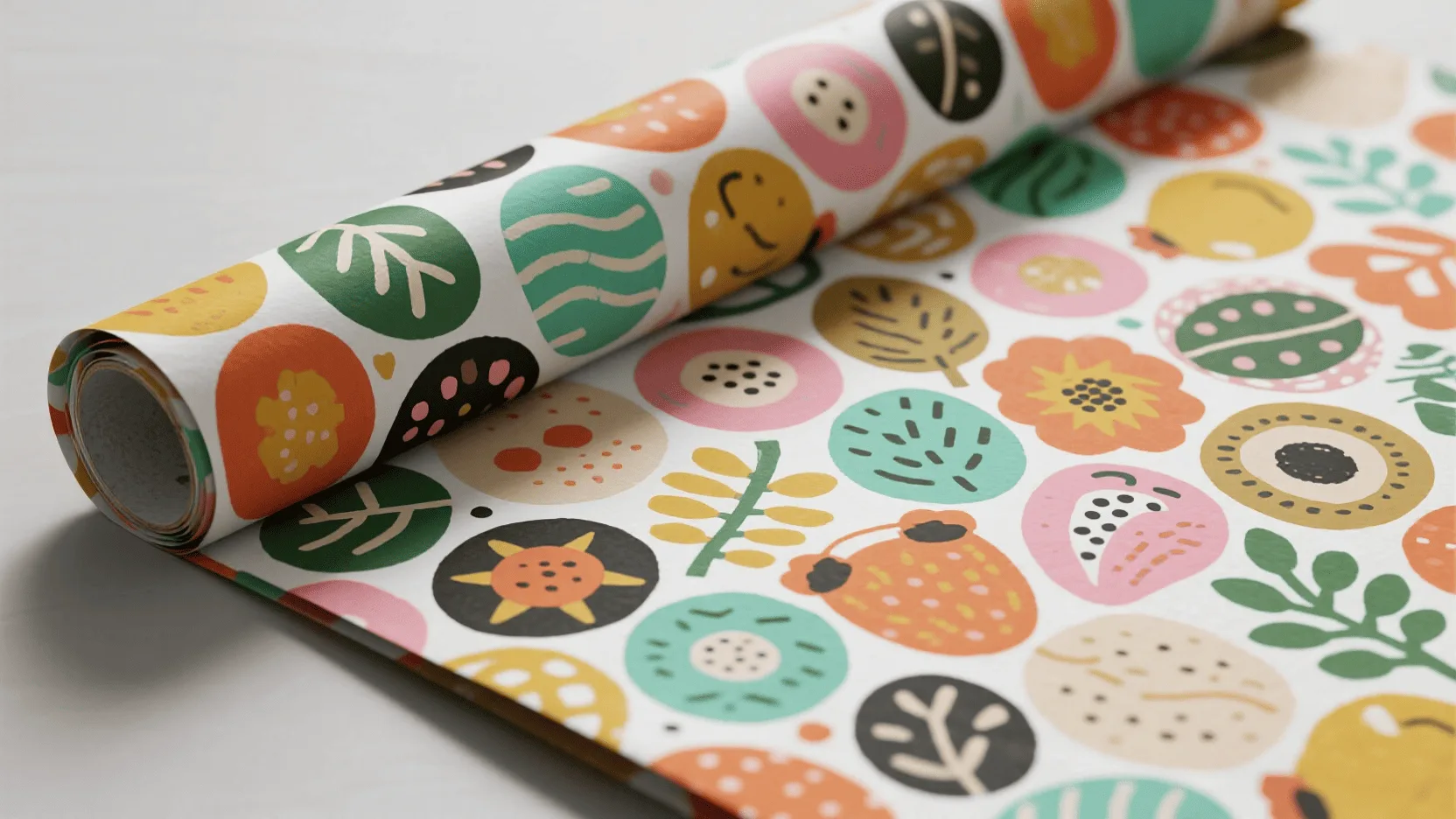
I once worked with a jewelry designer who was launching her first e-commerce store. She had beautiful, intricate designs, but her initial packaging idea was a busy, metallic-patterned paper. During our consultation, I laid a piece of her jewelry on that paper, and then on a simple sheet of our white kraft paper. The difference was immediate. On the patterned paper, her jewelry got lost. On the clean white background, her design was the hero.
We ended up printing a delicate, custom pattern using her brand’s logo on our wrapping paper. The final product looked incredibly sophisticated and let her craftsmanship shine. This is the power of white kraft; it doesn’t compete with your product, it complements it. It communicates quality and confidence.
Superior Print Quality and Color Vibrancy
Unlike the porous, brown surface of natural kraft, white kraft paper1 provides a smooth, bright base that is highly suitable for high-quality printing.
- Sharp Lines: Logos, text, and intricate patterns can be rendered with crisp, clean edges.
- True Colors: The bright white background provides a neutral base for accurate reproduction of brand colors and Pantone shades.
- Full Coverage: It is suitable for everything from a simple one-color logo repeat to a full-color, edge-to-edge custom design.
- Detailed Graphics: The smooth surface can reproduce small text, fine patterns, and detailed illustrations with strong clarity.
High-Fidelity Printing Methods
Choosing the right printing method depends on your design, quantity, budget, and required color accuracy.
- Offset Lithography: This is the preferred choice for high-volume commercial printing. It uses printing plates to deliver exceptionally sharp images and precise color matching, including specific Pantone colors. It becomes increasingly cost-effective for large production runs.
- Digital Printing: Ideal for short runs, limited editions, personalized designs, or businesses that do not want high plate setup costs. It applies ink directly to the paper and provides greater flexibility for smaller quantities.
- Flexography: More commonly used for large-scale production and simpler designs, particularly one- or two-color patterns. It offers high-speed and efficient production when complex photographic detail is not required.
For example, a large cosmetics company producing hundreds of thousands of holiday wraps may benefit from offset printing because of its consistent color reproduction and lower unit cost at scale. A small e-commerce boutique producing only a few hundred sheets for a limited edition may find digital printing more practical.
The Power of Minimalist Aesthetics
In a world of visual noise, minimalism is a statement of luxury. White space is elegant and draws the eye to what’s important: your brand and your product.
A white kraft wrap communicates a modern, clean, and often eco-conscious brand ethos that resonates strongly with today’s consumers. It feels intentional, not generic. This makes it particularly effective for luxury jewelry, fashion, cosmetics, organic skincare, and premium gift brands.
Customization Beyond Printing
The versatility of white kraft paper extends beyond printing. Its simple elegance pairs beautifully with other branding elements. You can enhance the look with:
- Custom-printed paper stickers instead of plastic tape.
- Natural twine or branded ribbon.
- A custom gift tag with a handwritten note.
- Hot foil stamping for metallic accents.
- Embossing or debossing for a tactile logo or pattern.
- Spot UV for controlled gloss and contrast.
How Can Special Finishes Elevate White Kraft Paper?
Your standard printed wrap looks good, but it lacks that "wow" factor. You want to create a multi-sensory experience that customers can see and feel, without abandoning the clean aesthetic of kraft paper.
Special finishes like hot foil stamping, embossing, and Spot UV can transform white kraft paper from a simple wrap into a tactile luxury experience. These techniques add texture, shine, and depth, significantly increasing the perceived value of the packaging.
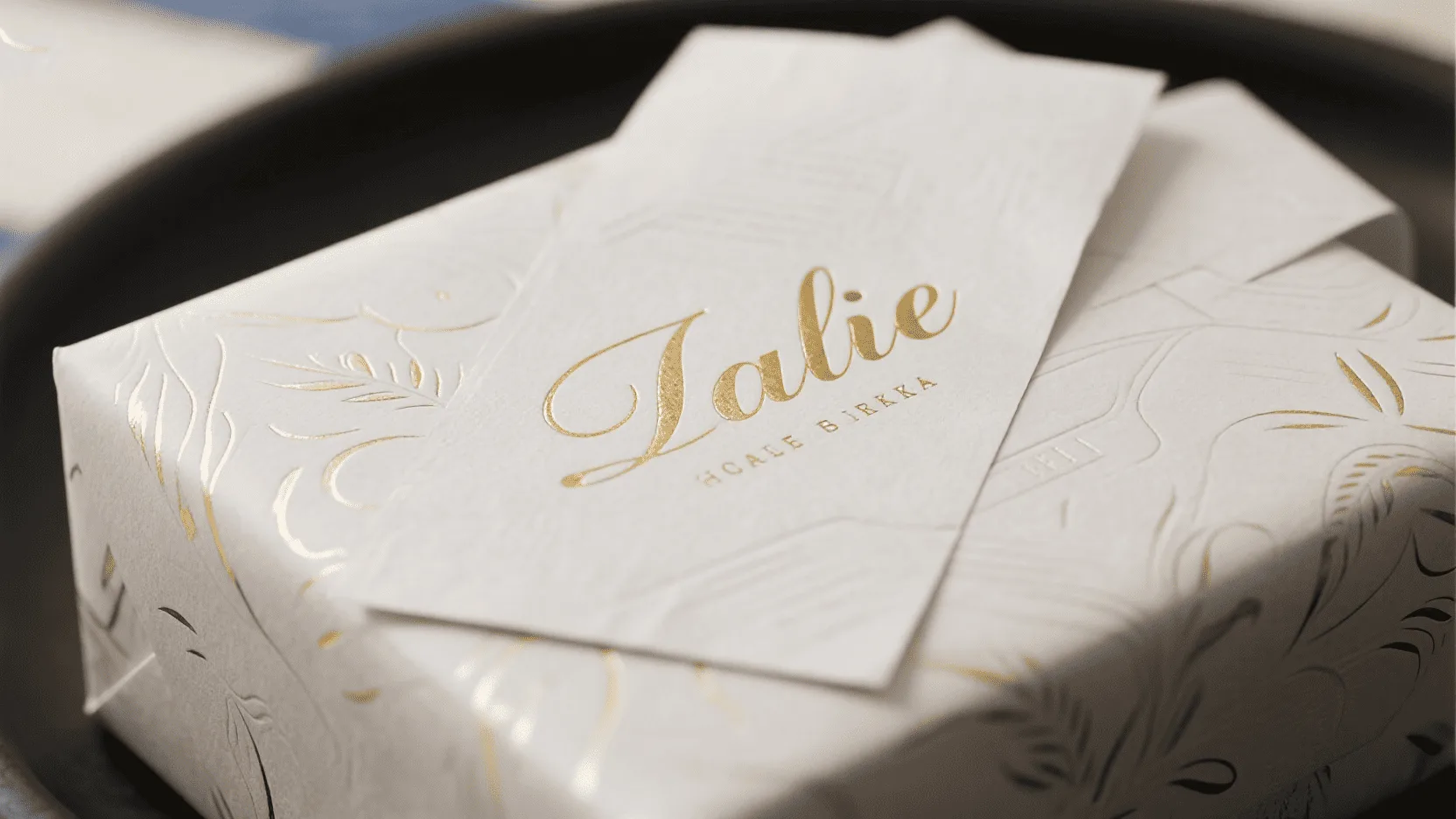
The difference between a nice package and a luxury package often comes down to texture. It’s the feeling a customer gets when they run their hand over a raised logo or see a flash of metallic gold.
One of the most effective combinations I’ve seen was for a high-end chocolatier. We designed a wrap using a deep cocoa-colored ink on white kraft paper. Then, we used subtle embossing to create a pattern of cocoa pods across the sheet and finished it with the brand’s name stamped in copper foil. The final product wasn’t just visually appealing; it was an experience. You could feel the texture of the pods and see the warm gleam of the copper. It communicated the artisan quality of the chocolate before the box was even opened.
Adding a Tactile, Premium Dimension
These finishes engage the sense of touch, making the unboxing process more memorable and interactive.
- Hot Foil Stamping2: This process uses heat and pressure to apply a thin layer of metallic or pigmented foil to the paper. Gold, silver, rose gold, copper, and other finishes can add a brilliant reflective accent that signals luxury.
- Embossing & Debossing3: Embossing creates a raised 3D effect, while debossing creates an indented impression. Both add an elegant tactile element that works particularly well for logos, monograms, and subtle patterns.
- Spot UV: A Spot UV coating applies a high-gloss clear finish to a specific area. This creates contrast between the matte paper and glossy elements, allowing logos or patterns to stand out without covering the entire sheet.
| Finishing Technique | Visual Effect | Tactile Sensation | Best For |
|---|---|---|---|
| Hot Foil Stamping | Bright, metallic, reflective | Smooth, flat | Luxury branding, logos, accents |
| Embossing | Raised, 3D pattern | Textured, raised surface | Monograms, subtle patterns, logos |
| Debossing | Indented, understated | Recessed texture | Minimalist logos, premium patterns |
| Spot UV | High-gloss, wet look | Smooth, slick surface | Creating visual contrast, highlighting details |
Does Customization Compromise the Eco-Friendly Nature of White Kraft Paper?
You’re committed to sustainability, but you’re worried that adding foils and varnishes will make your beautiful wrapping paper non-recyclable. You’re caught between your desire for a premium look and your brand’s promise to be environmentally responsible.
Not necessarily. While some traditional finishes can pose recycling challenges, sustainable options are available. Embossing and debossing add no additional coating materials, while carefully selected recyclable foils and water-based varnishes can help brands achieve a premium appearance with a more responsible packaging approach. Final recyclability still depends on the exact construction and the capabilities of local recycling systems.
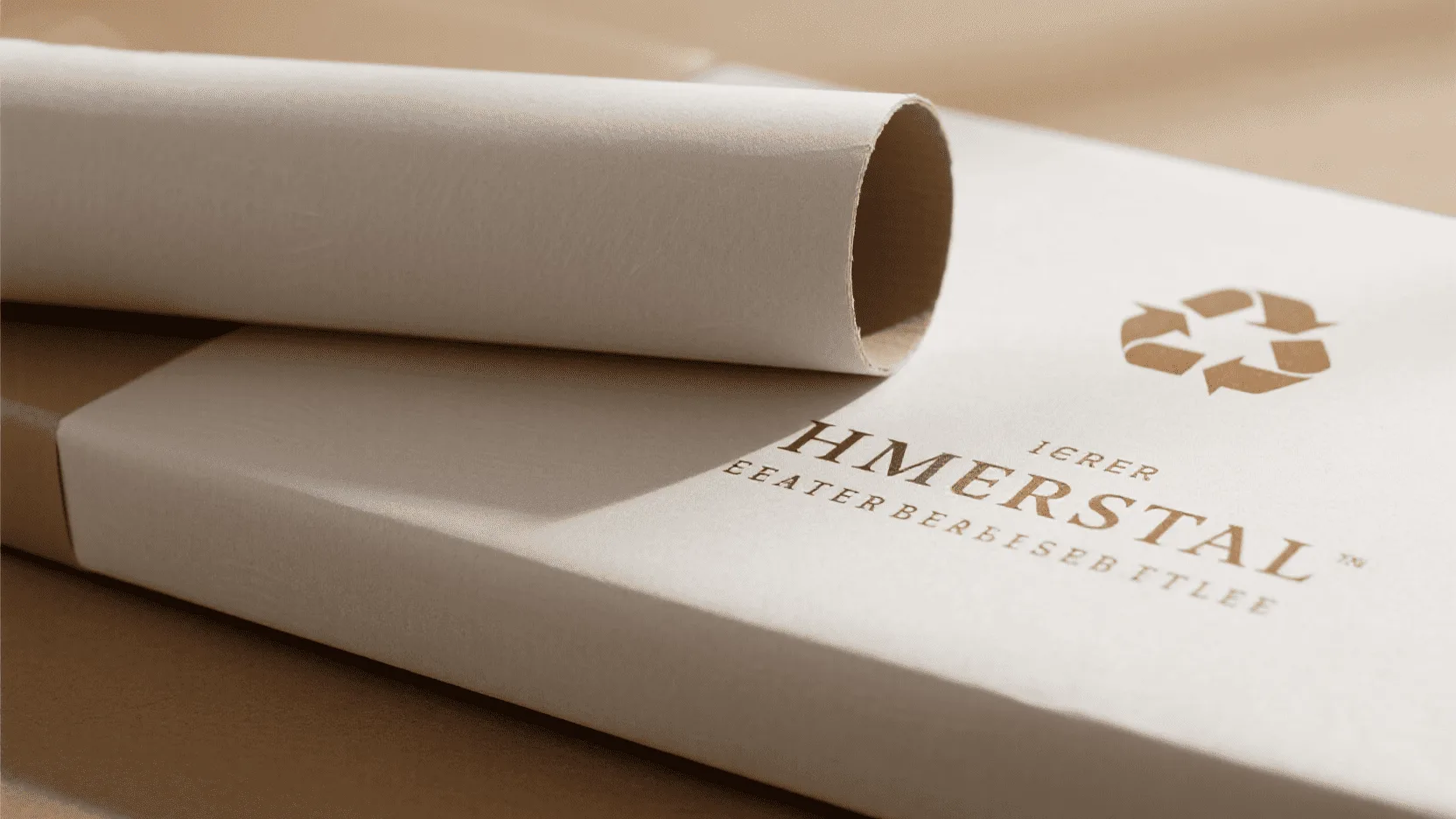
This is a critical conversation, and one I frequently have with brand owners. The fear of "greenwashing" is very real. A client in the organic personal care space once asked me, "What’s the point of using FSC-certified paper if I add a finish that sends it straight to the landfill?" It’s a valid question.
The answer lies in making informed choices. Instead of treating luxury and sustainability as mutually exclusive, brands can choose finishes based on how they interact with recycling systems and how much material is actually required.
Balancing Aesthetics and Responsibility
Achieving a high-end look doesn’t have to come at an environmental cost.
- Embossing as a Structural Finish: Since embossing and debossing reshape the paper rather than adding a separate decorative material, they are among the most straightforward options for maintaining a paper-based construction.
- Modern, Recyclable Foils: Some newer foil technologies are designed with improved compatibility with recycling processes. Brands should confirm the specific foil and recycling requirements with their packaging supplier.
- Water-Based Varnishes: Water-based varnishes can provide protective or aesthetic effects in gloss or matte while offering an alternative to some conventional coatings.
- Use Finishes Strategically: A small foil-stamped logo or selective Spot UV treatment can create a premium effect without covering the entire sheet in additional materials.
- Consider the Local Recycling System: "Recyclable" should always be evaluated according to the actual material construction and the recycling infrastructure available in the target market.
This approach allows brands to maintain the visual and tactile qualities of luxury packaging while making more responsible material decisions.
Is White Kraft Paper Strong and Versatile Enough for Your Products?
You love the look and sustainability of white kraft, but you’re worried it might be flimsy. You can’t risk your products arriving with torn or punctured wrapping, as that would ruin the customer’s first impression.
Absolutely. White kraft paper is engineered for strength and durability. Its long-fiber composition gives it exceptional tear resistance, making it a reliable and versatile choice for wrapping a wide range of products, from delicate apparel to heavy gift boxes.

One of our clients, a high-end online gift box company, used to use very thick, laminated paper. They switched to a heavy-grammage white kraft paper to improve their sustainability credentials. They were nervous at first, so we ran a few tests in our facility. We wrapped their heaviest items and put them through a simulated shipping test, tumbling and dropping the boxes.
The white kraft paper held up well, resisting punctures and tears. What surprised them most was the feedback from their fulfillment team. They said the kraft paper was easier to work with because it folded more crisply and held its shape better, making their wrapping process faster and the final product look neater. It was a win for sustainability, durability, and operational efficiency.
The Strength Behind the Paper
The term "kraft" literally means "strength" in German. The kraft pulping process4 results in paper with long, interlocked fibers, which contributes to its durability compared to standard papers made through other pulping methods.
This inherent tensile strength means it can withstand handling and shipping without easily ripping or tearing. For particularly heavy products or packages with sharp corners, choosing a higher grammage is recommended.
The Superior Wrapping Experience
Professionals who wrap gifts all day appreciate working with high-quality materials. White kraft paper is not brittle. It has excellent fold memory, meaning it creates sharp, clean creases for a professional-looking package.
It is pliable enough to handle odd shapes but sturdy enough not to tear easily at the corners, which is a common frustration with cheaper, thinner wrapping papers. This ensures that the beautiful package you send out from your facility is the same beautiful package the customer receives.
Which Industries Benefit Most from White Kraft Wrapping Paper?
White kraft paper is particularly effective when packaging needs to communicate quality, cleanliness, sustainability, and thoughtful presentation at the same time.
Fashion and Apparel
In fashion, the unboxing experience is often the first physical interaction a customer has with the brand.
White kraft paper protects garments with its smooth, snag-free surface and durable strength while providing a sophisticated backdrop that makes the clothing the hero.

Fashion items such as fine-knit cashmere and delicate silk require packaging that won’t easily catch or pull threads.
- Minimalist Elegance: A simple logo or subtle pattern can create a sophisticated presentation.
- Snag-Free Surface: A smooth paper surface can glide over fabrics without catching delicate threads.
- Durability: Tear-resistant wrapping provides an additional layer of protection against dust and scuffs during handling and transit.
- Sustainable Positioning: Recyclable paper packaging helps fashion brands demonstrate a more responsible approach to packaging.
Cosmetics and Beauty
Cosmetics and skincare products often depend on visual signals of cleanliness, purity, and quality.
White kraft paper is ideal for cosmetics because its clean appearance mirrors the purity of the products, while its smooth print surface supports sharp branding and legible product information.

The clean, natural, and tactile feel of the paper can reinforce a brand’s positioning around natural ingredients and responsible materials.
For cosmetics and beauty brands, white kraft is especially useful for:
- Hygienic Appearance: The bright white color conveys cleanliness and purity.
- Natural Texture: The paper-based feel aligns well with natural and plant-based product positioning.
- High-Fidelity Graphics: Fine text, logos, ingredient information, and instructions can be reproduced with strong clarity.
- Brand Consistency: Custom-printed wrapping paper can complement the wider cosmetic packaging system.
| Feature | White Kraft Paper | Standard Colored Tissue Paper |
|---|---|---|
| Brand Perception | Premium, clean, minimalist | Standard, less luxurious |
| Print Quality | Excellent for fine details | Good, but can bleed or be less sharp |
| Durability | High tear resistance | Prone to tearing easily |
| Sustainability | Easily recyclable when appropriately designed | Depends on dyes, coatings, and local recycling systems |
Gift Shops and E-commerce Boutiques
Boutiques and gift shops often carry diverse products, from candles and books to gourmet foods and accessories. Using different packaging for every product can make the overall brand experience inconsistent.
White kraft paper creates a cohesive, cost-effective branded unboxing experience that can make almost any product feel intentionally packaged and gift-ready.

The rise of unboxing content has also turned packaging into a marketing channel. A consistent, recognizable wrap can encourage customers to photograph and share their purchases, creating additional brand exposure.
Creating a Signature Unboxing Experience
For e-commerce brands, the package may be the first major physical touchpoint with the customer.
- Brand Recognition: A custom-printed wrap creates an immediate visual connection with your brand.
- Perceived Value: High-quality wrapping makes the purchase feel more valuable and thoughtfully prepared.
- Social Sharing: A distinctive presentation can encourage customers to share unboxing photos and videos.
- Consistency: One custom wrapping paper design can unify many different products under the same visual identity.
Versatility Across Diverse Inventory
White kraft paper provides a consistent branding element that ties together a diverse product range.
It can also be adapted to different positioning:
- Pair it with silk or satin ribbon for luxury products.
- Use natural twine for artisan or handmade products.
- Add custom gift tags & stickers for a personalized presentation.
- Combine a minimalist logo with white space for modern premium brands.
- Add foil, embossing, or selective gloss effects when a more luxurious finish is required.
How Does White Kraft Compare with Traditional Wrapping Paper?
| Feature | White Kraft Wrapping Paper | Traditional Glossy/Foil Paper |
|---|---|---|
| Material Structure | Primarily paper-based | May contain plastic, foil, glitter, or multiple coatings |
| Print Surface | Smooth, bright, non-porous | Coated, reflective, can be uneven |
| Color Accuracy | Excellent, true-to-brand colors | Colors can be affected by gloss or metallic effects |
| Brand Aesthetic | Minimalist, modern, premium | Often generic, flashy, or trend-dependent |
| Customization | Highly versatile for custom designs | Often based on stock patterns |
| Durability | High tear resistance | Varies by construction |
| Recyclability | Strong potential when appropriately designed | Can be limited by coatings and mixed materials |
| Premium Finishes | Foil, embossing, debossing, Spot UV | Often relies heavily on coatings and decorative effects |
Conclusion
Choosing white kraft wrapping paper is no longer a compromise; it is an upgrade. It allows your brand to align with modern consumer values of sustainability, project a premium and confident brand image, and deliver a durable, high-quality unboxing experience.
More importantly, white kraft is not limited to one particular aesthetic. The same clean material can support a minimalist fashion brand, a natural skincare company, a luxury jewelry designer, an artisan gift shop, or an e-commerce boutique. With the right printing method and carefully selected finishing techniques, it can move from simple and understated to highly luxurious without losing its fundamental paper-based appeal.
The smartest approach is to treat white kraft paper as a flexible branding platform rather than simply a wrapping material. Choose the right grammage for your products, select offset or digital printing according to your order requirements, and use finishes such as embossing, foil stamping, or Spot UV strategically.
Ready to elevate your brand’s wrapping experience? Explore our custom wrapping paper solutions or contact us to discuss your project.
Learn more about building a complete sustainable packaging suite with our guide on How to Create an Unforgettable Unboxing Experience.
FAQ
Is white kraft paper made from 100% recycled materials?
It can be, but it is often made from virgin wood fibers when brands require a bright white appearance and high strength. The key is to source paper responsibly, such as from FSC-certified forests. White kraft paper itself can be recyclable, although the final recyclability depends on its coatings, inks, finishes, and local recycling system.
Can you print vibrant, full-color designs on white kraft paper?
Yes, absolutely. The smooth, bright white surface is an excellent base for full-color CMYK printing as well as simple one-color logos. Offset printing is particularly suitable for high-volume orders requiring precise color matching, while digital printing offers flexibility for shorter runs and personalized designs.
What printing method is best for white kraft wrapping paper?
It depends on your quantity and design. Offset printing is generally the best choice for large production runs because it offers excellent color consistency and a lower unit cost at scale. Digital printing is more suitable for short runs, limited editions, and personalized designs. Flexography can be efficient for large-volume, simpler one- or two-color patterns.
Can white kraft paper have luxury finishes like foil stamping and embossing?
Yes. White kraft paper is an excellent base for hot foil stamping, embossing, debossing, and Spot UV. These techniques can add metallic shine, tactile depth, and visual contrast, allowing sustainable paper packaging to achieve a distinctly luxurious appearance.
What is the difference between embossing and debossing?
Embossing creates a raised pattern on the paper’s surface, pushing the design upward. Debossing is the opposite; it creates an indented pattern by pressing the design into the paper. Both add a sophisticated tactile element and are especially effective for logos, monograms, and subtle patterns.
Does adding foil or varnish make white kraft paper non-recyclable?
Not necessarily, but the specific finish matters. Embossing and debossing add no separate coating material. Some modern foils and water-based varnishes are designed to provide a more responsible alternative to conventional finishes. However, recyclability should always be confirmed based on the exact packaging construction and the recycling requirements of the target market.
Is white kraft wrapping paper strong enough for heavy or sharp-cornered items?
Yes. Kraft paper’s long-fiber composition gives it strong tear resistance. For heavier products or boxes with sharp corners, a higher grammage should be selected to provide additional durability and protection.
Is white kraft paper suitable for fashion and delicate fabrics?
Yes. Its smooth surface can be used to wrap apparel such as silk, cashmere, and other delicate garments without the snagging associated with rougher materials. Its fold memory also helps create neat, professional presentation inside shipping boxes.
Is white kraft paper suitable for cosmetics and skincare products?
Yes. Its clean white appearance works particularly well with beauty and skincare brands that want to communicate purity, natural materials, and quality. Its smooth print surface is also suitable for detailed logos, product information, instructions, and other small text.
Is white kraft paper food-safe for wrapping edible gifts?
Untreated, 100% virgin kraft paper can be suitable for certain food-contact applications, but food safety must be verified with the manufacturer for the specific grade of paper. If custom inks or other finishes are used and the material will directly contact food, the inks and finishes must also meet the applicable food-contact requirements.
Can small businesses afford custom-printed white kraft paper?
Yes. Digital printing has made short-run custom packaging more accessible because it avoids some of the setup costs associated with traditional plate-based printing. For larger quantities, offset printing can provide a lower unit cost. Minimum order quantities and pricing will vary depending on the paper specification, printing method, size, and finishing requirements.
Is white kraft wrapping paper more expensive than traditional gift wrap?
The cost depends on the grammage, order quantity, printing method, and finishing. Very inexpensive traditional gift wrap may have a lower upfront price, but white kraft paper can provide greater value through stronger brand presentation, durability, customization, and a more responsible material profile.
-
Explore the advantages of kraft paper, including its recyclability and eco-friendliness, to make informed choices for sustainable gifting. ↩ ↩
-
Explore how Hot Foil Stamping enhances packaging with luxury finishes, making products stand out. ↩
-
Discover the advantages of Embossing & Debossing in design, adding texture and elegance to your branding. ↩
-
Understanding the kraft pulping process can enhance your knowledge of paper durability and its applications. ↩