How to Design a Cake Box for Safe Delivery: A Complete Guide to Cake Packaging Protection
Your beautiful cakes keep arriving damaged, leading to customer complaints, refunds, and wasted production costs. You’ve invested time and skill into creating the perfect cake, only to have it ruined during the final step of the delivery journey.
The solution is engineered cake packaging. A well-designed cake shipping box combines strong corrugated construction, precision-fit inserts, secure closures, reinforced handles, and clear handling instructions to protect cakes from crushing, shifting, vibration, and accidental impacts during last-mile delivery.
For bakeries, cake shops, and online cake businesses, packaging is no longer just a container. It is part of the delivery system.
I once got a call from a new client who specialized in elaborate wedding cakes. Her first major e-commerce order was a multi-tiered anniversary cake, but it arrived looking like it had been through a tumble dryer. The box had crushed, the cake layers had shifted, and the icing was badly damaged.
She initially thought the courier was the problem. Instead of changing the courier, we changed the packaging.
We moved from a standard paperboard box to a reinforced corrugated cake shipping box with a custom insert that locked the cake base in place. The change was relatively simple, but it dramatically improved the delivery result.
That experience demonstrated an important principle:
For delicate products, a cake box is not simply a container. It is a protective packaging system designed to control movement, absorb impact, and maintain product presentation throughout delivery.
What Makes a Cake Box Strong Enough for Shipping?
You may assume that choosing thicker or heavier cardboard is enough to prevent cake damage. However, material thickness alone does not determine whether a cake box can survive shipping.
The best cake shipping boxes rely on structural engineering rather than thickness alone. The combination of appropriate paperboard or corrugated board, box geometry, reinforced edges, a strong base, and suitable internal support determines how well the packaging performs during transportation.
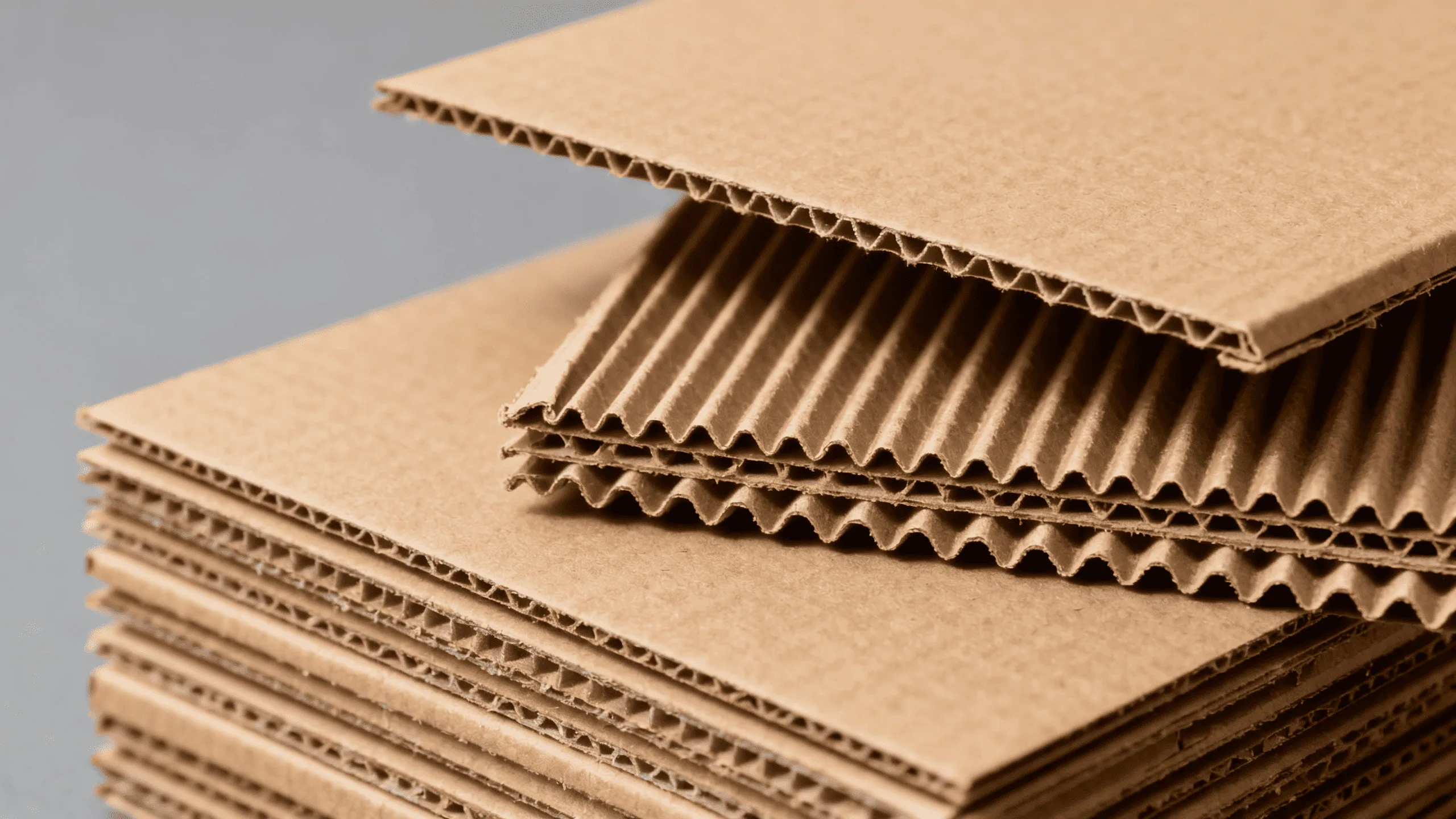
During delivery, a cake box can experience several different forces:
- Compression: Weight from other packages can press down on the box.
- Vibration: Continuous movement inside delivery vehicles can cause the cake to shift.
- Shock: Dropping or sudden impacts can damage both the box and the cake.
- Side pressure: Packages may press against the box from different directions.
- Tilting: A cake can slide or topple if the internal structure does not keep it centered.
A thick paperboard box may feel strong when you hold it, but shipping requires more than static strength. Corrugated board is particularly effective because its fluted inner layer sits between linerboards to create a lightweight structure with excellent compression and impact resistance.
This makes corrugated construction especially suitable for cake delivery boxes, wedding cake shipping boxes, custom bakery boxes, and other food packaging that must withstand transportation.
Material Strength and Paperboard Grade
The strength of a cake box begins with its material.
Paper weight is commonly measured in grams per square meter (GSM). A higher GSM1 generally means more material, but GSM should not be used as the only measurement of packaging performance.
For shipping applications, the board structure, flute construction, compression strength, box dimensions, and overall design are equally important.
Smart Structural Design
The physical construction of the box can significantly improve its performance.
Features such as reinforced corners, a strengthened base, locking tabs, and an auto-lock bottom2 can provide greater stability than a basic tuck-in construction.
For heavier cakes, the bottom structure is particularly important because the entire product weight is concentrated on the base during lifting and transportation.
Which Cake Box Material Is Best for Shipping?
The ideal material depends on the cake size, weight, delivery distance, and handling conditions.
| Material Type | Best Use Case | Key Strength Feature |
|---|---|---|
| SBS Paperboard | In-store pickup, lightweight cakes | Smooth, premium printing surface |
| Kraft Paperboard | Lightweight to medium cakes, local delivery | Good tear resistance and natural appearance |
| Single-Wall Corrugated | Most shipped cakes and tiered cakes | Strong crush resistance with cushioning |
| Double-Wall Corrugated | Heavy or large tiered cakes | Higher compression strength and protection |
For cakes that will be shipped through parcel carriers, single-wall or double-wall corrugated packaging is generally more appropriate than ordinary folding paperboard.
How Do Custom Cake Box Inserts Prevent Cakes from Sliding?
A strong outer box is only half of the solution. If the cake can move freely inside the packaging, it may still arrive with smeared frosting, damaged decorations, or shifted layers.
Custom-fit cake box inserts prevent internal movement by securing the cake base, separating individual products, and maintaining a controlled gap between the product and the outer box.
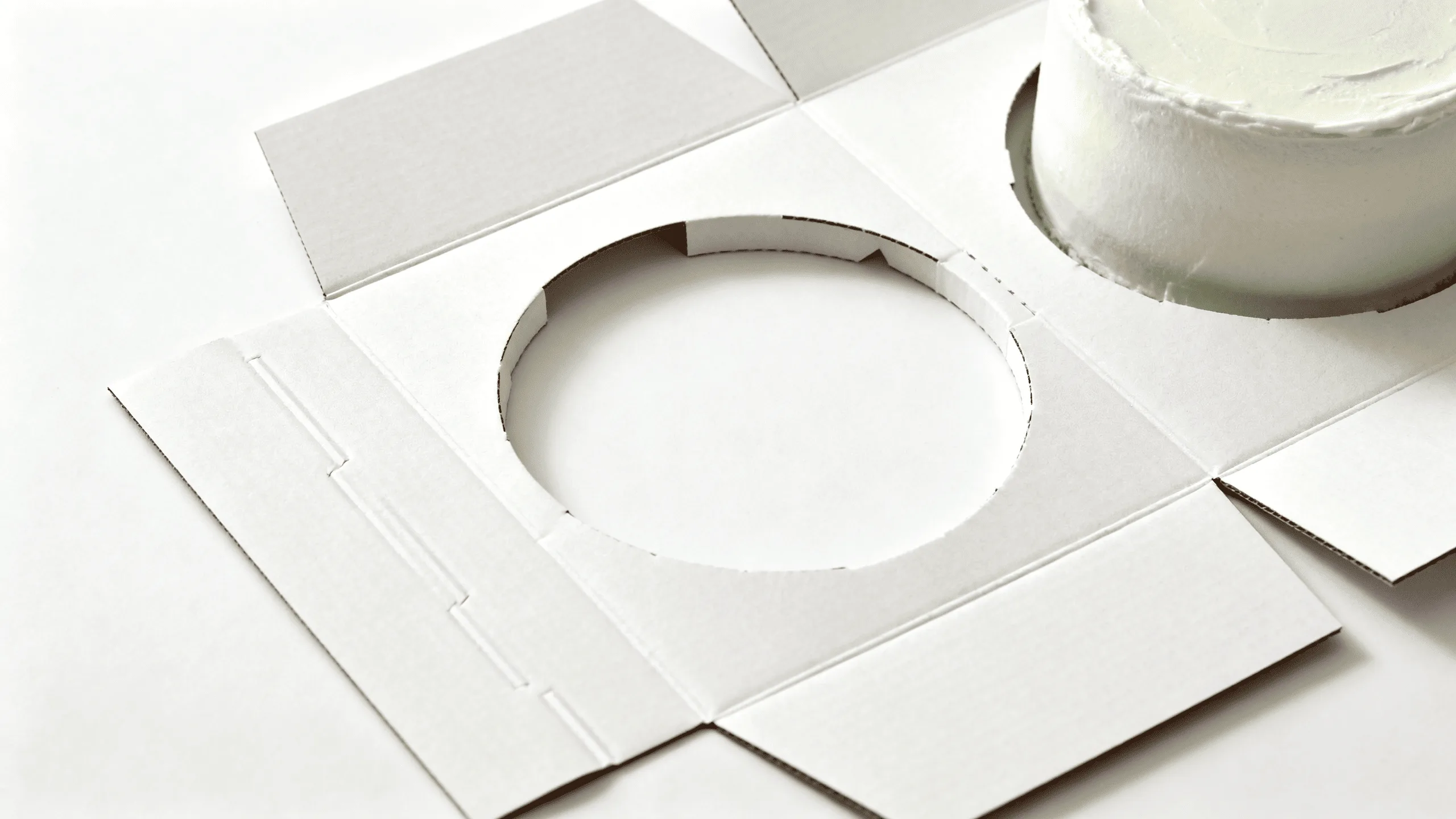
Think of the insert as the internal suspension system of your cake packaging.
Without an insert, the cake can slide whenever the box accelerates, stops, turns, or becomes tilted. Even when the outer box remains completely intact, internal movement can destroy the appearance of the cake.
We once worked with a cupcake company that was experiencing a high damage rate when shipping boxes of cupcakes. The cupcakes would shift during transportation and collide with each other, leaving frosting smeared across the packaging.
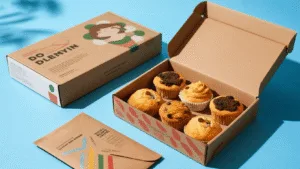
The solution was a die-cut corrugated insert with precisely positioned circular openings. Each cupcake was held in its own compartment, significantly reducing movement during transportation.
This demonstrates why custom inserts are particularly valuable for cupcakes, macarons, individual cakes, mini cakes, and decorated bakery products.
How Should a Cake Box Insert Fit?
The most important characteristic of an insert is precision.
The opening or support area should be large enough to allow the product to be placed inside without damaging the cake, but tight enough to prevent excessive movement.
This requires accurate product measurements and professional die-cutting. Precise measurements1 are especially important when designing packaging for irregular cake shapes or products with delicate decorations.
Before producing a custom cake box, manufacturers should consider:
- Cake diameter and height
- Cake board dimensions
- Product weight
- Decoration height
- Clearance between the cake and box walls
- Position of the insert
- Number of internal compartments
- Required ventilation or temperature-control components
Can Cake Box Inserts Improve the Unboxing Experience?
Yes. A well-designed insert can improve both product protection and presentation.
A cake positioned neatly in the center of the box creates a more professional presentation. For cupcakes, macarons, and other small bakery products, individual compartments can also make the products easier to remove without damaging neighboring items.
This means an insert can serve two purposes:
- Logistics: Prevent movement and reduce product damage.
- Marketing: Improve presentation and create a more premium unboxing experience2.
For premium bakeries, this combination can make packaging part of the overall customer experience rather than simply a shipping expense.
What Makes a Cake Delivery Box Easy to Carry and Securely Closed?
Even when the cake is protected by a strong outer box and custom insert, the delivery process can still fail if the box is difficult to carry or easy to open accidentally.
A reliable cake delivery box should combine a secure closure system with a reinforced handle or carrying structure. These features reduce the risk of accidental opening, dropping, and handling damage between the bakery and the customer.
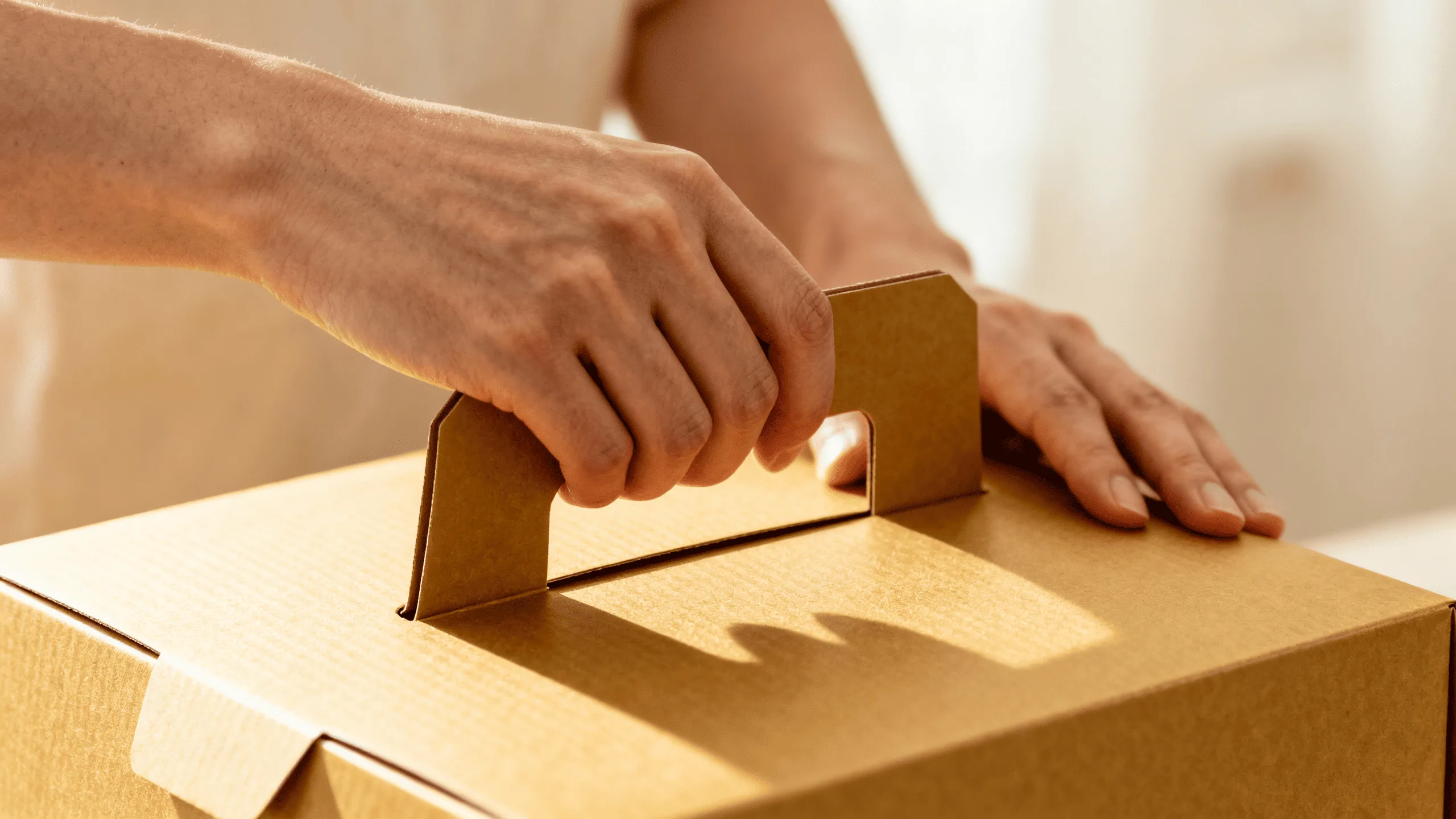
A cake box should be designed for the person carrying it just as carefully as it is designed for the cake inside.
Consider the different people who may handle the packaging:
- Bakery employees moving finished cakes
- Delivery drivers carrying multiple packages
- Customers transporting cakes from a vehicle to their home
- Retail staff handing cakes to customers
A weak handle or loose lid creates unnecessary risk at every stage.
One bakery client was using standard boxes with simple tuck-in lids, but the lids would occasionally come loose during local delivery. We redesigned the closure using side-locking tabs. The change required only a small adjustment to the die-line but provided a significantly more secure closure.
We also developed a wider integrated handle from the same corrugated board. Compared with thin plastic handles, the integrated handle provided a more comfortable carrying experience while keeping the packaging structure consistent.
Which Closure Is Best for a Cake Delivery Box?
Different closure systems work for different applications.
- Locking Tabs1: Provide a mechanical connection that helps prevent accidental opening.
- Ribbon Closures: Suitable for premium bakery and gift packaging where appearance is particularly important.
- Sleeve Designs: Combine an inner tray with an outer sleeve to create additional structural protection and a premium presentation.
- Tuck-In Flaps: Simple and economical, but better suited to short-distance handling or lighter products when additional locking features are unnecessary.
For cakes being shipped through parcel carriers, the closure should be selected based on the expected handling environment rather than appearance alone.
Should Cake Boxes Have Handles?
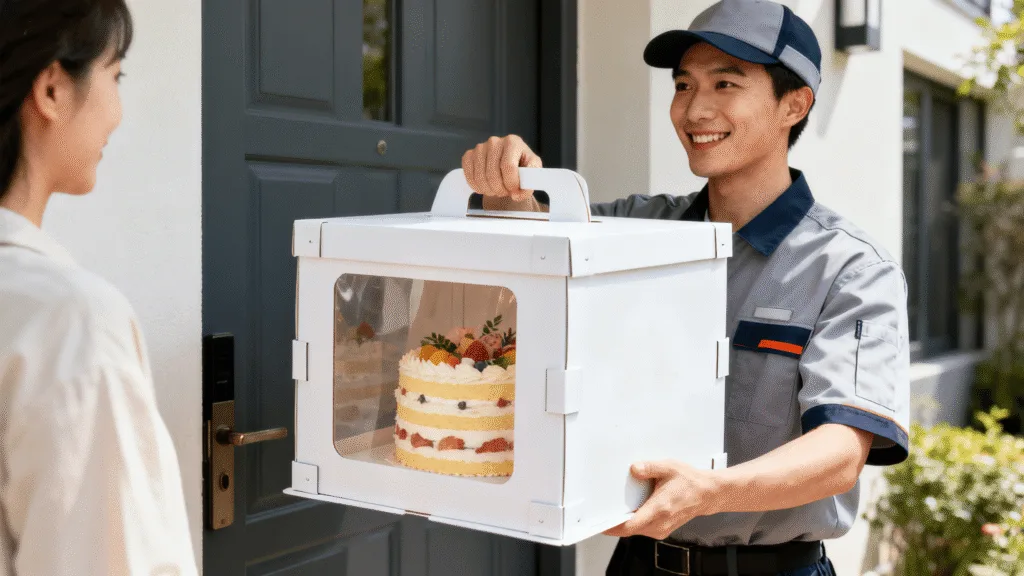
For cakes that customers or delivery staff frequently carry by hand, an integrated handle can improve convenience and reduce handling mistakes.
However, the handle must be structurally connected to the box and strong enough for the loaded weight. A decorative handle that cannot support the cake safely can create more risk than value.
The handle design should therefore be tested together with the box material, handle position, board thickness, adhesive or locking structure, and total product weight.
Why Should Cake Boxes Include Handling Instructions?
Packaging printing can provide an additional layer of protection.
Instructions such as:
- FRAGILE — CAKE INSIDE
- THIS SIDE UP
- HANDLE WITH CARE
can communicate the intended handling method to couriers, warehouse staff, and customers.
Although printed instructions cannot replace structural protection, clear communication can help reduce avoidable handling mistakes. This is particularly useful for fragile products that must remain upright during transportation.
Clear communication2 should therefore be considered part of the overall cake packaging system.
How Do You Design a Cake Box for Safe Shipping?
Designing a reliable cake shipping box requires more than choosing a box size. The packaging should be developed around the cake, its weight, delivery method, and expected handling conditions.
A practical design process includes the following steps:
1. Measure the Cake
Record the cake’s:
- Diameter or width
- Height
- Weight
- Cake board size
- Decoration height
- Shape and irregular features
Accurate measurements provide the foundation for the entire packaging design.
2. Choose the Appropriate Material
Determine whether the cake requires:
- Paperboard
- Kraft paperboard
- Single-wall corrugated board
- Double-wall corrugated board
For parcel shipping and heavier cakes, corrugated construction generally provides better structural protection.
3. Design the Internal Insert
Determine how the cake will be immobilized inside the box.
The insert may support:
- The cake board
- The cake base
- Multiple cupcakes
- Individual pastries
- Multi-tier cake components
The goal is to minimize movement while keeping the product easy to remove.
4. Strengthen the Base and Closure
The base must support the full product weight, while the closure should remain secure during transportation.
For heavier products, consider reinforced bottoms, locking tabs, auto-lock structures, or other mechanical closure systems.
5. Add Carrying Features
If the box will be manually transported, consider an integrated handle or another secure carrying solution.
The carrying structure should be tested with the actual loaded package rather than evaluated only when the box is empty.
6. Consider Temperature Protection
For cakes with temperature-sensitive fillings, cream, mousse, or delicate frosting, the packaging may need an additional insulation system.
Possible solutions include insulated liners or other temperature-control components designed to fit inside the shipping box.
7. Test the Complete Packaging System
The final test should evaluate the complete package, not only the empty box.
The box, insert, cake board, cake, closure, and carrying structure should work together as one system.
This approach can help identify problems such as:
- Cake movement
- Box compression
- Weak handles
- Loose closures
- Insert deformation
- Insufficient internal clearance
- Excessive packaging dimensions
How Can You Make a Cake Box Look Premium Without Sacrificing Strength?
Protection and aesthetics do not have to compete.
A well-designed cake shipping box can combine structural strength with premium printing, branding, finishing, and presentation features.
For example, brands can use high-quality graphics printed on suitable corrugated board, or combine a strong kraft shipping box with a custom-printed outer sleeve.
Premium packaging options can include:
- Custom logo printing
- Full-color graphics
- Matte or gloss finishes
- Embossing
- Foil stamping
- Custom-printed sleeves
- Branded inserts
- Printed handling instructions
For luxury bakeries and premium cake brands, a structurally strong inner package plus a visually refined outer presentation can provide both shipping protection and a memorable unboxing experience.
The key is to select the finishing method according to the packaging structure and expected handling environment.
Conclusion
Effective cake delivery packaging is not about choosing the thickest cardboard and hoping for the best. It is about engineering the entire packaging system around the product.
The most reliable cake shipping boxes combine four essential elements:
- A structurally strong outer box that resists compression and impact.
- A precision-fit insert that prevents the cake from shifting.
- A secure closure and carrying system that reduces handling risks.
- Clear labeling and thoughtful presentation that support both delivery and the customer experience.
For bakeries, cake shops, and online cake businesses, investing in the right custom cake box can reduce product damage, protect your brand reputation, and create a more consistent customer experience.
Ready to design a cake box that protects your product and your reputation? Explore our custom shipping packaging solutions or contact our team for a consultation.
FAQ
What is the best material for shipping very heavy, tiered wedding cakes?
Double-wall corrugated cardboard is generally the strongest option for very heavy or large tiered cakes. Its two fluted layers provide greater compression strength and structural rigidity than single-wall corrugated board.
The final material choice should also consider the cake’s total weight, dimensions, shipping distance, and expected handling conditions.
Can cake boxes be insulated for temperature control?
Yes. Cake shipping boxes can be combined with custom insulation to help protect temperature-sensitive products.
Depending on the application, insulated liners or other thermal packaging components can be fitted inside a corrugated shipping box. This is particularly useful for cakes containing cream, mousse, chocolate, or other ingredients that are sensitive to temperature changes.
Insulation does not replace refrigeration or temperature-controlled transportation when those are required.
You do not have to sacrifice aesthetics for structural performance.
Options include printing directly onto suitable corrugated board, adding a custom-printed sleeve around a strong shipping box, or incorporating finishes such as embossing and foil stamping where appropriate.
A practical approach is to separate structural protection from visual presentation: use a strong shipping structure to protect the cake and add premium branding elements to create the desired appearance.
What is a realistic MOQ for fully custom cake boxes?
For fully custom-printed and die-cut cake boxes, a production MOQ of around 3,000 pieces per design is a realistic starting point for many factory orders. The exact MOQ depends on the box structure, material, printing method, finishing requirements, dimensions, and production setup.
Higher quantities can usually provide better unit economics because tooling, setup, and production costs are distributed across more units.
What information does a manufacturer need to quote a custom cake shipping box?
To develop an accurate quotation and packaging recommendation, manufacturers typically need:
- Cake box dimensions
- Cake or product weight
- Cake board dimensions
- Material preference, if any
- Printing requirements
- Handle requirements
- Insert requirements
- Finishing requirements
- Estimated order quantity
- Shipping destination
Providing the length, width, and height of the cake or cake board, rather than only one or two dimensions, makes it much easier to develop an accurate packaging structure.
What is the difference between a cake box for local delivery and a cake shipping box?
A local-delivery cake box may only need to withstand short-distance transportation and careful manual handling. A cake shipping box must generally be designed for more demanding conditions, including vibration, compression, impacts, and repeated handling.
Local delivery can often use lighter packaging, while parcel shipping usually requires stronger corrugated construction, internal inserts, and more secure closures.
Can custom cake boxes be designed for different cake sizes?
Yes. Custom cake packaging can be designed around specific cake dimensions, including round cakes, square cakes, cupcakes, mini cakes, and tiered cakes.
For businesses selling multiple cake sizes, manufacturers can also develop a packaging series with standardized structures and different dimensions. This can help maintain consistent branding while providing an appropriate fit for each product.
How can I reduce cake damage during last-mile delivery?
The most effective approach is to control both external impact and internal movement.
A practical cake delivery packaging system should include:
- Strong corrugated construction
- A properly sized box
- A secure cake board
- A custom-fit insert
- A reliable closure
- A reinforced carrying structure
- Appropriate handling instructions
The objective is not simply to make the box stronger. It is to ensure that the cake, insert, and outer box work together as one protective system.