Your product is premium, but a flimsy hang tag can instantly undermine a customer’s perception of quality. For brands sourcing from overseas, the tag is often the first physical interaction a customer has with your brand. A mismatched tag can diminish perceived value before a single word is read.
This guide provides a factory-floor perspective on designing and manufacturing custom hang tags that amplify your brand’s luxury positioning. It covers the critical decisions that separate a premium hang tag from a forgettable one, ensuring your tags are not just beautiful but consistently producible at scale.
Key Takeaways / TL;DR:
- A luxury hang tag requires paperboard of at least 350 GSM; 400–600 GSM is standard for high-end jewelry and apparel.
- The most effective finish is often a soft-touch matte lamination paired with a single, precise hot foil stamp for maximum perceived value.
- For brands targeting European retail, specifying FSC-certified paperboard is a fundamental compliance and market-access requirement.
- Never authorize bulk production without first approving a physical pre-production sample made with the final materials and finishes.
- A reliable factory’s Minimum Order Quantity (MOQ) for custom luxury hang tags typically starts at 500–1,000 pieces.
As the founder of Ometpack, I’ve spent over a decade turning brand visions into tangible, high-quality paper packaging. I’ve seen firsthand how a well-designed hang tag can elevate a product and how a poorly planned one can cause costly delays. This isn’t just about aesthetics; it’s about engineering a small but powerful piece of your brand’s physical identity.
What Makes a Hang Tag Feel "Luxury"?
Worried your hang tag feels like an afterthought? A luxury tag communicates its premium nature through sensory cues long before the price or brand name is registered.
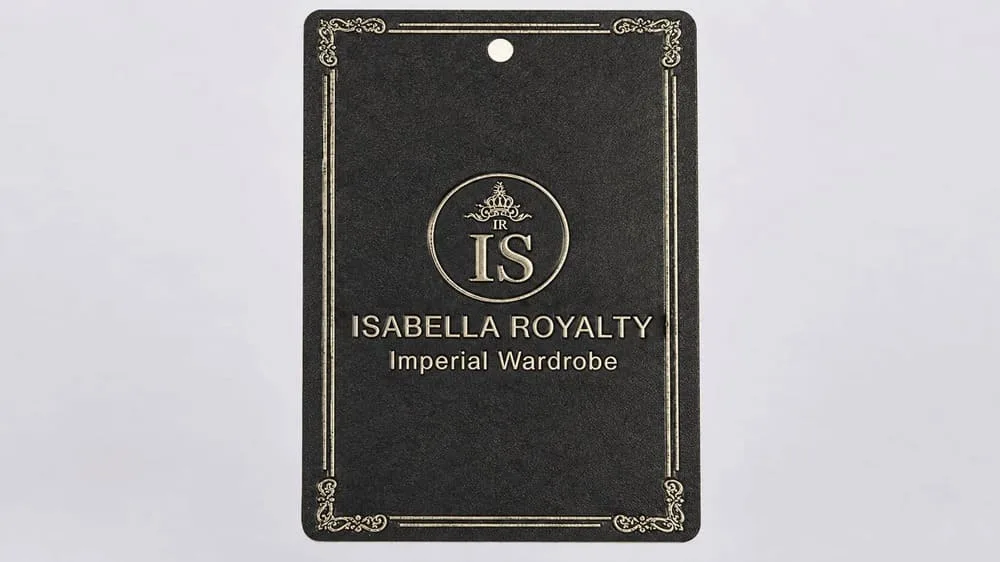
A luxury hang tag feels premium when it is rigid, tactile, and visually restrained. The perception of quality comes from heavyweight paper, precise die-cut edges, and one or two high-contrast finishes like foil or embossing, all executed flawlessly. Consistency across every single tag matters more than adding extra, competing effects.
From a manufacturing standpoint, luxury is the result of discipline. It’s about the tangible weight of a 400 GSM board, the visual precision of a perfectly centered foil stamp, and the flawless execution of a clean die-cut edge. The tag is often the first time a customer physically interacts with your brand’s promise. We had a jewelry client upgrade their tags to a 500 GSM soft-touch board with a simple debossed logo. Their retail partners gave the new collection more prominent display space, attributing it to the "more premium feel" of the overall presentation. The tag didn’t just describe the product; it elevated it.
How Do You Choose the Right Paper for Luxury Hang Tags?
Struggling to decide between a textured cotton paper and a sleek coated board? The material you choose dictates the look, feel, and the feasibility of your desired finishing techniques.
For luxury hang tags, select paperboard of at least 350 GSM. Premium applications often use 400–600 GSM duplex board or specialty papers. This choice directly impacts finish compatibility and durability. For brands targeting European markets, specifying paper from an FSC-certified supply chain is a baseline requirement.
Choosing the right paper is a technical decision. The paper’s surface, density, and fiber composition determine how well it accepts foil, holds an emboss, and resists tearing. A common pitfall is approving a sample made with a rare paper that isn’t available for mass production. At Ometpack, my team always proposes a "mass-production available" alternative stock during sampling to ensure consistency, order after order.
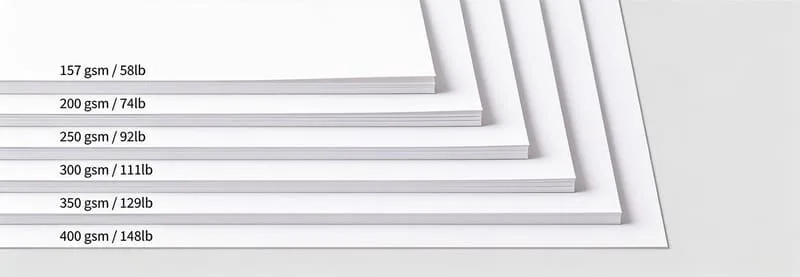
| Material | Common GSM Range | Best For | Production Considerations |
|---|---|---|---|
| Coated Art Board | 300–400 GSM | Crisp printing, sharp foil details | Smooth surface is ideal for foil and spot UV. |
| Duplex Board | 400–800 GSM | Rigidity, deep embossing | Offers superior stiffness and a premium hand-feel. |
| Uncoated Paper | 280–450 GSM | Understated, tactile luxury | Can soften fine details; requires testing for foil adhesion. |
| Kraft Paper | 250–400 GSM | Eco-conscious or rustic branding | Best for bold, simple designs; fine foil can be challenging. |
What Size and Shape Should a Luxury Hang Tag Be?
Is your hang tag overpowering your product or getting lost? The right size is a matter of proportion and function, ensuring it complements the item without competing with it.
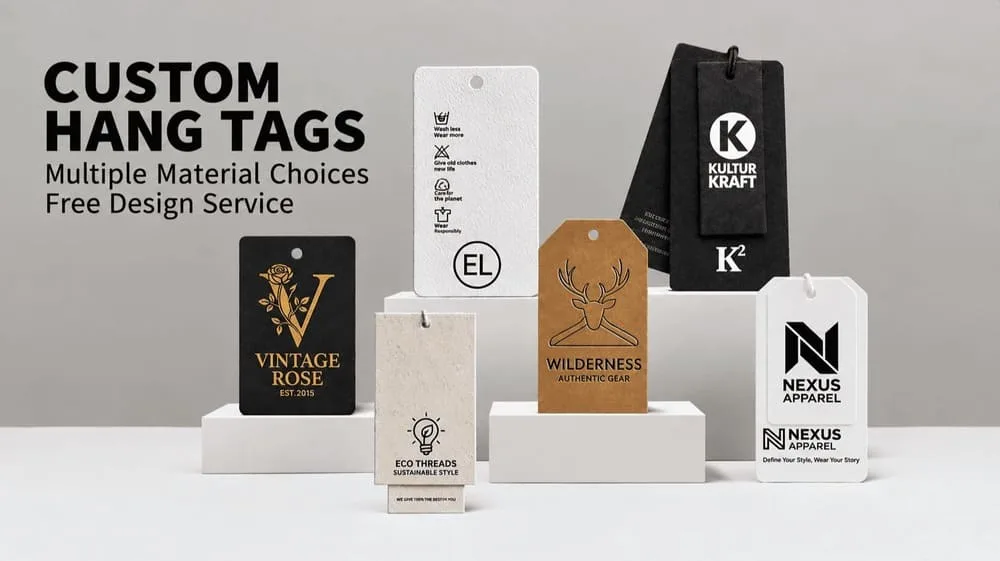
Luxury hang tag sizing should follow two rules: the tag’s width should not exceed one-third of the product’s width, and it must accommodate all required content without visual crowding. Standard luxury formats range from 2×3.5 inches for jewelry to 3×5 inches for premium apparel.
The shape and size must also serve a practical purpose. A folded "booklet" tag is ideal for including multi-language care instructions required in the EU, without cluttering the front design. While custom die-cut shapes add distinctiveness, they require a tooling investment and are best reserved for flagship products. Always get a physical proof to check how the tag hangs and drapes on your actual product.
Which Finishing Techniques Actually Signal Premium Quality?
Overwhelmed by options like foil stamping and embossing? The key is not to use them all, but to choose one or two that best serve your brand’s identity.
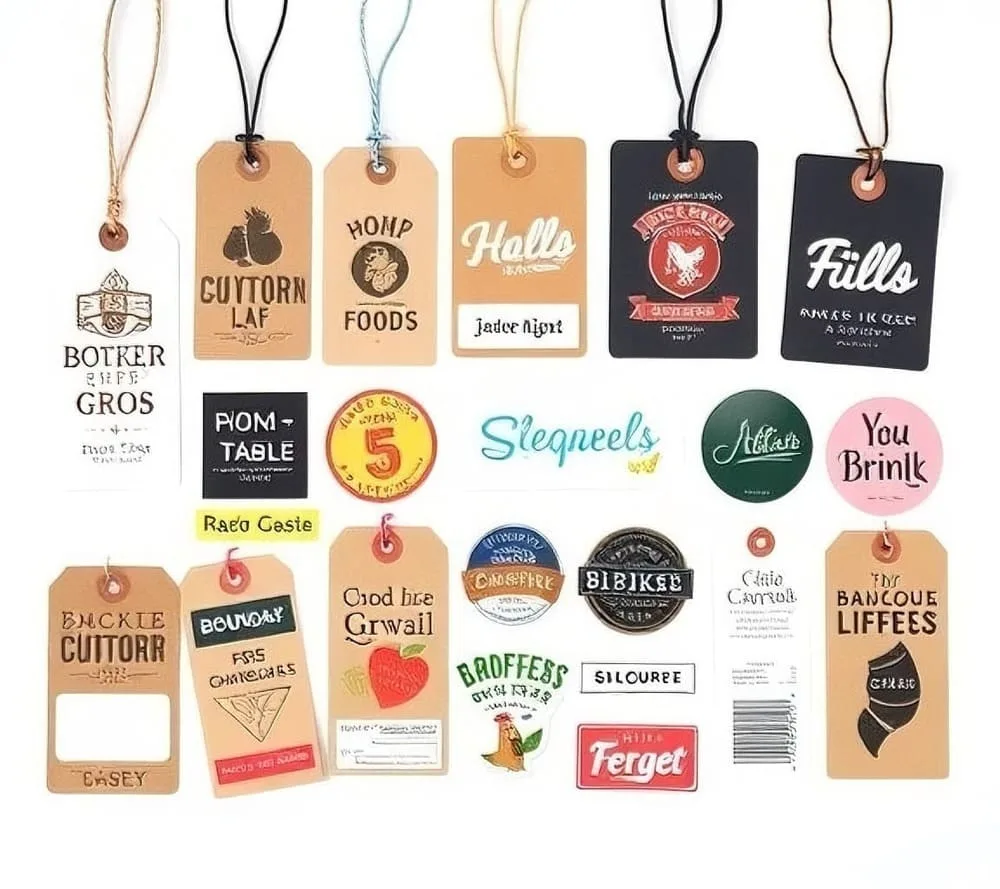
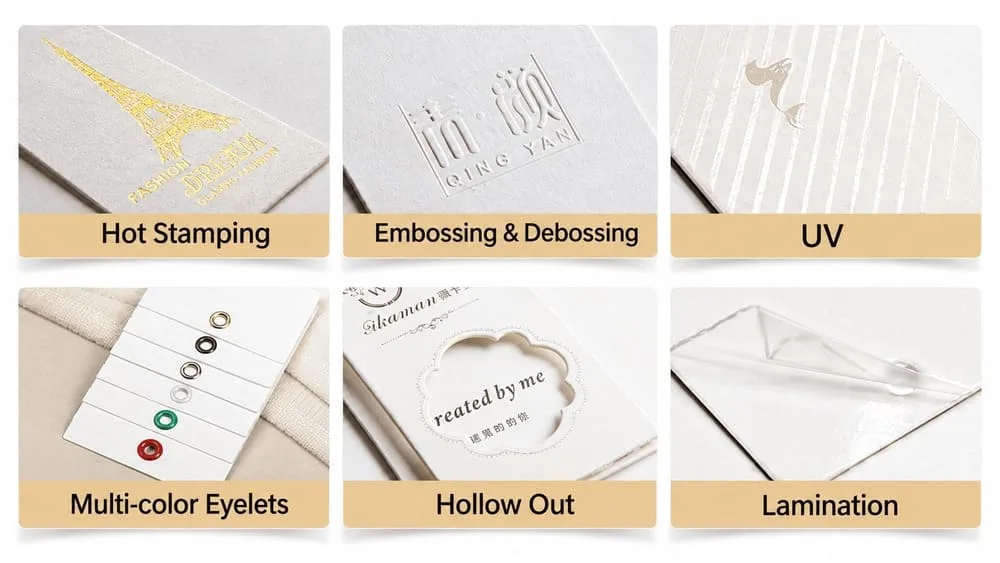
The best return on investment comes from finishes that create a clear tactile or visual cue with low production risk. Foil stamping delivers an instant "luxury signal," while blind embossing offers subtle craftsmanship. A simple foil stamp, executed perfectly, is far more luxurious than a tag with misaligned foil and a weak emboss.
On our factory floor, the most successful tags are those that master one or two finishes. If I had to recommend one combination for maximum ROI, it would be a 400 GSM board with a soft-touch matte lamination, finished with a single, clean hot foil stamp of the logo. This combination balances tactile appeal, visual impact, and production reliability, making it a smart investment for any premium brand.
How Do You Brief a Factory to Avoid Production Mistakes?
Afraid your beautiful design will be lost in translation during production? A clear, technical brief is the single most important tool for ensuring your vision is executed correctly.
To prevent errors, your brief must be a complete "spec sheet." It should include print-ready vector artwork with separated layers for finishes, confirmed material specifications (GSM and paper type), Pantone color references, and clear packing instructions. Missing any of these is the leading cause of delays.
The most expensive mistake is approving an order from a digital mock-up alone. A PDF cannot convey the depth of an emboss or the texture of a paper. At Ometpack, we insist on a mandatory physical sample sign-off. The client approves a production-grade sample, which becomes the "master standard" for the bulk run. This single step eliminates over 90% of potential quality disputes.
Conclusion
A luxury hang tag, when designed and manufactured with precision, costs pennies but can add dollars in perceived brand value. The key is to master the technical details—paper weight, finish compatibility, compliance, and a rigorous quality control process.
Ready to create hang tags that truly represent your brand’s quality? Contact us today to request a free sample pack or to discuss a custom quote. For more insights, explore our Tags & Stickers Hub.
FAQs (Frequently Asked Questions)
What is the best paper weight for a luxury hang tag?
For a premium, rigid feel, luxury hang tags should use paperboard that is at least 350 GSM. High-end applications in jewelry or premium apparel often use 400 GSM to 600 GSM duplexed board for superior stiffness and a substantial hand-feel.
What is the minimum order quantity (MOQ) for custom hang tags?
For most specialized factories, the MOQ for custom luxury hang tags typically starts between 500 and 1,000 pieces. Orders requiring complex custom die-cut shapes may have a higher minimum of 1,000 to 2,000 pieces to amortize tooling costs.
Foil stamping vs. embossing: which finish is better for luxury?
Both signal luxury. Foil stamping provides a high-impact, visual shimmer that catches the eye. Blind embossing offers a subtle, tactile sophistication that communicates craftsmanship. The best choice depends on your brand’s aesthetic—bold and opulent, or understated and elegant.
Do I need FSC-certified paper for my hang tags?
If you plan to sell your products in European or North American retail channels, using FSC-certified paper is highly recommended. Many major retailers now require it as part of their sustainability standards, and it provides verifiable proof of responsible sourcing.
Note: Please ensure FAQPage Schema markup is applied to the FAQs section above. If the article contains step-by-step instructions, consider adding HowTo Schema.