What Is the Best Paper Thickness for Luxury Gift Wrapping? A Factory CEO’s Definitive GSM Guide
Are you struggling to specify the right paper thickness for your luxury gift wrap? A low-quality choice can cheapen the unboxing experience and damage your brand’s reputation, while the wrong spec leads to production failures and costly compliance issues. This guide provides the definitive factory-floor answer.
The best paper thickness for luxury gift wrapping is 90–120gsm (grams per square meter). The 110–120gsm range is essential for premium finishes like hot stamping and embossing, ensuring a premium feel and structural integrity that prevents tearing during wrapping or finishing.
Key Takeaways / TL;DR:
- 90–120gsm is the accepted B2B standard for luxury gift wrapping; paper below 80gsm is inappropriate for luxury retail applications and will damage brand perception.
- 110–120gsm is the minimum required specification for hot stamping, embossing, and soft-touch lamination — the three defining luxury finishing techniques.
- Higher GSM increases the raw paper cost by approximately 10–15% per tier but does not typically increase Minimum Order Quantities (MOQ) with a full-service factory.
- FSC Chain of Custody certification and water-based (not PE plastic) coatings are non-negotiable for EU retail compliance under the PPWR, applicable from August 12, 2026.
- Always verify the production substrate’s GSM with an official mill certificate and a physical sample before approving any bulk luxury paper order.
As the founder of Ometpack, I’ve spent over a decade on the factory floor. I recall an urgent call from a cosmetics brand in Paris, just weeks before their holiday launch. They had sourced 80gsm paper to save a few cents per roll. The result? The paper tore constantly at their department store wrapping stations, and the gold foil on their logo was flaking off. That panicked, last-minute call for a complete re-run is a costly lesson I help my clients avoid from day one. Choosing the right paper thickness isn’t a detail; it’s the foundation of your brand’s physical handshake with your customer.
What does paper thickness (GSM) actually mean for your brand?
Are you confused by technical paper specifications? Choosing the wrong GSM can lead to visible quality failures that undermine your brand’s luxury positioning.
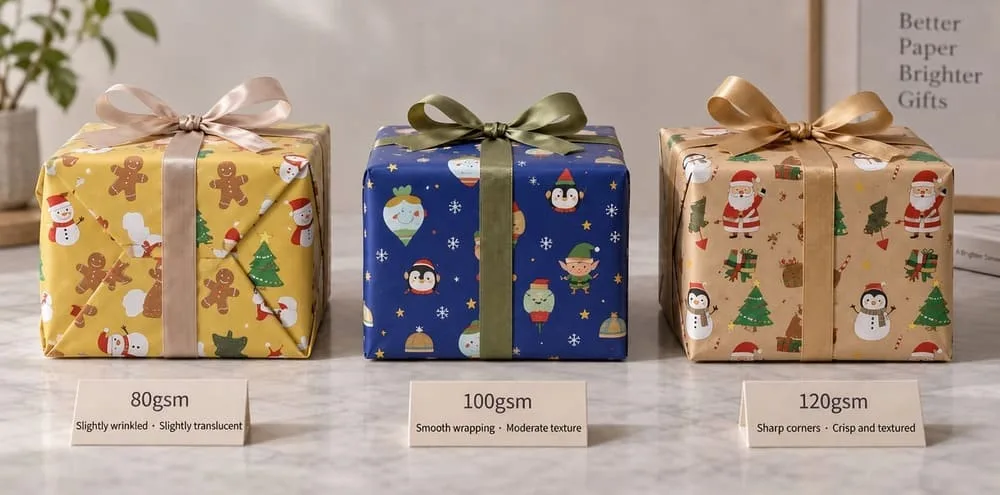
GSM, or Grams per Square Meter, is the universal standard for paper density. For luxury wrapping, it dictates the paper’s opacity, fold crispness, tear resistance, and its ability to withstand premium finishing processes like hot stamping without deforming. It’s the most critical specification you will make.
Paper weight directly determines four key attributes that shape the customer’s unboxing experience: opacity (hiding the gift), crease quality (sharp, professional folds), durability (tear resistance), and the all-important tactile feel. The moment a customer touches the gift, their brain makes a judgment about its value. A heavier, more substantial paper feels expensive. From my experience at Ometpack, we reject any paper roll that measures significantly below its specified GSM. This strict quality control is the first step in guaranteeing the final product meets a luxury brand’s expectations.
Which GSM is best for luxury gift wrapping?
Struggling to visualize the difference between 90gsm and 120gsm? This choice directly impacts your product’s perceived value and finishing options.
The luxury gift wrap spectrum runs from 60gsm (budget) to 120gsm+ (ultra-premium). The 90-100gsm range is the modern premium standard. True luxury begins at 110-120gsm, offering superior tear resistance and a crisp fold structure that elevates the unboxing experience.
Understanding the practical differences between GSM tiers is crucial. Specifying the wrong tier is one of the most common and costly mistakes in packaging sourcing. Here’s a factory-floor perspective on what you can expect from each weight class.
| GSM | Feel & Opacity | Crease Quality | Finishing Compatibility | B2B Verdict |
|---|---|---|---|---|
| 60–80 gsm | Thin, semi-translucent | Soft, imprecise | Basic print only | ❌ Not Luxury |
| 90–100 gsm | Opaque, substantial | Crisp, clean lines | Offset print, matte lamination | ✅ Luxury Entry |
| 110–120 gsm | Fully opaque, premium | Very crisp, sharp corners | Hot stamping, embossing | ✅✅ Recommended |
| 130+ gsm | Heavyweight, card-like | Razor-sharp | Full finishing suite | ✅✅✅ Ultra-Luxury |
At Ometpack, our automated production lines are calibrated for the 90-120gsm range. For any brand serious about their presentation, the conversation should start at 90gsm. This tier offers the best balance of premium feel, workability, and cost-effectiveness for most applications, as seen in our Gift Wrapping Paper solutions.
Have you ever seen a luxury gift wrap where the gold foil is cracked or peeling? This is a direct result of specifying the wrong paper GSM.
Paper thickness is the single most critical factor for successful premium finishes. Hot stamping and embossing require a dense, stable substrate of at least 110-120gsm to withstand the necessary heat and pressure without tearing, cracking, or causing deformation.
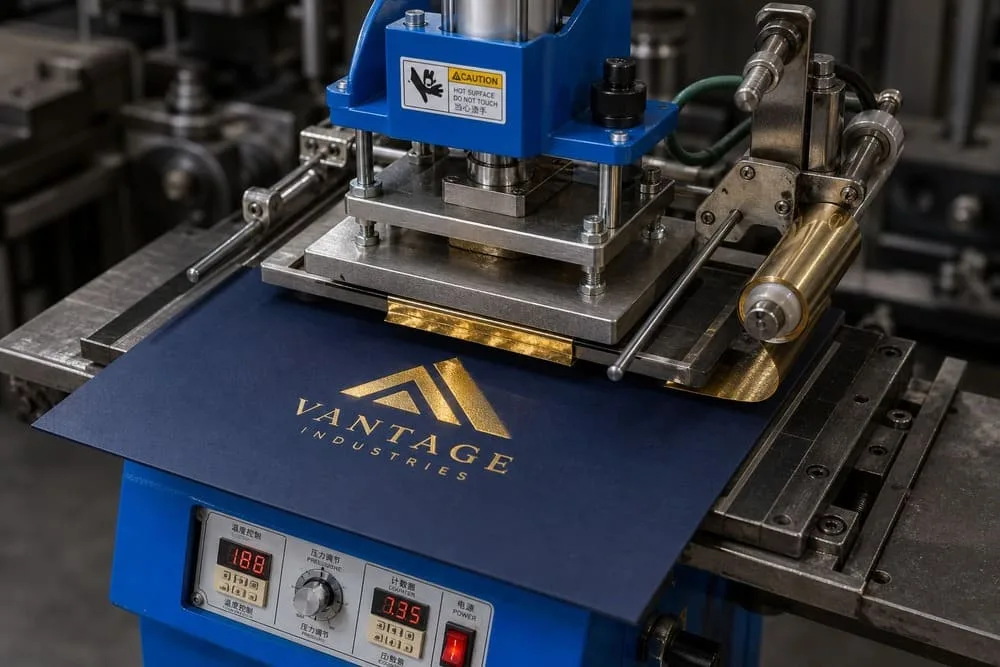
Adding a finish like hot foil stamping or embossing is how brands create a true luxury experience. However, these processes involve immense heat and pressure. On our factory tour, I show clients a hot stamping die pressing a sheet of 120gsm paper with tons of force to create a brilliant gold logo. Then, I show them a 80gsm sheet run through the same process: the paper tears and the foil has an incomplete transfer. The only variable is the paper’s ability to withstand the process.
Here are the minimums we require at Ometpack for a guaranteed quality result:
- Hot Foil Stamping: Minimum 110gsm. The paper needs density to resist heat and pressure.
- Embossing/Debossing: Minimum 120gsm. The paper fibers must be reshaped without cracking.
- Soft-Touch Lamination: Best achieved on 110gsm for a truly luxurious, velvety feel and to prevent curling.
Does a higher GSM automatically mean better print quality?
Worried your brand’s custom colors won’t look right on the final product? The paper’s GSM plays a larger role than most people realize.
Yes, a higher GSM generally delivers superior print quality. Denser substrates (90gsm and above) absorb ink more evenly, preventing color bleed and ensuring sharp registration. For precise Pantone color matching, 110gsm coated art paper is the factory-recommended standard for luxury brands.
Higher GSM contributes to superior print results for two reasons: ink holdout and surface stability. Good "ink holdout," found on coated 100gsm+ papers, means the ink sits on the surface, producing vibrant colors and sharp details. "Surface stability" means the denser paper resists stretching on high-speed presses, ensuring different color plates align perfectly. For any brand where color accuracy is critical, especially for matching specific brand colors on your custom wrapping paper, I always insist on a minimum of 100gsm coated paper.
Is sustainable luxury wrapping paper a myth at higher GSMs?
Are you concerned that a thick, premium-feel paper is inherently bad for the environment and will fail EU compliance checks?
No, it’s not a myth. Luxury 110-120gsm wrapping paper can be fully sustainable if it’s sourced from an FSC-certified mill and uses recyclable, water-based coatings instead of plastic (PE) lamination. For EU markets, verifying your supplier’s Certifications for FSC, EUDR, and PPWR-readiness is mandatory.
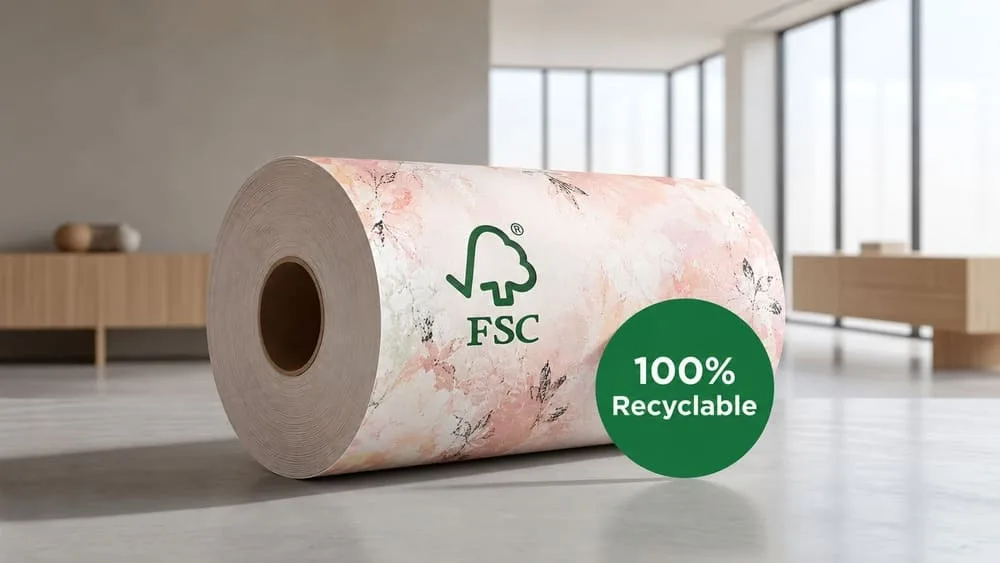
In today’s market, luxury and sustainability must go hand-in-hand. The EU’s Packaging and Packaging Waste Regulation (PPWR), applicable from August 12, 2026, mandates that all packaging be recyclable. This makes traditional plastic (PE) laminations a liability. At Ometpack, we use water-based aqueous coatings that provide a beautiful finish while being fully recyclable. Furthermore, our FSC certification provides a complete chain-of-custody for our paper, ensuring compliance with the EU Deforestation Regulation (EUDR). A beautiful paper that is non-compliant is not a luxury asset; it’s a problem waiting to happen.
Does a higher GSM significantly increase costs and lead times?
Is your finance department pushing back on specifying 120gsm paper, fearing it will blow the budget and delay your launch?
Choosing a higher GSM increases the raw paper cost by about 10-15% per tier, but it rarely impacts MOQ or lead time with a well-stocked factory. The marginal cost of better paper is far less than the cost of a single quality failure or brand perception drop.
The raw paper is just one component of the final cost. Printing, finishing, and conversion costs remain relatively fixed. Therefore, moving from 90gsm to 110gsm has a minimal impact on the final landed cost, often just a few cents per meter. Our MOQ is determined by efficient press runs (typically 500-1,000 rolls) and does not change with standard GSMs. As we stock these materials, lead times remain our standard 7-15 days. The most expensive wrapping paper is the one you have to re-order due to poor quality.
How do you verify a supplier is actually providing the specified GSM?
How can you be sure the 120gsm paper you paid for isn’t just 100gsm paper from a dishonest supplier? This is a common and costly problem.
You must implement a multi-step verification process. Demand a mill certificate with the order, request a physical pre-production sample from the actual bulk material, and consider a third-party pre-shipment inspection to weigh random rolls from the production line.
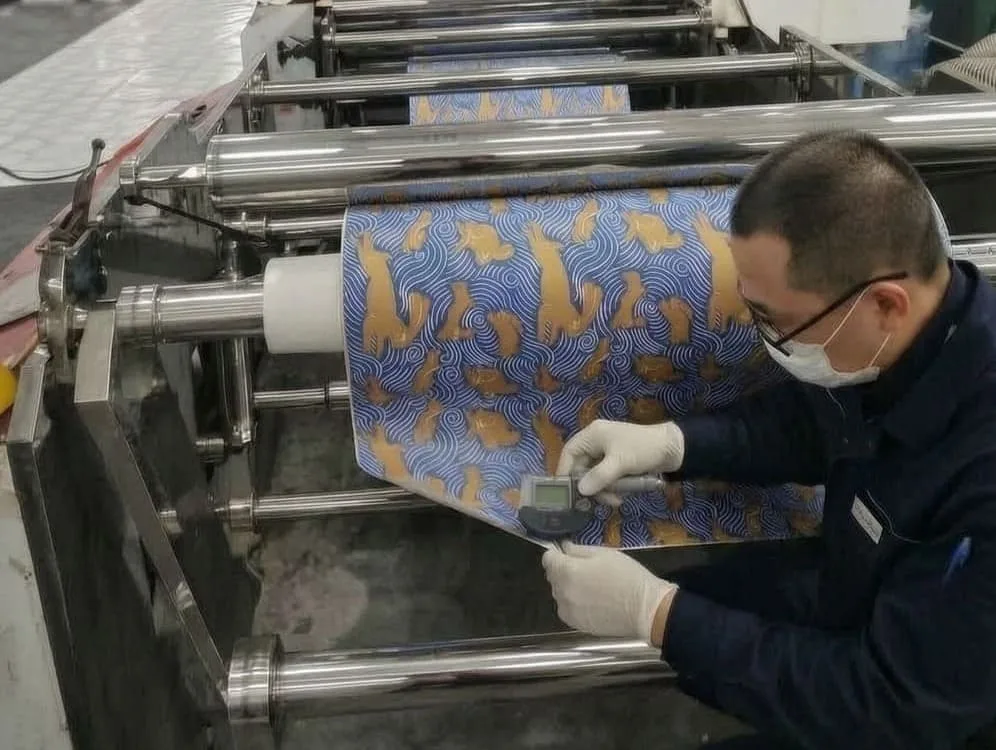
The most common cheat in global sourcing is to substitute a lower-grade paper after the sample has been approved. A supplier who is hesitant to provide verifiable proofs is a major red flag. Here are three essential checks:
- Demand the Mill Certificate: Ask for the original paper mill’s technical data sheet for the exact batch of paper being used for your order.
- Get a "Production Substrate" Sample: Do not approve the order based on a showroom sample. Insist on a physical sample printed on the actual paper from the bulk roll.
- Independently Verify Certifications: If a supplier claims FSC certification, ask for their certificate number and verify it on the official FSC public database (
info.fsc.org).
At Ometpack, we welcome this scrutiny and provide this documentation proactively. True partners in manufacturing believe in transparency and verifiable quality.
Conclusion
Choosing the right paper thickness, between 90gsm and 120gsm, is a strategic investment in your brand’s perceived value. It ensures a flawless unboxing experience, supports premium finishes, and prevents costly production and compliance failures. This is not a cost to be minimized, but a value to be maximized.
Ready to feel the difference for yourself? Contact the Ometpack team today. We’ll send you a complimentary physical sample pack with our 90, 110, and 120gsm options so you can make a confident, informed decision for your brand.
Request Your Free GSM Sample Pack Now
For more in-depth knowledge, explore our complete Wrapping Paper Resource Hub.
FAQs (Frequently Asked Questions)
The best all-around choice for luxury gift wrapping is 110gsm or 120gsm coated art paper. This thickness provides excellent opacity, a premium feel, and the structural integrity required for high-end finishing techniques like hot stamping and embossing without risk of tearing.
Can I use 80gsm paper for luxury wrapping to save on cost?
We strongly advise against it. While 80gsm paper is cheaper, it is often semi-translucent, tears easily at the corners of boxes, and cannot reliably support premium finishes. The potential damage to your brand’s luxury perception far outweighs the minimal cost savings.
Does thicker wrapping paper mean it’s less sustainable?
Not necessarily. A 120gsm paper can be highly sustainable if it is made from FSC-certified fibers, produced in a BSCI-compliant factory, and is free of non-recyclable plastic laminations. For EU markets, look for water-based coatings to ensure compliance with the PPWR.
How does paper thickness affect MOQ from a China factory?
For standard paper types like 90-120gsm coated art paper, the thickness does not typically affect the Minimum Order Quantity (MOQ). Most established factories stock these materials, and the MOQ is based on an efficient print run, not the paper weight itself.
What is the difference between GSM and paper caliper (thickness)?
GSM measures weight (density), while caliper measures physical thickness. While they are related, two papers can have the same GSM but different calipers if one is more compressed. For wrapping paper, GSM is the more important and universally accepted B2B specification.
Note: Please ensure FAQPage Schema markup is applied to the FAQs section above.