
Struggling to decide between matte, gloss, or that elusive "soft touch" for your new greeting card line? You worry that the final product might not match your brand’s luxury feel, or worse, face compliance issues in your target market. This guide provides the factory-floor answers you need before committing to a production run.
Selecting the right finish for custom greeting cards is a strategic decision that impacts brand perception, unit cost, and market access. This guide breaks down the core finishes, their costs, compatibility, and crucial compliance factors for B2B buyers.
Key Takeaways / TL;DR:
- The five essential greeting card finishes—gloss lamination, matte lamination, soft touch lamination, hot foil stamping, and spot UV—each serve a unique brand and market function.
- For premium gift and jewelry markets, a combination of soft touch lamination and hot foil stamping delivers the highest perceived value, but it requires precise production sequencing to prevent defects.
- For brands exporting to the European Union, the choice of finish now directly affects recyclability scores and potential fees under the Packaging and Packaging Waste Regulation (PPWR).
- Minimum Order Quantities (MOQs) for cards with standard lamination typically begin around 500 units, whereas complex, multi-finish orders often require 2,000–5,000 units to be cost-effective.
- Always request physical samples with the exact finishes specified—do not rely on digital mockups. For EU-bound orders, demand FSC Chain-of-Custody certificates and material data sheets from your supplier.
As the founder of Ometpack, I’ve spent over a decade on the factory floor here in Yiwu, China, turning brand concepts into tangible, high-quality paper packaging. I’ve seen firsthand how the right finish can make a greeting card feel like a luxury gift, and how the wrong one can lead to costly reprints and logistical nightmares. A client once approved a beautiful design on screen, only to realize the gloss finish created too much glare for their in-store photography. We had to pivot mid-production, a change that could have been avoided with a bit of upfront knowledge. This article is the guide I wish my clients had before they send their first Request for Quotation (RFQ). It’s not just about aesthetics; it’s about making a smart business decision.
Why Does the Right Finish Make or Break Your Custom Greeting Card’s Impact?
Is a finish just a final touch? Far from it. It’s the first thing your customer interacts with, creating an instant impression of quality and value.
The right finish for a custom greeting card transforms it from a simple piece of paper into a tactile brand experience. It directly influences perceived value, shelf appeal, and even durability, impacting everything from customer engagement to your bottom line.
From my experience running our finishing lines, the impact of a finish extends far beyond the visual. It’s a technical choice with real-world consequences for your supply chain. For example, a card’s finish determines its durability during international shipping. A robust gloss or matte lamination can protect against scuffs and moisture, ensuring your cards arrive at the distribution center in pristine condition. This is a small detail that B2B buyers often overlook until they receive a pallet of damaged goods.
Furthermore, the finish dictates how other premium effects, like foil stamping or spot UV, will adhere and perform. I’ve seen projects fail because a client specified hot foil on an incompatible, uncoated stock, resulting in peeling and a 30% wastage rate. A knowledgeable manufacturing partner guides you away from these pitfalls.
The Three-Second Shelf Test: What a Finish Communicates
In a crowded retail environment, you have about three seconds to capture a customer’s attention. A greeting card’s finish is your silent salesperson.
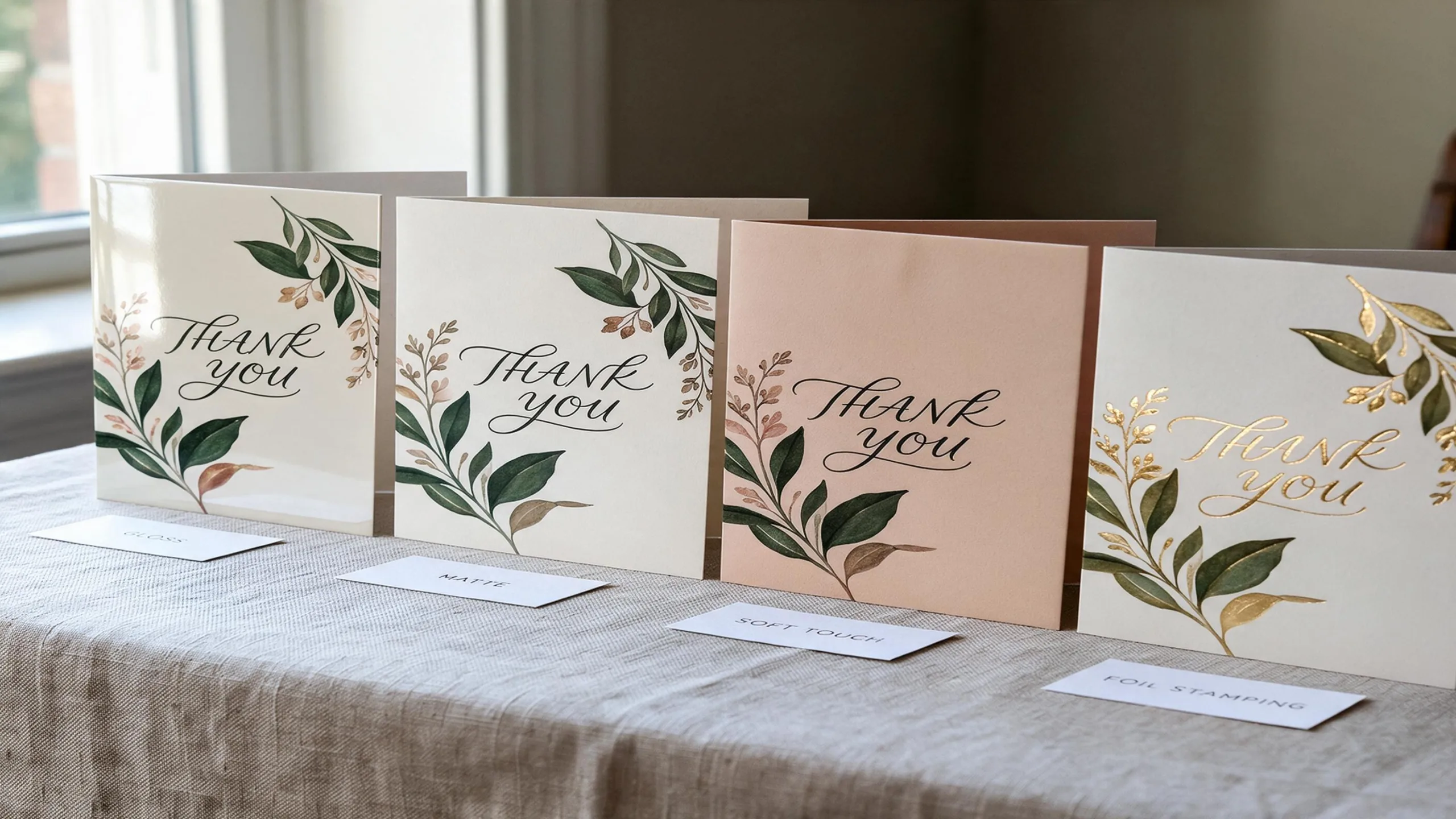
- Gloss Lamination: Shouts vibrancy and fun. It makes colors pop, perfect for photo-heavy cards or a younger demographic. It communicates energy and affordability.
- Matte Lamination: Whispers sophistication and professionalism. Its non-reflective surface feels modern and understated, ideal for corporate branding or high-end minimalist designs.
- Soft Touch Lamination: Conveys undeniable luxury. The velvety, suede-like feel triggers a sensory response that says "premium" and "high-quality" before a single word is read.
Why B2B Buying Decisions Are Different
For a B2B procurement manager or brand owner, choosing a finish is a strategic calculation, not just a creative one. You’re balancing aesthetics with budget, lead times, and market-specific regulations. For instance, a buyer targeting the EU market must now consider how a plastic-based lamination affects the card’s recyclability score under new regulations. This is a conversation we at Ometpack have with our European clients daily. The finish is no longer just a design choice; it’s a compliance decision.
What Are the 5 Core Finishes for Custom Greeting Cards?
Feeling overwhelmed by finishing jargon? It’s simpler than it seems. Most professional results come from one of five core techniques.
There are five primary finishing techniques for custom greeting cards: gloss lamination, matte lamination, soft touch lamination, hot foil stamping, and spot UV coating. Each serves a distinct purpose, from enhancing color and texture to adding metallic elegance or targeted contrast.
As a manufacturer, we see these five finishes as our essential toolkit. Each requires its own machinery, specific material inputs, and operator skill. At our factory in Yiwu, we have dedicated lines for lamination, foil stamping, and UV coating because controlling these processes in-house is the only way to guarantee quality and compatibility. Here’s a breakdown from my perspective:
H3: Gloss Lamination — For Maximum Vibrancy
This is a thin, plastic film bonded to the cardstock that creates a shiny, reflective surface. It’s excellent for making colors look saturated and is highly durable, offering great protection against moisture and scuffs. It’s the workhorse finish for mass-market cards.
H3: Matte Lamination — For Understated Sophistication
Similar to gloss, but the film has a non-reflective, satin finish. It offers a more subdued, professional look. A huge advantage is that it reduces glare and is easier to write on with most pens compared to gloss, a key consideration for corporate or event-based cards.
H3: Soft Touch Lamination — For a True Luxury Feel
This is not the same as matte lamination, a common point of confusion for buyers. Soft touch is a special type of matte film that has a velvety, almost rubbery texture. When you hold a card with a soft touch finish, the tactile sensation immediately signals premium quality. It’s a favorite for high-end brands in the beauty, jewelry, and luxury gift sectors.
H3: Hot Foil Stamping — For Metallic Elegance
This process uses heat and pressure to apply a thin layer of metallic or pigmented foil to the card. It’s not ink; it’s a true metallic transfer. Available in gold, silver, rose gold, and a variety of colors, it adds a touch of luxury and visual authority that printing simply cannot replicate.
H3: Spot UV Coating — For Selective Contrast and Detail
Spot UV involves applying a high-gloss, clear UV coating to specific "spots" on the card, leaving the rest matte. This creates a striking contrast in both texture and sheen. It’s perfect for highlighting a logo, a pattern, or a specific word, adding a layer of dimension that invites touch.
Gloss vs. Matte vs. Soft Touch Lamination: Which Suits Your Brand?
Your brand has a personality, and the lamination on your greeting card should match it. Are you vibrant and bold, or sophisticated and subtle?
The choice between gloss, matte, and soft touch lamination depends on your brand identity, target audience, and intended use. Gloss is best for vibrant, eye-catching designs, matte suits professional and elegant branding, and soft touch delivers an unparalleled luxury experience.
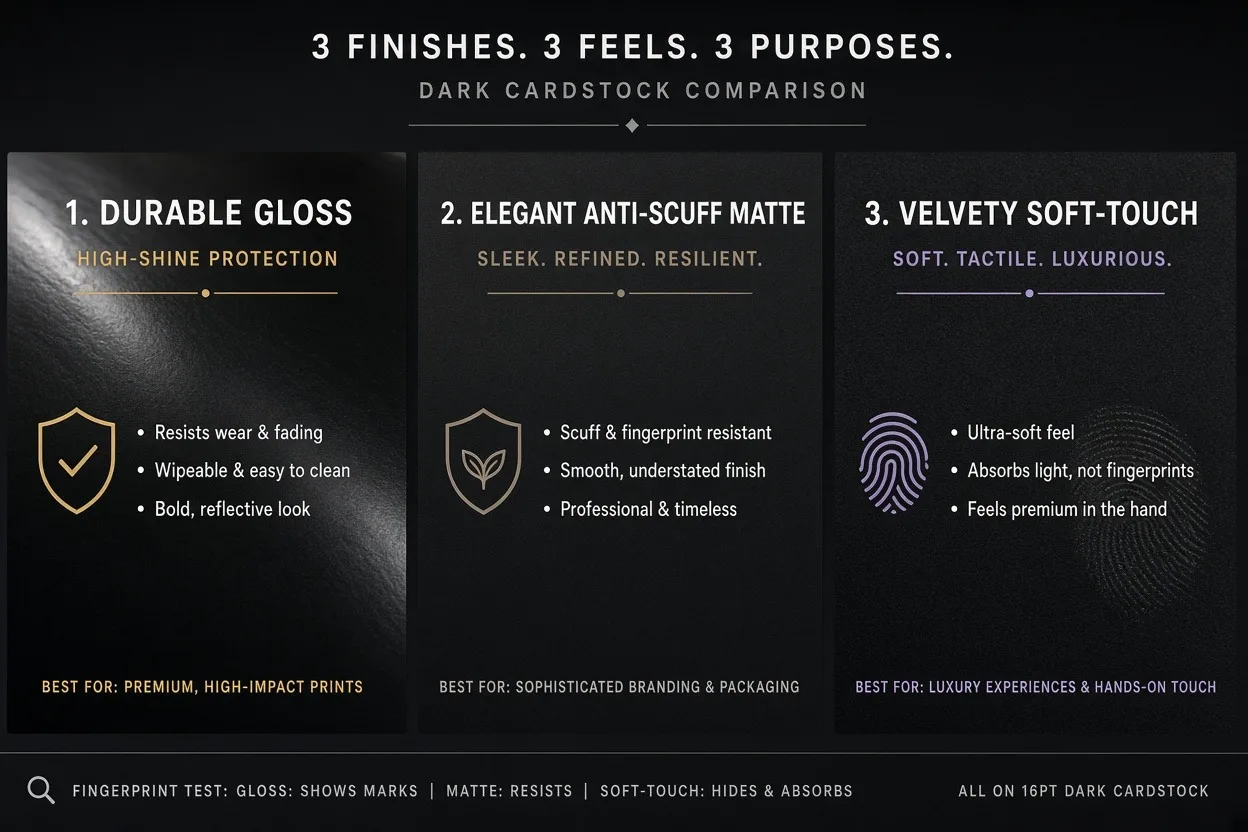
I often advise clients to think about the physical context where the card will be seen and handled. A client of ours, a high-end chocolatier, switched from gloss to soft touch lamination for their gift cards. The reason? Their customers were interacting with the cards in a boutique setting, and the velvety feel of the soft touch finish mirrored the smooth, indulgent quality of their chocolates. Sales of their gift cards increased by 15% the following quarter. This is a perfect example of aligning the tactile experience with the brand promise. The table below breaks down the key decision factors we discuss with our B2B clients every day.
| Feature | Gloss Lamination | Matte Lamination | Soft Touch Lamination |
|---|---|---|---|
| Visual Effect | High sheen, vibrant colors | Low glare, sophisticated | Velvety, deep matte |
| Tactile Feel | Smooth, slick | Smooth, non-slip | Velvety, rubbery, suede-like |
| Best For | Photo cards, mass-market, bold designs | Corporate branding, minimalist aesthetics, luxury | Premium gift brands, jewelry, beauty, high-end invitations |
| Durability | Excellent (scuff & water-resistant) | Very Good (hides fingerprints better than gloss) | Excellent (fingerprint & scuff-resistant) |
| Writability | Poor (requires special markers) | Good (most ballpoint pens work well) | Poor (difficult to write on) |
| Relative Cost | Base Cost (1x) | ~1.15x – 1.25x | ~1.30x – 1.45x |
For brands targeting European markets, there’s another critical layer to this decision. Both gloss and matte lamination typically use a BOPP plastic film. Under the EU’s new PPWR framework, this can negatively impact the card’s recyclability classification and potentially lead to higher EPR (Extended Producer Responsibility) fees. We are now working with clients to explore alternatives like water-based varnishes to meet sustainability goals without sacrificing protection. This is a crucial conversation to have with your supplier.
Hot Foil Stamping, Spot UV & Embossing: When Are Premium Finishes Worth It?
These premium options add to the unit cost, but are they an expense or an investment? The answer depends on your brand’s market position.
Premium finishes like hot foil stamping, spot UV, and embossing are a worthwhile investment when your goal is to command a higher price point, stand out in a saturated luxury market, or create a memorable unboxing experience. They signal craftsmanship and attention to detail.
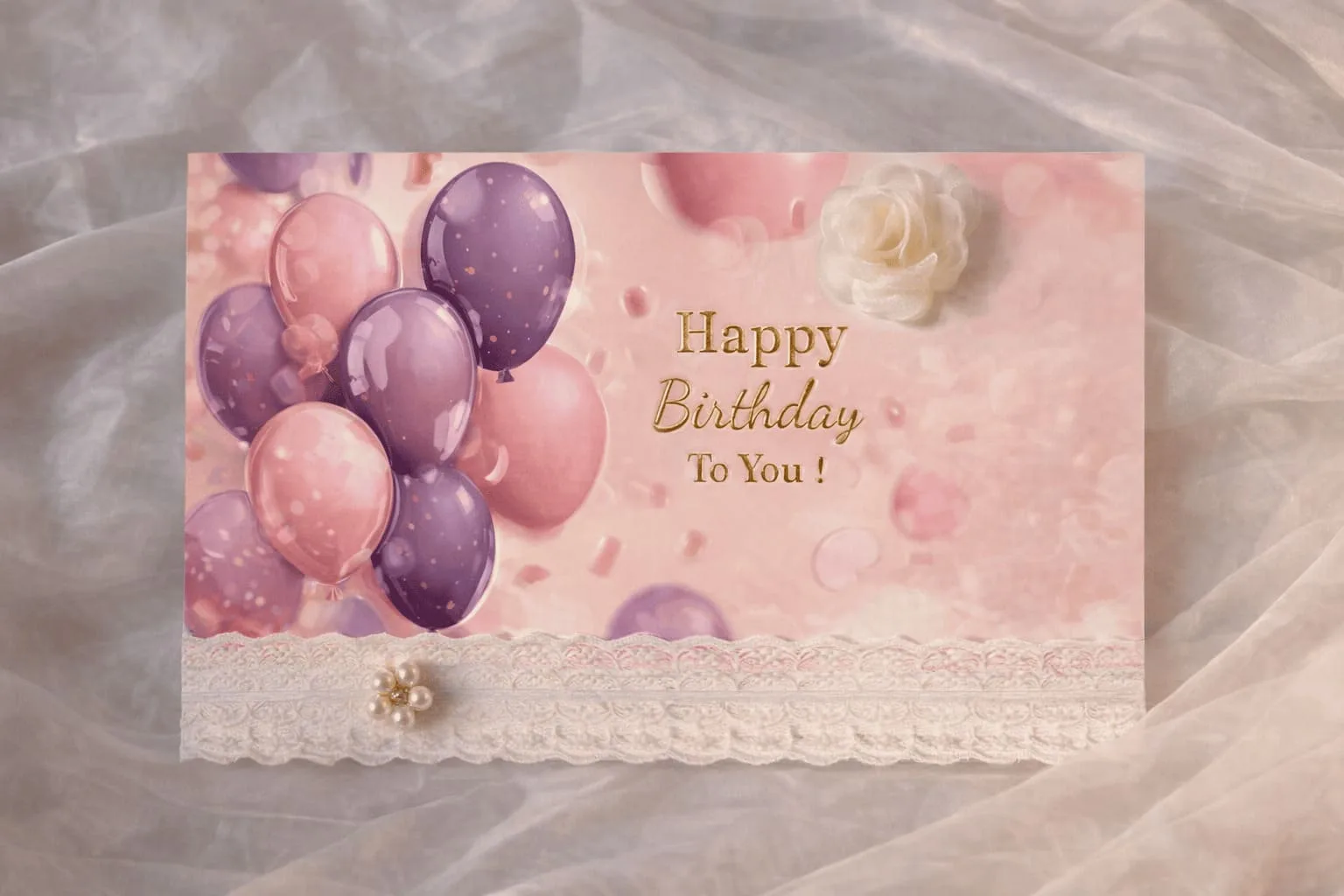
I recall a jewelry brand that came to us for their certificate of authenticity cards. They were initially hesitant about the added cost of hot foil stamping and embossing. We produced two samples for them: one with simple flat printing and another with their logo embossed and stamped in rose gold foil. We didn’t need to say a word. Holding the two cards, the perceived value was night and day. The premium version didn’t just look better; it felt more substantial and trustworthy, reinforcing the value of the jewelry it accompanied. They moved forward with the premium finish, and it became a signature part of their brand packaging.
This is the key: these finishes aren’t just decorative. They are tools for brand positioning.
-
Hot Foil Stamping is your go-to for communicating heritage, authority, and classic luxury. When you see a gold foil crest on a card, your brain immediately associates it with prestige. It’s a powerful, non-verbal cue. For B2B orders, it’s important to ask your supplier about their process. Traditional hot foil requires a metal die, which has an upfront tooling cost, making it more economical for larger runs (2,000+ units). Digital foiling, a newer technology, is die-less and better for smaller, customized runs.
-
Spot UV is the master of modern, sleek appeal. By creating a high-contrast play between matte and gloss surfaces, it draws the eye to specific elements. It’s a fantastic way to add a subtle "reveal" to your design. We often recommend it on top of a matte or soft-touch lamination for the most dramatic effect.
-
Embossing (raising the design) and Debossing (imprinting the design) add literal dimension. They engage the sense of touch in a way that flat surfaces cannot. An embossed logo feels more permanent and crafted. When combined with foil, it creates a multi-sensory experience that is the hallmark of truly high-end packaging. The ROI isn’t just in the card’s sale price, but in the elevated perception of your entire brand.
How Can You Combine Finishes Without Ruining Your Production Run?
Mixing premium finishes can create stunning results, but it can also lead to production disasters if you don’t know the rules of compatibility.
To successfully combine finishes, you must understand their production sequence and material compatibility. For example, soft touch lamination provides an excellent base for hot foil stamping, while gloss lamination can cause adhesion issues for both foil and spot UV.

The most expensive mistake a buyer can make is designing a beautiful card with incompatible finishes. I’ve seen this happen too many times. A marketing team designs a card with a high-gloss background and then wants a spot UV logo on top. On paper, it sounds great. In reality, the UV coating won’t cure properly on the slick, non-porous gloss lamination, resulting in a tacky, easily-smudged mess. The entire run has to be scrapped.
At Ometpack, our pre-production team acts as a safeguard against this. Before we even make a plate, we analyze the client’s artwork and finish specifications for any potential conflicts. It’s a critical part of our service. Here is a simple compatibility guide based on thousands of production runs.
Process Compatibility Matrix
| Base Finish | Compatible With | Incompatible With / Use Caution | Key Factory Insight |
|---|---|---|---|
| Soft Touch Lamination | Hot Foil Stamping, Embossing, Debossing, Spot UV, Raised UV | Writing with standard pens | This is the best base for premium combinations. Its surface provides excellent adhesion for foil. |
| Matte Lamination | Spot UV, Embossing, Debossing, Writing with pens | Large areas of Hot Foil (adhesion can be weaker than on soft touch) | The most versatile option. Offers a good balance of writability and compatibility with other finishes. |
| Gloss Lamination | Embossing, Debossing | Hot Foil Stamping, Spot UV, Writing with pens | The slick surface makes it very difficult for foil or UV coating to adhere reliably. We strongly advise against this combination. |
| Uncoated Paper | Hot Foil Stamping, Embossing, Debossing, Letterpress, Writing | Lamination, UV Coating | Provides a natural, rustic feel but offers no protection. Foil adhesion can be less crisp than on a laminated surface. |
The most important takeaway is that the order of operations matters. A common high-end combination is Soft Touch + Hot Foil + Spot UV. The correct sequence is:
- Print the card (CMYK).
- Apply the Soft Touch Lamination. This creates the perfect surface for what’s next.
- Apply the Hot Foil Stamping. The heat and pressure press the foil into the lamination for a durable bond.
- Apply the Spot UV coating in the remaining designated areas.
A supplier who doesn’t understand this sequence will produce a card that looks great on day one but starts peeling or flaking by the time it reaches the customer.
What Do B2B Buyers Need to Know About Cost, MOQ & Lead Time?
Beyond the design, the three most important letters for any B2B buyer are C, M, and L: Cost, MOQ, and Lead Time. How do finishes affect them?
For B2B sourcing, finishes directly influence unit cost, Minimum Order Quantity (MOQ), and production lead time. Premium finishes like foil stamping require higher MOQs (typically 2,000+ units) to offset tooling costs and add 5-10 business days to production.
When a client sends an RFQ, my team immediately analyzes the finish to project these three variables. It’s a triangle—you can optimize for two, but it’s hard to get all three (low cost, low MOQ, fast lead time). A complex, multi-finish card will never be the cheapest or the fastest option, and its MOQ will be higher.
Here’s the breakdown I give my clients:
-
Cost: Finishes are not priced equally. If we set a standard CMYK-printed card with gloss lamination as our baseline (1x), the cost escalates with complexity.
- Matte Lamination: ~1.15x – 1.25x the base cost.
- Soft Touch Lamination: ~1.30x – 1.45x the base cost.
- Spot UV (added): +20-35% on top of the lamination cost.
- Hot Foil Stamping (added): +40-80% or more, depending on foil coverage and die complexity.
This is because each additional process requires another machine, more setup time, more skilled labor, and more materials.
-
MOQ (Minimum Order Quantity): Why can’t you order just 100 cards with hot foil? The answer is tooling and setup. For traditional hot foil stamping, we have to create a custom-engraved metal die for your design. That die can cost several hundred dollars. To make the per-unit cost reasonable, we need to spread that tooling cost over a larger quantity.
- Standard Lamination: Our MOQ starts at 500 units.
- Foil/Embossing/Spot UV: We recommend 2,000 units or more to be cost-effective.
- Pro Tip: One tactic we use for clients with multiple SKUs is a "shared tooling" approach. If you have five different card designs that all use the same foil logo in the same position, we can use a single die for all of them, dramatically lowering your per-design cost.
-
Lead Time: Every finish adds a step to the production line.
- Printing + Lamination only: 7-12 business days.
- Adding Foil or Spot UV: Add 3-5 business days.
- Adding Embossing + Foil: Add 5-7 business days.
- Complex combinations: Can take up to 15-25 business days from artwork approval to ready-to-ship.
I cannot stress this enough: for seasonal orders (like for Christmas or Valentine’s Day), you must factor these lead times into your planning. We advise our clients to place Q4 holiday orders by late August to ensure on-time delivery.
How Does Finish Choice Affect Your Market Access via FSC, Recyclability & EU Compliance?
Think your finish choice only affects looks? If you sell in the EU, it’s a compliance issue that can determine whether your product even makes it to the shelf.
For greeting cards sold in the EU, the chosen finish directly impacts regulatory compliance. Plastic-based laminations can lower a product’s recyclability score under the PPWR, while the paper itself must have a traceable, deforestation-free supply chain under EUDR.
This is the most significant change I’ve seen in my career. For years, the conversation with our European buyers was about price and quality. Now, the first questions are often: "Is the paper FSC certified?" and "What is the composition of your lamination film?"
Since the EU’s Packaging and Packaging Waste Regulation (PPWR) began its full application phase, and with the EU Deforestation Regulation (EUDR) on the horizon, compliance is non-negotiable. As a manufacturer, it’s our job to help our clients navigate this. Here’s what you must know:
-
FSC® Certification: The Forest Stewardship Council provides the leading standard for responsible forest management. Most major European retailers will not stock paper products that lack an FSC certification. At Ometpack, we maintain a strict FSC Chain of Custody, meaning we can trace the paper in your greeting card all the way back to a certified, responsibly managed forest. When you request a quote, you should also be requesting the supplier’s FSC certificate number.
-
PPWR & Recyclability: The PPWR aims to make all packaging recyclable in an economically viable way. A greeting card laminated with a standard BOPP plastic film is a mixed-material product. This makes it harder and more expensive to recycle. Consequently, under the "eco-modulation" part of the PPWR, brands that place these cards on the market may face higher EPR (Extended Producer Responsibility) fees. This has made sustainable alternatives a top priority. We now offer water-based "aqueous" varnishes that provide protection without the plastic film, improving the card’s recyclability profile.
-
EUDR & Traceability: The EUDR requires companies to prove their products have not been sourced from land that was deforested. This applies to paper. As your manufacturing partner in China, we are required to provide precise geolocation data and due diligence statements for the paper pulp’s origin. Working with a supplier who cannot or will not provide this documentation is a significant business risk.
My advice to all B2B buyers, especially those targeting the EU, is to make compliance part of your supplier vetting process. Don’t wait until your container is stuck at customs to ask about certifications.
How Do You Evaluate a Greeting Card Supplier’s Finishing Capabilities?
Your supplier says they can do it all, but can they prove it? Here’s how to tell a true factory partner from a middleman.
Evaluate a supplier’s finishing capabilities by verifying their in-house equipment through a virtual or physical factory tour, demanding physical samples with all specified finishes, and auditing their quality control documentation and valid certifications (FSC, BSCI).
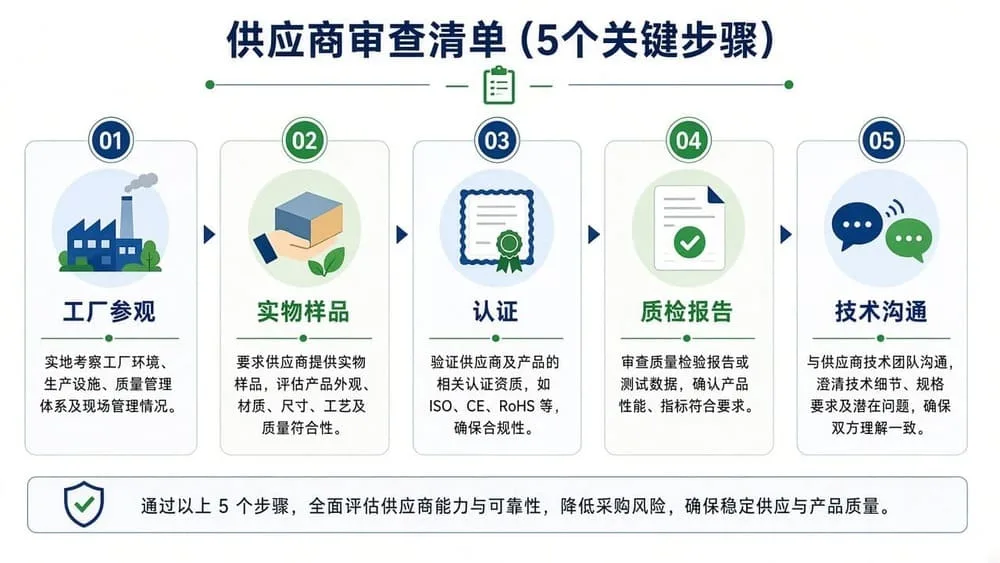
The difference between a factory like Ometpack and a trading company is control. We own and operate our finishing machines. A trading company outsources your order to the lowest bidder, often splitting different processes among different small workshops. This loss of control at each handoff is where quality issues, inconsistencies, and delays originate.
Here is the 5-point checklist I would use if I were in your shoes, sourcing a new greeting card supplier:
-
Verify In-House Capability: Don’t just take their word for it. Ask for a video tour of their facility. Ask to see their lamination machine, their hot foil stamper, and their die-cutter in operation. If they are hesitant or can only show you finished products in a showroom, that’s a major red flag.
-
Demand Comprehensive Physical Samples: Digital mockups are meaningless for evaluating finishes. Insist on a physical sample that includes all the finishes you plan to use, on the exact paper stock you’ve specified. This is your single best tool for quality assurance. Check for foil adhesion by scratching it lightly with a fingernail. Check for lamination bubbles. Feel the texture. This sample is your contract for quality.
-
Audit Their Certifications: Ask for copies of their FSC and BSCI certificates. Don’t just look at the logo. Check the certificate number and the expiration date. A professional supplier will have these ready and available.
-
Request QC Documentation: This is the question that separates the professionals from the amateurs. Ask: "Can I see your In-Process Quality Control (IPQC) report for a recent foil stamping job?" A real factory will have standardized records for things like adhesion tests, color consistency checks, and defect rates. A trading company won’t even know what you’re talking about.
-
Test Their Technical Knowledge: Ask them a compatibility question from this article. For example: "I’m thinking of doing a gloss lamination with spot UV. What are your recommendations?" If they just say "Yes, we can do it," be wary. A true expert partner, like we strive to be at Ometpack, will explain the potential adhesion problems and guide you toward a better solution, like using a matte lamination as the base instead. Their job is not just to take your order; it’s to ensure your project succeeds.
Conclusion
Choosing the right finish for your custom greeting cards is one of the highest-leverage decisions you can make. It’s the bridge between your brand’s vision and the tangible experience your customer holds in their hands. It’s about balancing beauty, budget, and the complex realities of global manufacturing and compliance.
Ready to see and feel the difference for yourself? Request your free, no-obligation Finishing Sample Kit from Ometpack today. See our gloss, matte, soft touch, and foil options on real cardstock. Or, if you have a design ready, contact our team for a custom quote based on your unique specifications.
For more in-depth knowledge on creating standout paper products, explore our Paper Cards Hub, a central resource for B2B buyers and brand owners.
FAQs (Frequently Asked Questions)
What is the difference between matte and soft touch lamination?
Matte lamination provides a non-reflective, smooth surface. Soft touch lamination is a special type of matte film that has a unique, velvety, rubber-like texture. It offers a more premium, luxurious tactile experience but typically comes at a higher cost than standard matte.
Can you combine hot foil stamping with soft touch lamination?
Yes, this is a very popular and highly recommended premium combination. The soft touch lamination provides an ideal, smooth surface for the hot foil to adhere to, resulting in a crisp, durable, and luxurious finish that combines tactile and visual appeal.
Are laminated greeting cards recyclable in the EU?
It’s complicated. Greeting cards with standard plastic (BOPP) lamination are considered mixed materials, which hinders their recyclability under the EU’s PPWR. This can lead to higher EPR fees. For better recyclability, consider alternatives like water-based aqueous coatings or specified biodegradable lamination films.
How much does hot foil stamping add to the cost of a greeting card?
Hot foil stamping can increase the unit cost by 40% to 80% or more, depending on the size of the foiled area and the complexity of the die. There’s often a one-time tooling cost for the metal die, making it more cost-effective for larger order quantities (2,000+ units).
What is the typical MOQ for custom greeting cards from a China factory?
For cards with standard CMYK printing and basic lamination, a typical MOQ from a factory like Ometpack is around 500 units. For orders involving more complex processes like hot foil stamping, embossing, or custom die-cutting, the MOQ generally starts at 2,000 units to make the setup and tooling costs viable.
Note: Please ensure FAQPage Schema markup is applied to the FAQs section above. If the article contains step-by-step instructions, consider adding HowTo Schema.