

GSM (Grams per Square Meter)
GSM is one of the most critical specifications in paper packaging. Buyers use it to judge thickness, strength, and cost before approving production. If you source paper bags, folding cartons, or rigid boxes, understanding GSM helps you prevent material failure and control budget accurately.
Also Known As
Grammage, Paper Weight, Basis Weight, Paper Density, g/m²

Definition
GSM is one of the most critical specifications in paper packaging. Buyers use it to judge thickness, strength, and cost before approving production. If you source paper bags, folding cartons, or rigid boxes, understanding GSM helps you prevent material failure and control budget accurately.
Understanding GSM (Grams per Square Meter)
GSM, which stands for Grams per Square Meter, is the most crucial and universal measurement for specifying paper. It tells you the density of the paper. A sheet of 150 GSM paper means a one-by-one meter square of that paper weighs 150 grams. This single number is the most reliable way to understand the substance and quality of a paper stock, regardless of its type or finish.
Understanding GSM is critical for any brand. It directly influences the durability, perceived quality, and cost of your packaging. A low GSM might feel flimsy and cheap, potentially damaging your brand's reputation or failing to protect your product. A GSM that is too high, however, can lead to unnecessary costs in both materials and shipping. Getting the GSM right is about finding the perfect balance for your specific product.
Common GSM Ranges and Their Applications
Different products require different paper weights. In our factory, we work with a wide spectrum of GSM values every day. Here is a general guide to help you understand common applications for various GSM ranges.
| GSM Range | Paper Type Examples | Common Packaging Applications |
|---|---|---|
| 35 - 70 GSM | Tissue Paper, Newsprint | Inner wrapping for apparel, void fill, product protection |
| 80 - 120 GSM | Standard Office Paper, Light Kraft | Standard retail paper bags, lightweight product boxes, flyers |
| 150 - 250 GSM | Heavy Kraft, Art Paper, Cardstock | Premium shopping bags, magazine covers, high-quality brochures |
| 280 - 400 GSM | Heavy Cardboard (C1S/C2S) | Folding cartons for cosmetics, electronics, business cards |
| > 400 GSM | Paperboard, Duplex Board | Rigid gift boxes, luxury packaging, display stands |
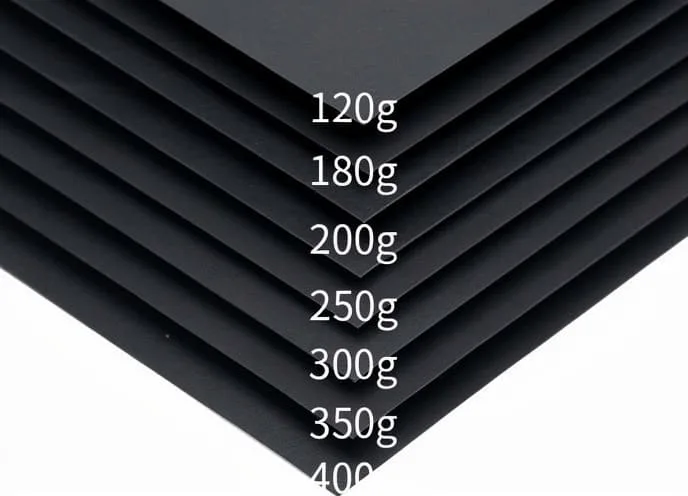 A visual comparison showing how different GSM values translate to paper thickness.
GSM vs. Basis Weight (lbs)
You may also see paper specified by Basis Weight, measured in pounds (lbs), which is common in North America. This system is often confusing. For example, "80 lb Text" paper and "80 lb Cover" paper have very different actual weights and thicknesses. An 80 lb text paper is around 120 GSM, while an 80 lb cover paper is about 216 GSM. This is why we, and the global industry, rely on GSM. It is a direct, unambiguous measurement of density, making it the superior standard for specifying packaging accurately.
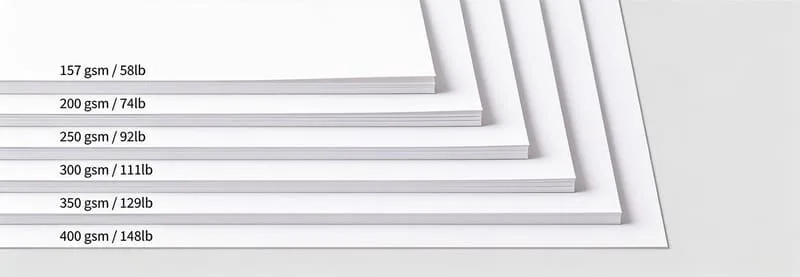 Paper Weight Conversion: GSM to LBS.
Frequently Asked Questions
Common questions and answers about this topic
Is a higher GSM always better?
Not always. While higher GSM means more durable, it can be too rigid for products that need to be folded easily. It also increases cost and shipping weight. The "best" GSM is the one that fits the specific application, balancing strength, flexibility, and budget for optimal performance.
What is a good GSM for a retail paper bag?
For standard retail shopping bags carrying light items like apparel, 120-150 GSM is a popular and effective choice. For heavier items like shoes or wine bottles, we recommend increasing the weight to 170-200 GSM to ensure the bag has enough strength and does not tear during use.
How does GSM affect the cost of my custom packaging?
GSM is a primary driver of cost. Since paper is bought by weight, a higher GSM means more material per sheet, which increases the raw material cost. It can also slightly increase shipping costs. We help clients find the sweet spot where the packaging feels premium and performs well without overspending.
What is the difference between GSM and Point (pt) thickness?
GSM measures weight (density), while Point (pt) or Caliper measures physical thickness (1 pt = 0.001 inches). While often correlated, two different paper types can have the same thickness but different weights. GSM is a more reliable and universal standard for paper quality and strength.
Is GSM the same as paper thickness?
No. GSM measures paper weight, while thickness measures the physical thickness of the material. They are related but not identical.
5 questions
Related Products
View All
Related Solutions
Gift Packaging Catalog
Gift & Seasonal Packaging Catalog Discover seasonal packaging collections, gift boxes, gift bags, wrapping paper and custom packaging...
Flower Packaging Catalog
Floral Packaging Catalog – Custom Flower Packaging Solutions | Omet Pack Home / Catalogs / Flower Packaging Floral...
Beauty Packaging Catalog
Beauty & Personal Care Packaging Portfolio | Omet Packaging Beauty & Personal Care Packaging Portfolio Explore luxury skincare,...
Food Packaging Catalog
Food & Beverage Packaging Catalog Explore premium retail packaging and food service packaging solutions for chocolate, tea, coffee,...
Related Resources
More GuidesMaterials & Printing & Finishes
Home › Resources › Materials, Printing & Finishes 📐 DECISION SUPPORT TOOL Materials, Printing & Finishes Guide Choose...
Read Guide
Logistics & Trade Terms
↑ Home › Resources › Logistics & Trade Terms Logistics & Shipping Guide: Incoterms, Landed Cost & Delivery...
Read GuideMOQ, Lead Time & Sampling
Home / Resources / MOQ & Lead Time Guide 📦 Buyer's Planning Guide MOQ, Lead Time & Sampling...
Read GuideRelated Catalogs
Need Help Choosing the Right Packaging Solution?
Our packaging specialists can help you select materials, structures, printing and finishes based on your product requirements. Tell us your needs -- we deliver surprises.