Why Are Birthday Cards a Powerful B2B Marketing Tool in 2026?
Digital fatigue is real. Your B2B marketing gets lost in the noise, failing to build the genuine connections that drive loyalty and sales for your business.
In 2026, birthday cards are a valuable B2B opportunity because they offer a tangible, personal touchpoint in a digital-first world. They are highly effective for client retention, employee engagement, strategic partnerships, and brand merchandising. New technologies such as CRM automation, variable data printing, and AI-powered design now make these personalized physical experiences scalable.
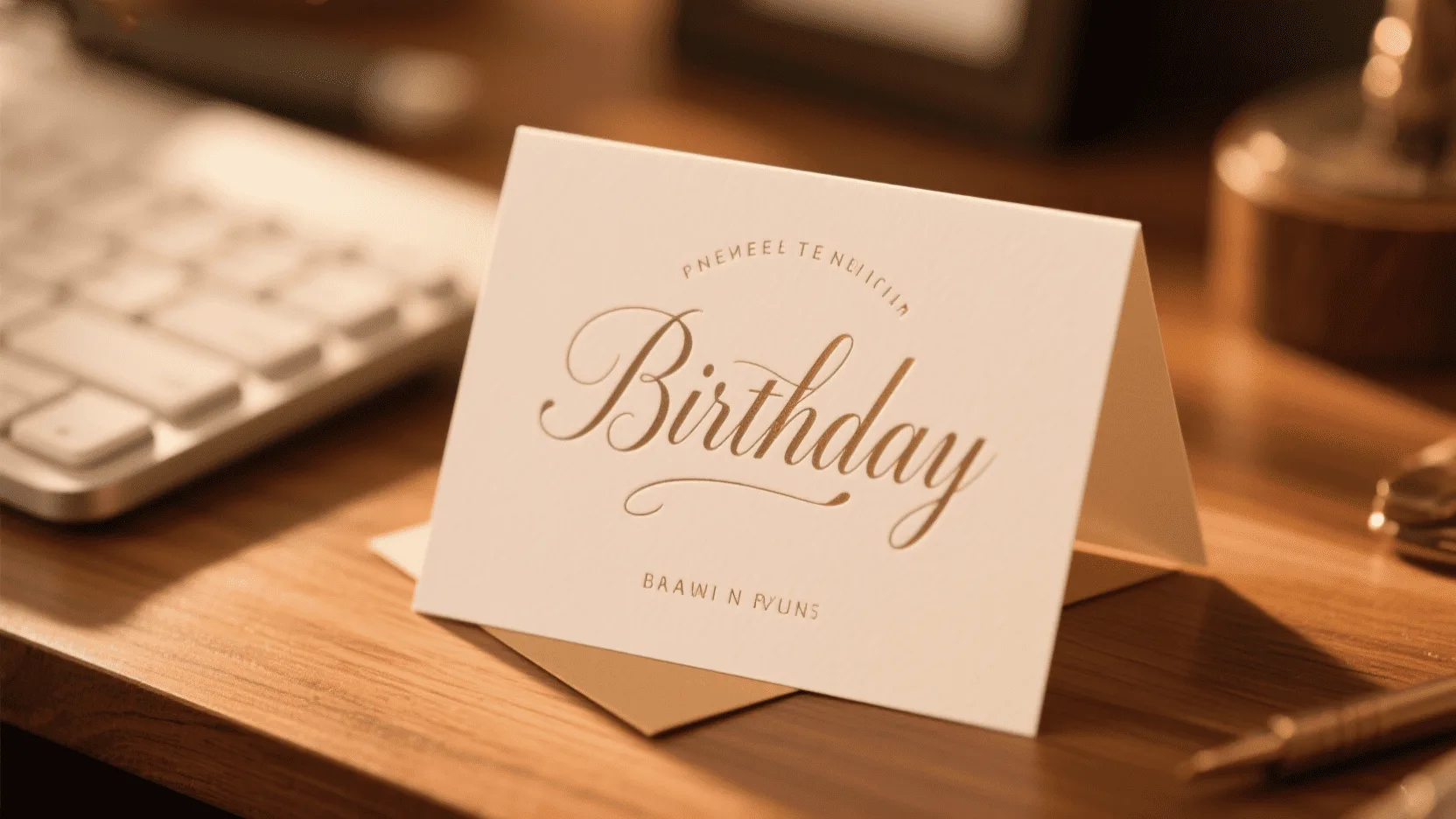
A few weeks ago, my inbox pinged with a birthday e-card from a software vendor we use. It was a generic animation with my name auto-filled. I glanced at it for two seconds and archived it without a second thought. The very next day, a small envelope arrived from one of our long-term paper suppliers. Inside was a simple, beautifully crafted card made from thick, textured stock with a handwritten note from my account manager. I placed that card on my desk, where it still sits.
The contrast was a powerful reminder: one was forgettable spam, the other was a relationship-builder. It made me realize that in our rush to automate, we’re losing the human touch that actually keeps business relationships strong. Ironically, technology is now making it easier to restore that human touch at scale.
How Do Birthday Cards Overcome Digital Fatigue in B2B Marketing?
Your emails go unread and your social media posts are scrolled past. You’re pouring money into digital marketing, but are you really connecting with anyone?
Birthday cards physically bypass the digital clutter that consumes your clients’ attention. They land directly in their hands, creating a memorable, tactile experience that ensures your brand gets noticed.
We live in an age of information overload. The average office worker receives over 120 emails per day, and most are scanned or deleted without being truly read. Your carefully crafted digital message is competing with thousands of others for a few seconds of attention. A physical birthday card, however, operates in a different space entirely. It doesn’t compete in the inbox; it arrives in the real world.
Research from Temple University found that physical advertisements trigger brain activity associated with value and desirability, leading to a stronger emotional response than digital ads (Forbes). When a client holds a high-quality paper card from your company, they are engaging multiple senses. The weight of the paper and the texture of the finish create a lasting impression that a fleeting email simply cannot achieve.
This advantage becomes even stronger when the card is designed as a premium brand touchpoint. Heavy textured stock, foil stamping, embossing, and cohesive branding can turn the card into something recipients keep on their desks rather than immediately discard.
The Tangible Advantage in a Digital World
The engagement difference between a physical card and a digital message is not just anecdotal; it’s measurable. A card is not just a message; it’s a physical representation of your brand’s commitment to the relationship.
| Metric | Typical Email Campaign | Direct Mail (Birthday Card)1 |
|---|---|---|
| Open Rate | ~21% | ~90% |
| Engagement Time2 | < 15 seconds | 1-5 minutes |
| Shelf Life | Instantaneous (Archived/Deleted) | Days or Weeks (Displayed on a desk) |
| Emotional Impact | Low to Neutral | High, Positive |
What Is the ROI of Using Birthday Cards for Client Retention?
Losing a client costs five to twenty-five times more than keeping one. Yet many businesses focus on acquisition, forgetting that loyalty is built through consistent, positive interactions.
The ROI is immense. Birthday cards reduce churn by building emotional loyalty. This non-sales gesture makes clients feel personally valued, making them far less likely to leave over price alone.

According to research from Bain & Company, increasing customer retention rates by just 5% can increase profits by 25% to 95%. This is a statistic I’ve seen play out in my own business, Omet Packaging. A few years ago, we had a major client whose contract was up for renewal. Their procurement department was aggressively seeking lower bids. We knew we were competitive on price, but we weren’t the cheapest.
Throughout the year, however, my team had made it a point to build a real relationship. We sent a premium, custom-designed birthday card to our main contact, signed by the whole team that worked on his account. When the time came to decide, he fought internally to stay with us. He later told me, "I know other vendors might save us a few cents, but I don’t feel like they are our partners. You guys are."
That single gesture didn’t close the deal on its own, but it solidified the emotional connection that tipped the scale in our favor. The cost of that card was nothing compared to the value of a multi-year, six-figure contract.
Comparing Generic vs. Personalized Client Outreach
The difference in impact is stark. A personalized approach1 using high-quality greeting cards transforms a routine gesture into a memorable brand experience.
| Feature | Generic Digital Outreach | Personalized Birthday Card |
|---|---|---|
| Personalization | Low (e.g., "Hi [First Name]") | High (Handwritten note, premium card stock) |
| Impact | Easily ignored or deleted | Creates a memorable, positive emotional response |
| Perceived Effort | Minimal | High; shows genuine thought and care |
| Relationship Building | Transactional | Relational; strengthens human connection |
Quantifying the Value of a Personal Touch
Investing in a high-quality corporate greeting card program is a strategic decision with a clear, positive financial impact. It moves the conversation from a purely transactional one to a relational one.
| Investment | Potential Return | Strategic Impact |
|---|---|---|
| Low Cost: A program of custom greeting cards. | High Value: Retention of a single key client. | Strengthens long-term revenue stability and reduces churn. |
| Minimal Time: A few minutes to write a personal note. | Significant Goodwill: Client becomes a brand advocate1. | Generates powerful word-of-mouth referrals. |
| Brand Reinforcement: High-quality, tangible brand touchpoint. | Increased Loyalty: Client is less sensitive to competitor pricing. | Protects market share and improves profit margins. |
Why Are Birthday Cards a Powerful Tool for Employee Engagement?
Your best employees are leaving for better offers. You struggle to build a strong company culture, especially with remote or hybrid teams, and morale feels low.
A personalized birthday card from leadership is a simple, low-cost action that makes employees feel individually recognized and valued. This gesture boosts morale, strengthens loyalty, and contributes to a positive workplace culture.

The modern workforce craves recognition. In fact, a lack of recognition is a primary reason employees quit their jobs (Gallup). While bonuses and promotions are important, small, consistent gestures of appreciation can be just as powerful.
When I started Omet Packaging, I made it a point to personally sign a birthday card for every single employee. The feedback was immediate and overwhelmingly positive. People would stop me to say thank you, mentioning that it was the first time a CEO had ever acknowledged their birthday. It costs next to nothing but communicates a powerful message: "You are an important part of this team, and we see you."
This is especially crucial for connecting with remote workers who can easily feel disconnected from the company culture. A physical card becomes a tangible piece of that culture delivered directly to their home.
Key Elements of an Effective Employee Birthday Program
For the program to be successful, it must feel authentic. A cheap, generic card can do more harm than good. Investing in quality paper cards and a genuine message is essential.
| Component | Description | Why It Matters |
|---|---|---|
| High-Quality Card | Uses premium paper stock and professional design. | Reflects the company’s commitment to quality and value. |
| Personal Note | A handwritten message1 from a direct manager or leadership. | Shows genuine effort and makes the employee feel individually seen. |
| Timely Delivery | The card arrives on or just before the employee’s birthday. | Demonstrates that the company is organized and truly cares. |
| Consistency | Every employee receives the same level of recognition. | Ensures fairness and prevents feelings of favoritism. |
Can Birthday Cards Nurture Strategic B2B Partnerships?
Your relationships with key suppliers, distributors, and partners are purely transactional. This leaves you vulnerable when you need a favor, better terms, or priority service during a crisis.
Yes. Sending birthday cards to key contacts at partner companies elevates the relationship beyond transactions. It builds goodwill and reinforces a collaborative spirit, fostering partnerships built on mutual respect and personal connection.

We often focus all our relationship-building energy on clients and employees, forgetting the third critical pillar: our partners. Your suppliers, logistics providers, and technology vendors are extensions of your team. A strong relationship with them can be a significant competitive advantage.
I remember a situation a few years ago when a global shipping delay threatened a major delivery for one of our clients. Because I had made an effort to build a personal relationship with our contact at the shipping company—which included sending a birthday card a few months prior—I was able to get him on the phone directly. He went out of his way to find an alternative route for our shipment, saving the project.
That outcome wasn’t based on our contract; it was based on goodwill. A simple birthday card helps build that bank of goodwill, ensuring your partners see you as a valued collaborator, not just another account number.
The ROI of Acknowledging Partners
This simple gesture can yield significant returns, especially when issues arise. It’s a low-cost insurance policy for your supply chain and business operations.
| Action | Potential Benefit | Strategic Impact |
|---|---|---|
| Send Birthday Card to Key Supplier Contact | Priority service during shortages, better payment terms. | Strengthens supply chain resilience1. |
| Acknowledge a Distributor’s Milestone | Increased focus on selling your product, better market intel. | Boosts sales channel performance2. |
| Congratulate a Tech Partner on an Achievement | Faster support response, early access to new features. | Improves operational efficiency. |
How Can Birthday Cards Serve as a Merchandising Tool for Your Brand?
Your packaging is often discarded immediately. How can you create a brand touchpoint with a longer shelf life that constantly reinforces your company’s image and values?
A beautifully designed birthday card acts as a miniature billboard on your client’s desk. It’s a piece of physical merchandise that showcases your brand’s commitment to quality and detail for days or weeks.
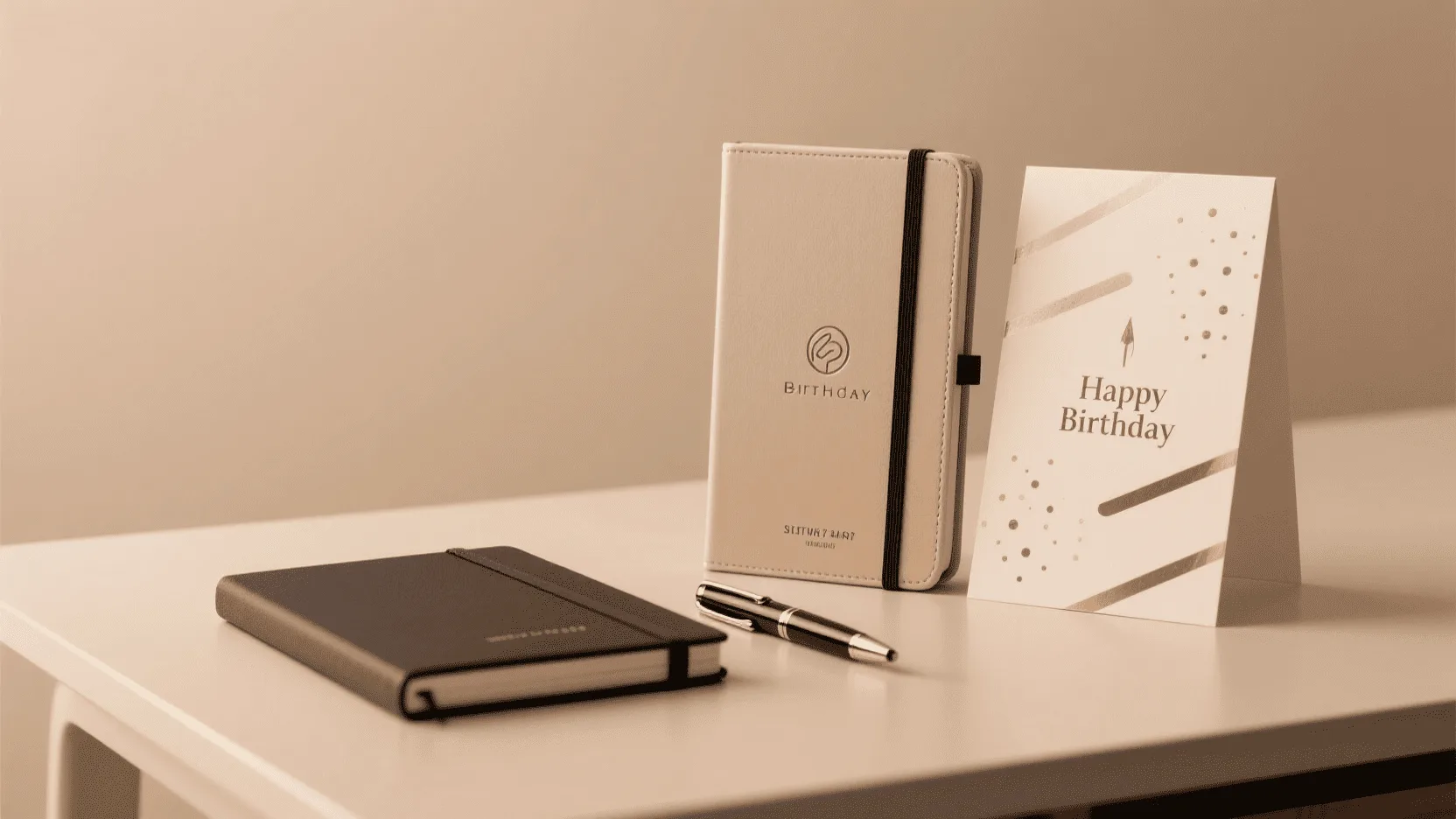
Think of a birthday card not just as a message, but as a product. It’s a physical artifact that represents your brand. When we design gift bags or paper boxes, we obsess over the details—the weight of the paper, the precision of the die-cut, and the finish of the laminate. The same principles apply to a corporate birthday card.
This is an opportunity to provide a sample of your commitment to excellence. Using premium paper stock, elegant finishes like hot stamping or embossing, and a thoughtful design communicates your brand’s values without saying a word. When that card sits on a CEO’s or procurement manager’s desk, it’s not just a friendly gesture. It’s a daily reminder of your brand’s quality standards.
From Card to Brand Ambassador
The specific features you choose for your card directly translate into how your brand is perceived. Each detail is a chance to tell your brand’s story.
| Card Feature | Resulting Brand Perception |
|---|---|
| Heavy, Textured Card Stock | Premium, Substantial, High-Quality |
| Custom Foil Stamping or Embossing1 | Luxurious, Detail-Oriented, Elegant |
| Sustainable, Recycled Paper (FSC Certified)2 | Responsible, Modern, Eco-Conscious |
| A Clean, Minimalist Design | Confident, Sophisticated, Modern |
| A Warm, Handwritten Note | Personal, Caring, Relationship-Focused |
How Do Material Choices and Finishes Create a Luxury Feel?
Your customers pay a premium for quality, but your current card feels cheap and disposable. This disconnect undermines the perceived value of your products and your brand.
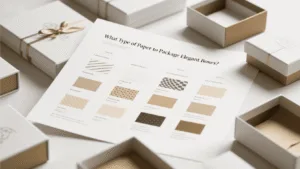
Material choice is the foundation of a premium card. Heavy, textured paper stock in the 350-400 GSM range, combined with finishes such as hot foil stamping, embossing, or debossing, creates a tactile experience that immediately communicates quality and value.

The first thing a person notices about a card is how it feels in their hands. Standard, flimsy cards can send a message of low cost and low effort, while high-grammage stocks provide a substantial, satisfying weight.
Textured stocks such as cotton, linen, or felted paper add another layer of sensory appeal. Hot foil stamping introduces metallic elegance, while embossing or debossing creates a subtle three-dimensional effect that invites touch.
Sustainability can also become part of the premium experience. Choosing FSC-certified paper, recycled stocks, or eco-friendly inks allows brands to combine luxury with responsible sourcing. For premium retailers, these choices can strengthen brand perception rather than requiring a compromise between aesthetics and sustainability.
Comparing Standard vs. Premium Card Features
| Feature | Standard Card | Premium Differentiator Card |
|---|---|---|
| Paper Stock | Thin, lightweight paper | Heavy, textured stock (350-400+ GSM) |
| Finishes | Standard flat ink printing | Hot foil stamping, embossing, debossing |
| Brand Message | Generic, mass-produced feel | Communicates quality, attention to detail, and care |
| Sustainability | Often overlooked | FSC-certified paper, recycled stock, eco-friendly inks |
Why Is Consistent Branding on Cards Crucial for the Unboxing Experience?
Your gift wrapping is beautiful and your boxes are perfect, but the card inside looks like it came from a different company. This breaks the magic of the unboxing moment.
A consistently branded card creates a seamless and immersive unboxing experience. Using the same colors, fonts, patterns, and design language as your gift boxes, bags, and wrapping paper turns the card into an integral part of the overall brand story.
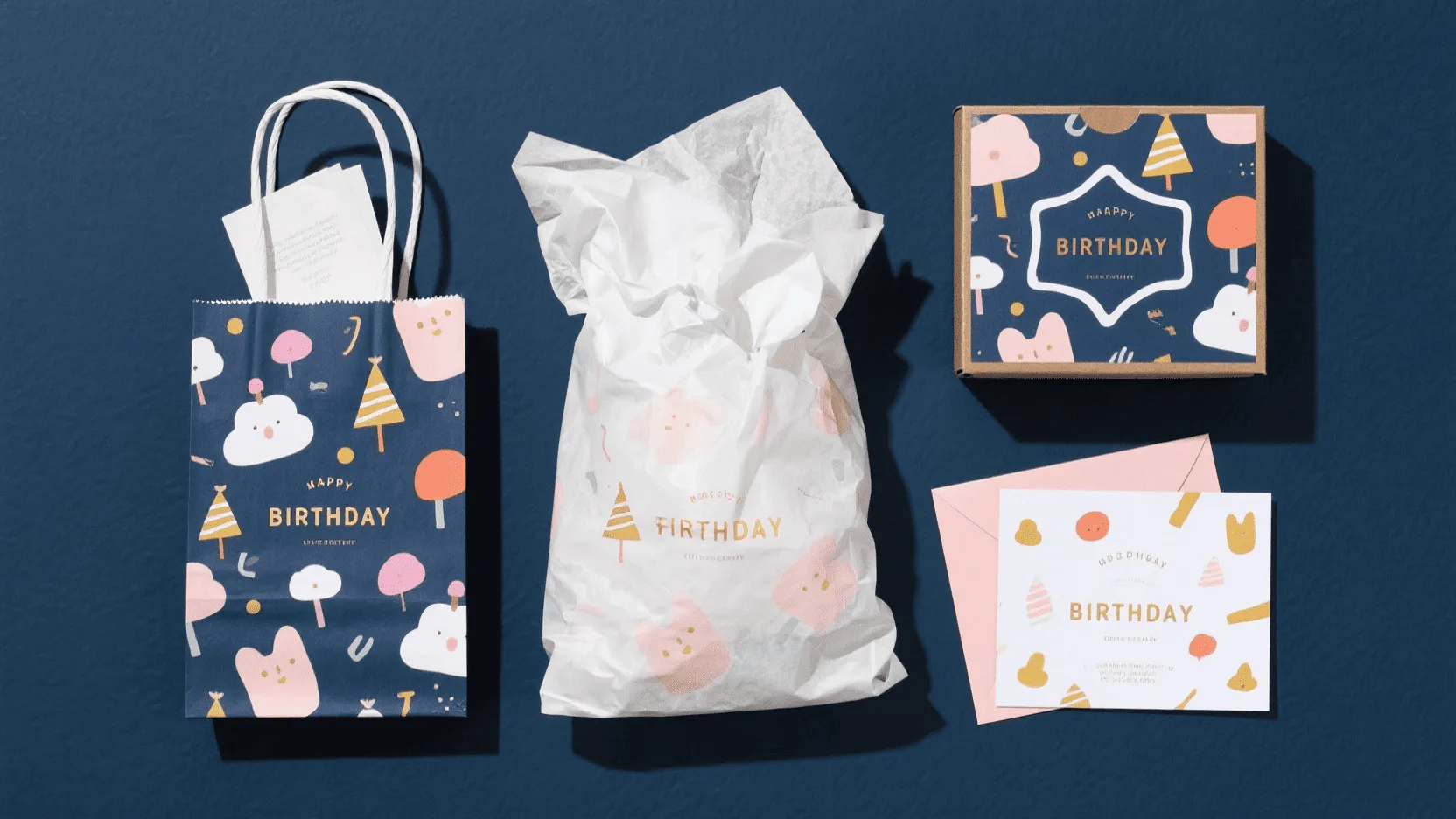
The unboxing experience is a journey, and every element should feel like part of the same story. When a customer opens one of our client’s beautifully designed gift bags, they see matching wrapping paper, and inside that, a stunning gift box. The birthday card is the climax of this journey because it delivers the personal message.
To avoid a disjointed experience, the card should use the brand’s specific color palette, typography, and logo. It might also incorporate a design motif from the box through a subtle debossed pattern or foil accent.
For premium retailers, this consistency transforms the birthday card from a commodity into a final brand statement. Every touchpoint reinforces the same level of quality and care.
How Can Personalization Go Beyond Just a Handwritten Note?
A handwritten message is the standard for a birthday card. For a premium brand, you can go further to create a truly memorable experience.
Premium brands can combine handwritten messages with variable data printing, custom monograms, tailored illustrations, unique QR codes, or personalized digital content. These layers make each card feel bespoke while creating a modern connection between physical and digital experiences.

For example, adding the recipient’s initials as a foil-stamped monogram can make a card feel like a bespoke item created specifically for them. A discreet QR code can lead to a personalized video message, a celebratory animation, or other digital content.
For premium gift retailers, a custom illustration can also relate directly to the gift inside—a specific flower for a bouquet or a visual reference to a special product. These details show a level of care that goes far beyond a standard corporate card.
Tiers of Personalization for Premium Retail
| Tier | Personalization Method | Customer Impact |
|---|---|---|
| Standard Premium | High-quality branded card with a blank interior. | Good. The quality of the card reflects the brand. |
| Enhanced | A handwritten message is added by staff. | Better. Adds a necessary personal touch. |
| Bespoke | Card includes a custom foil monogram of the recipient’s initials. | Excellent. Feels unique and highly personal. |
| Innovative | A QR code links to a custom video message. | Unforgettable. Creates a wow moment and a strong emotional connection. |
How Is Automation Making B2B Birthday Card Programs Scalable?
You know you should be sending cards, but tracking hundreds of client or employee birthdays is a logistical headache. Your team is already overworked and important dates inevitably fall through the cracks.
CRM-integrated automation can connect customer data with printing and fulfillment workflows, automatically triggering personalized birthday cards at the right time. This makes a personal marketing strategy scalable without making it feel automated.
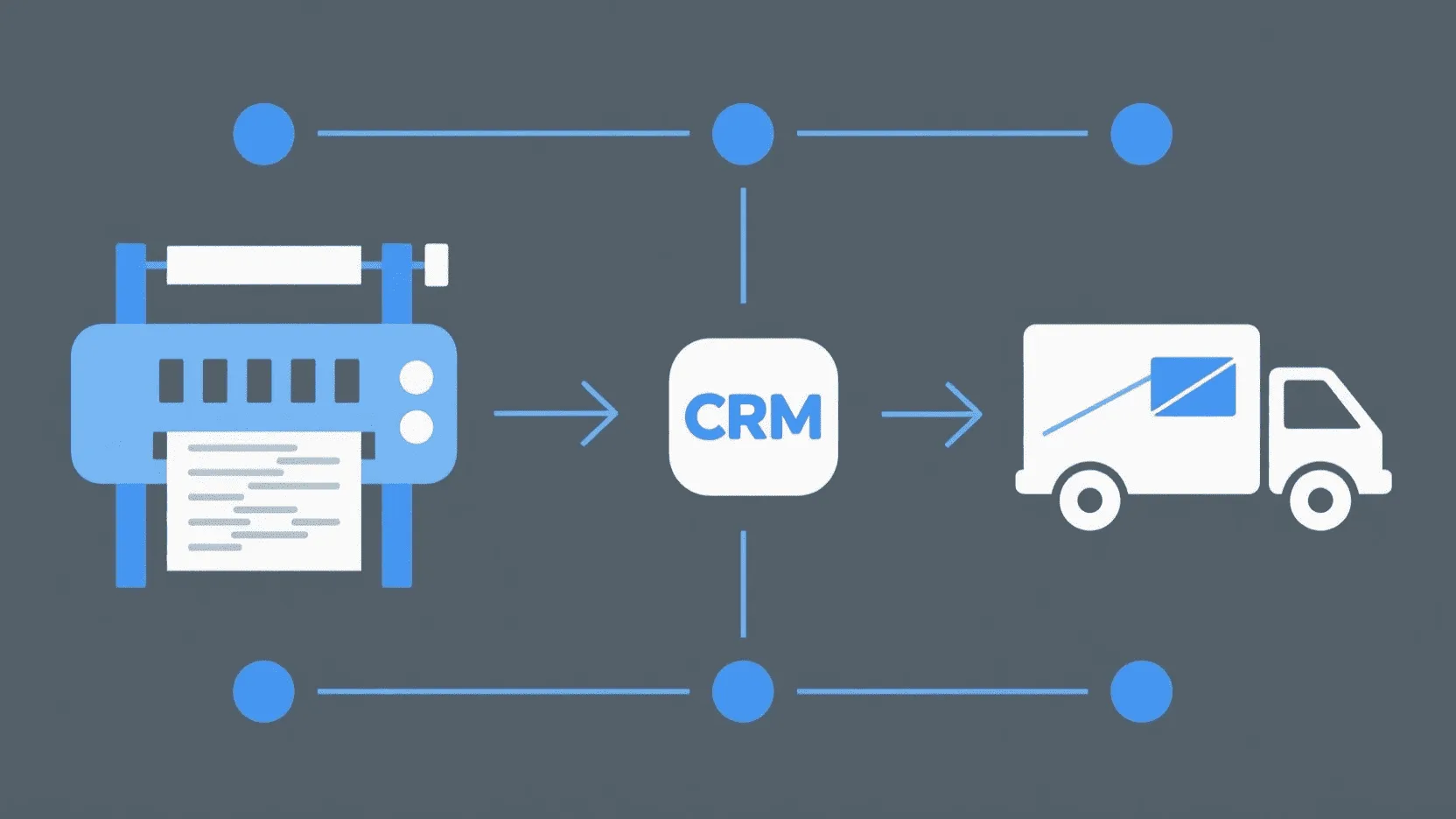
The biggest barrier to a consistent client appreciation program has always been the manual labor involved. Modern digital commerce has changed that. Companies can connect Customer Relationship Management (CRM) platforms such as Salesforce or HubSpot with print and mail services.
When a client’s birthday approaches, the system can automatically trigger an order using verified information such as the recipient’s name, address, birthday, and other approved custom fields. This removes the need for marketing staff to manually export lists or salespeople to remember individual dates.
The important distinction is that automation handles the logistics, not the relationship. Businesses can automate data management, printing, and delivery while preserving the elements that make the card meaningful, such as premium materials, tailored artwork, and handwritten messages.
From Manual Chore to Automated Strategy
| Aspect | Manual Process | CRM-Integrated Automation |
|---|---|---|
| Trigger | Human memory, calendar reminders | Automatic data trigger from CRM |
| Scalability | Low; practical for a limited number of contacts | High; can support large client or employee programs |
| Error Rate | Higher risk of missed dates or incorrect information | Lower when using verified CRM data |
| Team Effort | Recurring manual work | Minimal ongoing effort after setup |
| Personalization | Usually limited | Can combine CRM data with VDP and custom content |
What Role Does Variable Data Printing Play in Personalization?
Sending a card with your logo on it is one thing, but it can still feel generic. Your clients get dozens of these, and most fail to make a real impression.
Variable Data Printing (VDP) enables true one-to-one personalization at scale by changing text, graphics, images, or other elements on individual cards within the same print run.
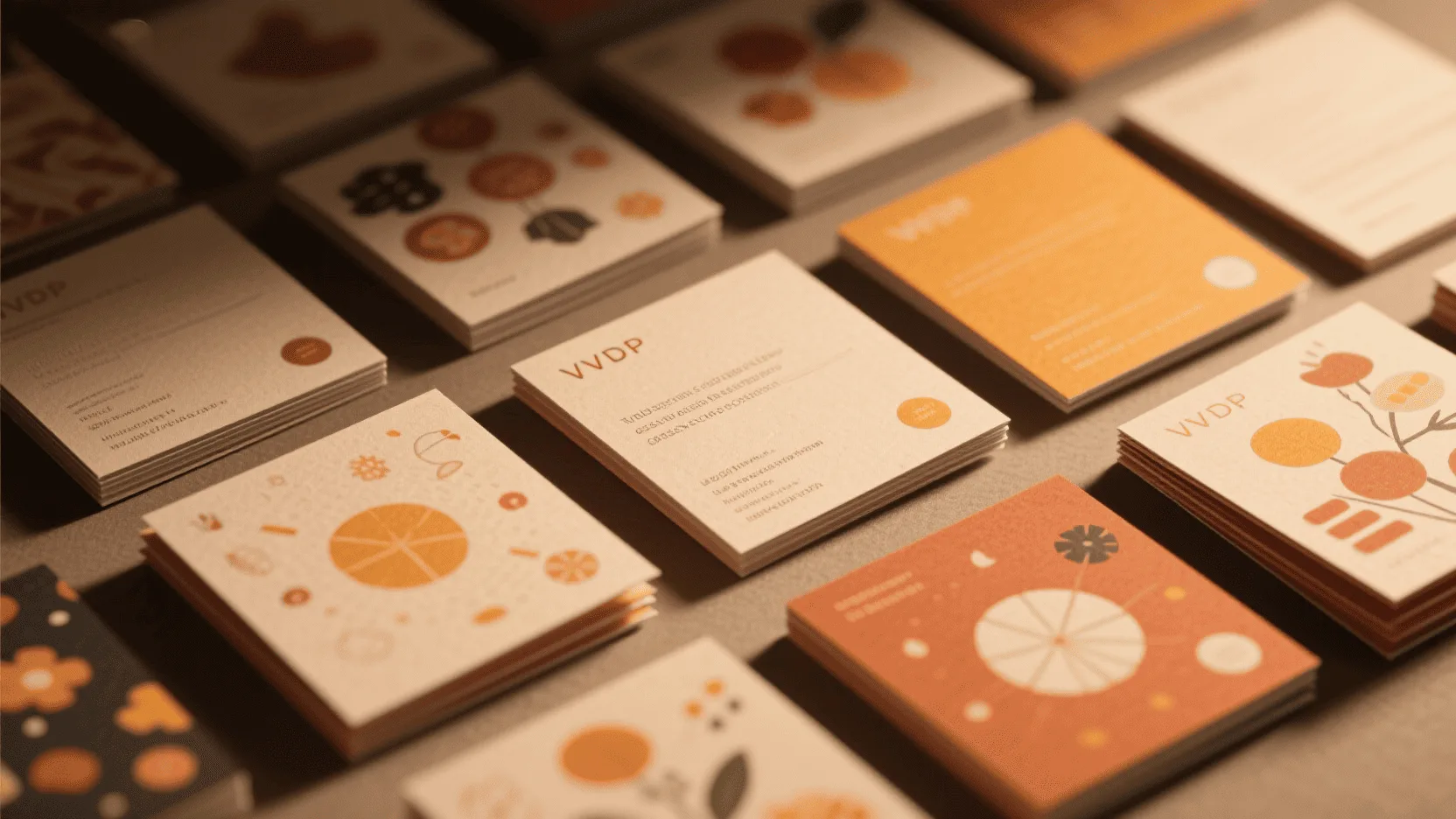
For years, "customization" in printing meant ordering thousands of cards that were all identical. VDP changes that completely. It works much like a sophisticated mail merge for high-quality printing.
A single card design can be connected to a database of recipients. The simplest application is printing a client’s first name directly into the artwork. More advanced applications can change imagery, messages, or design elements based on the recipient’s industry, location, relationship, or other appropriate customer data.
The Power of True One-to-One Communication
VDP moves beyond simple branding to create a communication piece that resonates on an individual level.
| Level of Personalization | Example | Client Impact |
|---|---|---|
| Standard Customization | All cards have your company logo and a generic message. | Low. Feels like standard corporate marketing. |
| Basic VDP | Each card includes the recipient’s name. | Medium. Shows additional effort and gets attention. |
| Advanced VDP | Design, imagery, and message are tailored to the recipient or relationship. | High. Feels thoughtful, personal, and highly relevant. |
Are AI and Online Design Tools Democratizing Custom Card Creation?
You want a unique, professional design for your company’s cards, but hiring a graphic designer can be expensive and time-consuming.
AI-driven platforms and intuitive online design tools are making professional-quality custom card design more accessible. Combined with modern printing technologies, they allow businesses of different sizes to develop distinctive, branded cards without the traditional design barriers.
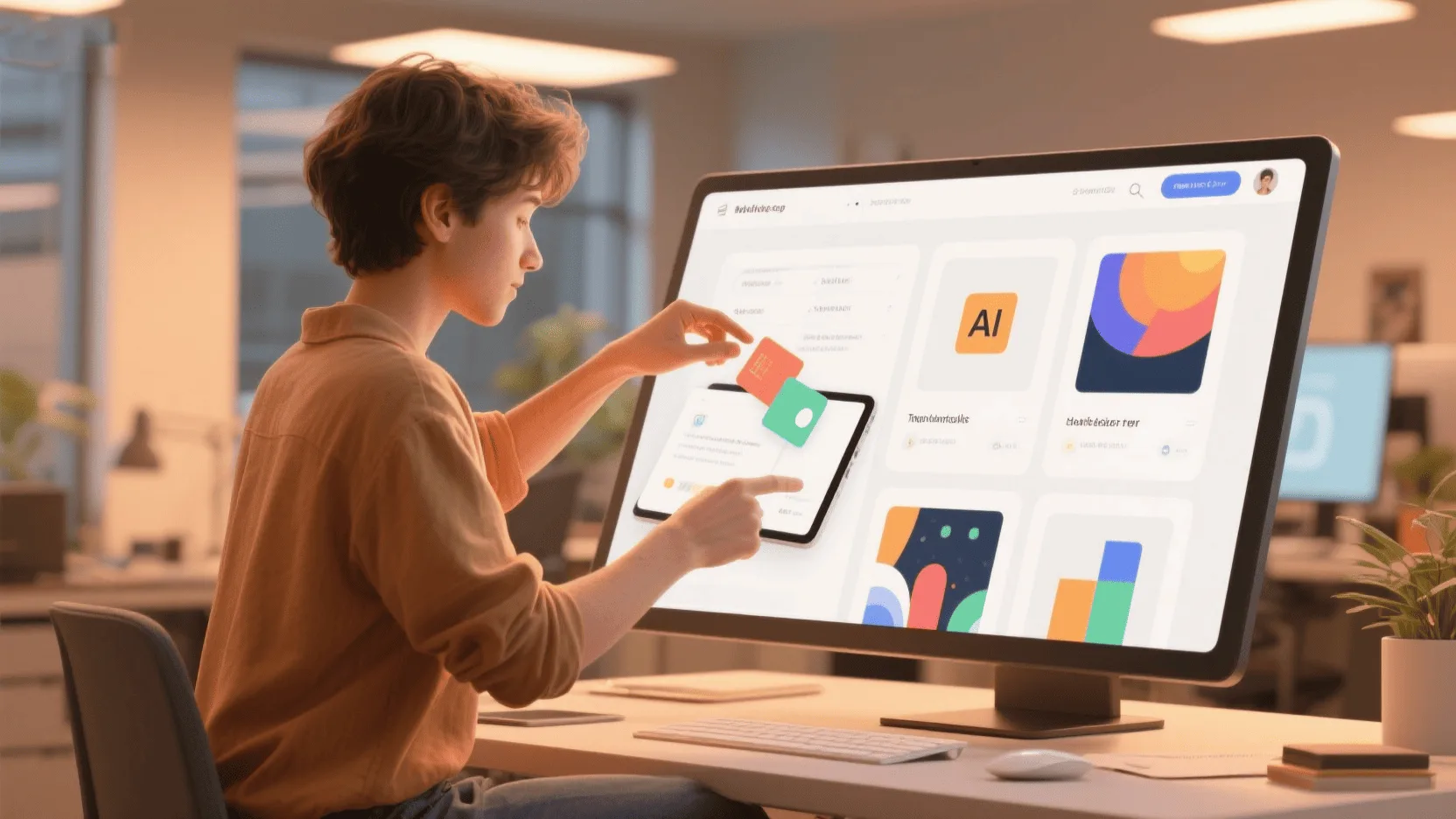
Online design platforms provide templates that can be customized with a company’s logo, brand colors, typography, and messaging. AI tools can take this further by generating design concepts from simple prompts and suggesting appropriate layouts or messages.
This is particularly valuable for small and medium-sized businesses that may not have dedicated design teams. It reduces the time and cost required to create a professional card while allowing the physical product itself to remain highly customized.
The best results still come from combining these tools with a clear brand identity and professional production. AI can accelerate the creative process, but material selection, printing quality, finishing, and final production determine how the card actually feels in the recipient’s hands.
Conclusion
In 2026, corporate birthday cards are not relics; they are sophisticated B2B tools. They cut through digital noise, support client retention and employee engagement, strengthen strategic partnerships, and act as powerful physical merchandise for your brand.
The opportunity is becoming even more significant because technology has removed many of the traditional barriers to personalization and scale. CRM automation can manage the logistics, VDP can create one-to-one printed experiences, and AI-powered design tools can simplify creative development. At the same time, premium materials, cohesive packaging design, and deeper personalization ensure the final physical experience still feels genuinely human.
The winning strategy is not choosing between digital efficiency and physical connection. It is using digital technology behind the scenes to deliver a better, more personal physical experience.
Ready to turn a simple card into a powerful business strategy? Contact us to design custom corporate greeting cards that make a lasting impression.
Explore our full range of custom gift packaging solutions to find more ways to elevate your brand.
FAQ
1. Isn’t sending physical cards outdated and bad for the environment?
Not necessarily. At Omet Packaging, we are FSC certified, meaning we can produce cards using paper from responsibly managed forests. You can also choose recycled paper stocks and more environmentally responsible inks to strengthen your sustainability positioning. The key is to select appropriate materials and avoid unnecessary packaging rather than assuming that digital communication is automatically the more sustainable option.
2. What is the right message to write in a B2B birthday card?
Keep it professional, warm, and authentic. A simple, handwritten message like, "Wishing you all the best on your birthday and a successful year ahead," is perfect. The key is to avoid any sales pitch. The message should be genuinely about celebrating them.
3. How can a small business or startup manage a birthday card program?
Start with your most important clients, employees, or partners and expand gradually. A simple spreadsheet or CRM can track birthdays at the beginning. As the program grows, CRM integrations and automated fulfillment can remove much of the manual work. Online design tools can also reduce the cost and time required to create professional cards.
4. Is a corporate birthday card program scalable for a large company?
Absolutely. CRM data can be connected with printing and fulfillment workflows so that birthdays automatically trigger personalized card orders. VDP can further customize individual cards within the same print run. The key is to automate logistics while preserving authentic details such as personalized messages and high-quality materials.
5. Is it better to send a physical card or a digital e-card?
For relationship-building, a physical card often has a stronger impact because it requires more effort, occupies physical space, and creates a lasting tactile reminder of the relationship. Digital tools can still play an important supporting role, particularly for reminders, CRM automation, and QR-code experiences that connect the physical card with personalized digital content.
6. How can premium brands make birthday cards feel truly luxurious?
Start with substantial materials such as 350-400 GSM textured stock, then consider finishes such as hot foil stamping, embossing, or debossing. Keep the card visually consistent with your gift bags, boxes, and wrapping paper. For an even more distinctive experience, add personalized monograms, tailored illustrations, handwritten messages, or QR codes linking to personalized digital content.
7. Can birthday cards be used for people other than clients?
Yes. A strong B2B birthday program can cover three important relationship groups: clients, employees, and strategic partners. Recognizing employees can strengthen engagement and company culture, while acknowledging suppliers, distributors, logistics providers, and technology partners can build goodwill and improve long-term collaboration.
8. What is the real ROI of sending B2B birthday cards?
The ROI is best measured beyond immediate sales. Relevant indicators include improved client retention, stronger employee engagement, lower turnover, increased partner goodwill, repeat business, referrals, and greater resistance to competitor price pressure. For a high-value client or strategic partner, the cost of a premium birthday card is small compared with the potential value of a long-term relationship.