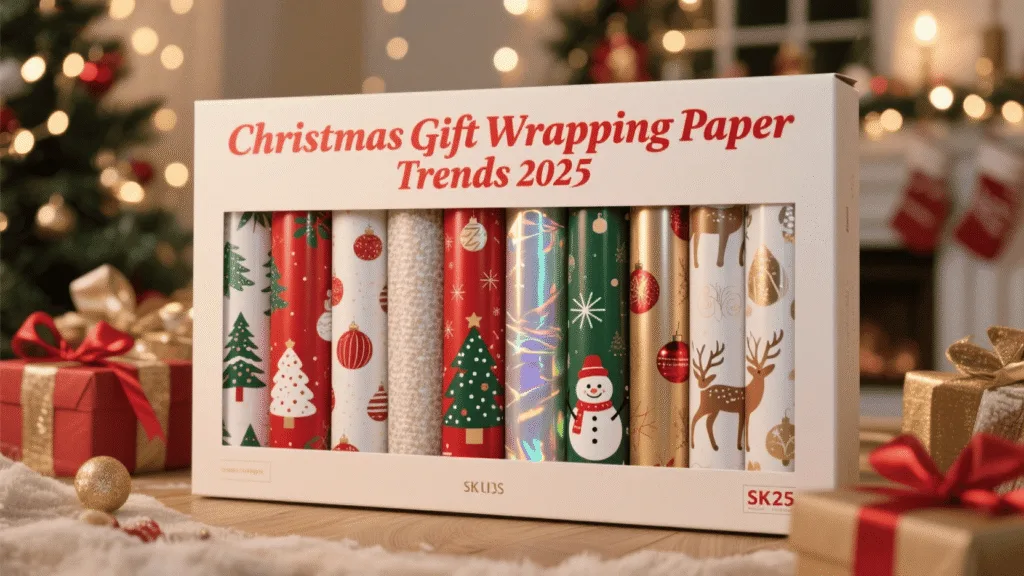
The Top Christmas Wrapping Paper Trends for 2026: Designs, Substrates, and SKUs That Actually Sell
Every year, retailers face the same holiday gamble: which gift wrap designs will fly off the shelves, and which will end up in a post-Christmas clearance bin? Stocking the wrong styles means tied-up capital, wasted inventory, and potentially higher product-return costs when fragile packaging fails during the holiday shipping rush.
For Christmas 2026, the winning trends are nature-inspired botanicals, "quiet luxury" minimalism, and tactile substrates like kraft and textured paper. A smart SKU strategy focusing on timeless core sellers and a few trendy designs will maximize sales, while durable, recyclable, and increasingly recycled paper can reduce product damage, returns, and unnecessary holiday waste without sacrificing brand value or profitability.
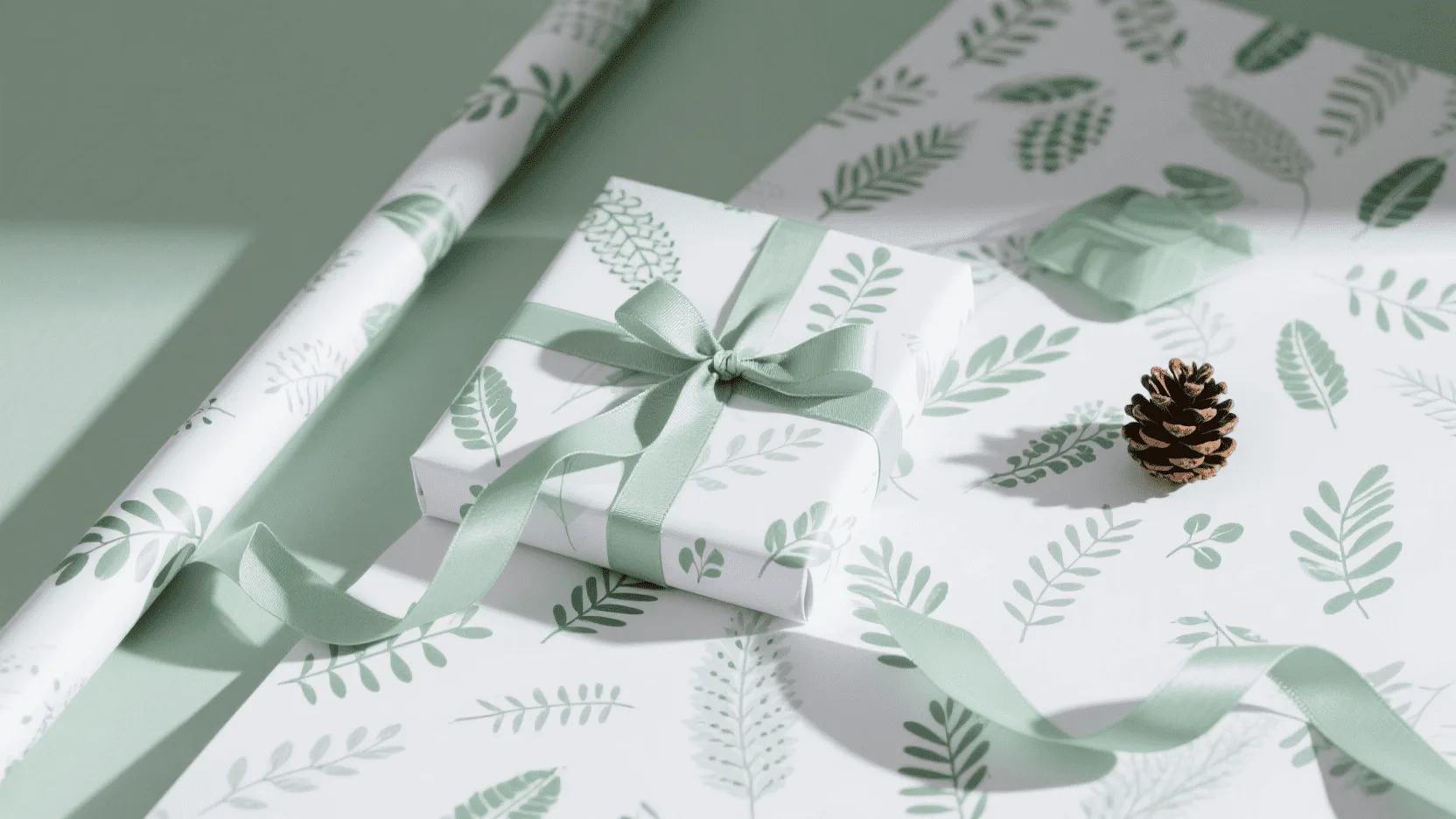
I’ve been in the paper packaging industry for over a decade, and I’ve watched trends come and go. I remember years when shelves were flooded with cartoon Santas, followed by seasons dominated by holographic glitter. But recently, something has changed. The choices have become more intentional. A few years ago, I advised a client to take a chance on a simple, elegant eucalyptus print on matte paper. It felt like a risk against the louder, more traditional options. It became their number one seller. That success reinforced what we’re seeing across the market: customers are looking for wrapping paper that feels personal, sophisticated, and aligned with their values.
At the same time, sustainability is no longer limited to simply choosing "paper." Customers are increasingly paying attention to what the paper is made from, how it is printed, and what happens to it after Christmas. That is why kraft and recycled kraft papers are becoming particularly useful for retailers: they can combine a natural aesthetic, strong brand story, and practical recyclability when specified and printed correctly.
What Wrapping Paper Designs Will Dominate Shelves in 2026?
Trying to choose between classic plaids and modern geometrics can feel like a shot in the dark. If you bet big on a fleeting fad, you’re stuck with dated inventory that won’t sell next year.
For 2026, focus on three dominant design themes: Biophilic Botanicals (winter foliage), Quiet Luxury (subtle patterns and monochrome), and Nostalgic Whimsy (modern-retro illustrations). These designs hit the sweet spot between festive tradition and contemporary style while giving retailers room to incorporate sustainable substrates and restrained printing techniques.
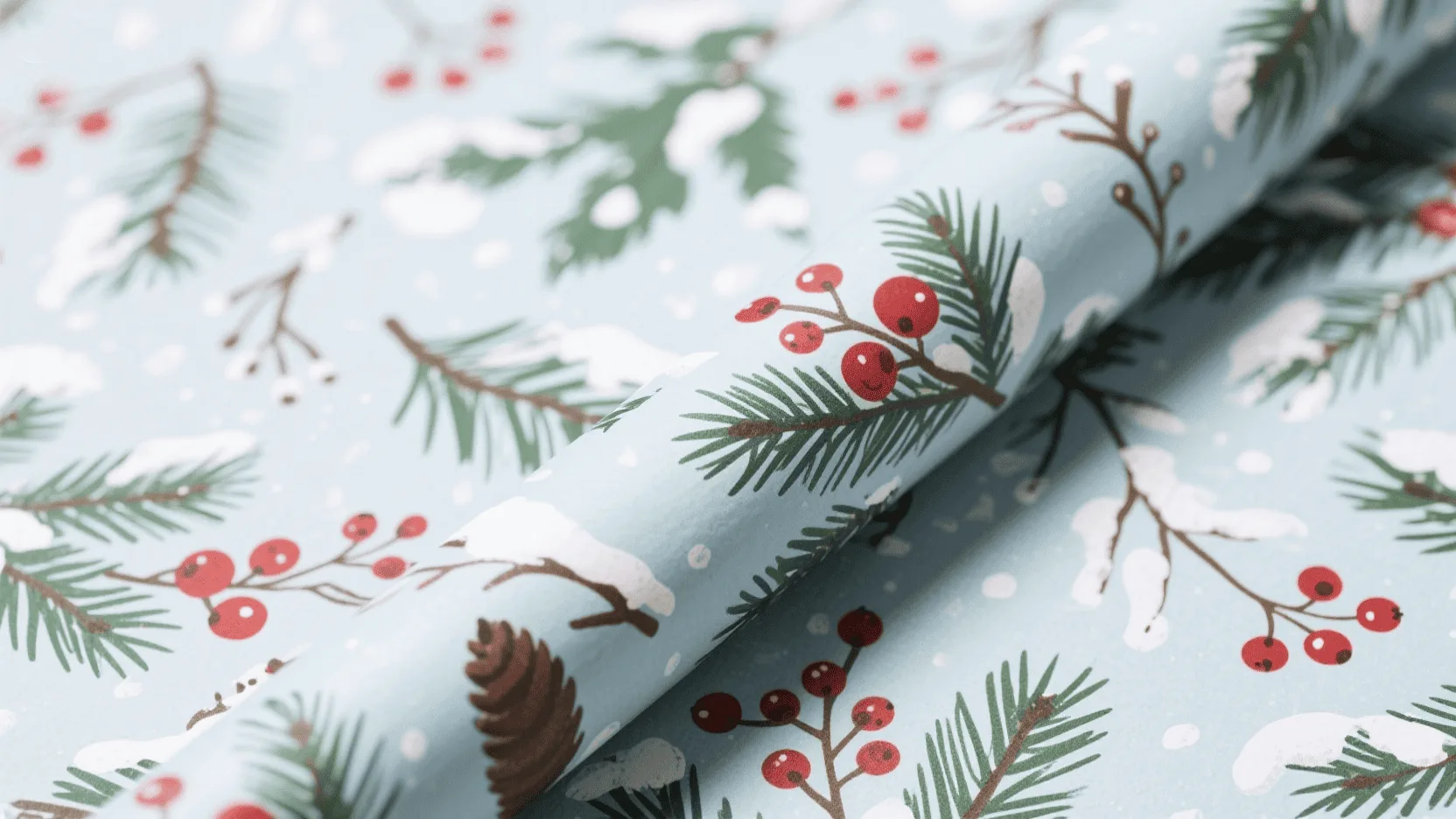
The shift toward more refined designs is undeniable. It’s a direct reflection of broader lifestyle trends focused on wellness, sustainability, and understated elegance. Gone are the days of loud, busy patterns being the only option. Today’s consumer wants a design that complements their home decor and feels thoughtfully chosen. When we at Omet Packaging work on custom designs, the conversation is less about "what’s festive?" and more about "what story does this tell?". A pattern of winter ferns and berries tells a story of natural beauty and calm. A subtle pinstripe on deep navy paper tells a story of sophistication. A whimsical, hand-drawn village scene evokes feelings of warmth and tradition. The key is to offer designs that create an emotional connection, turning the wrapping itself into part of the thoughtful gift experience.
The Top 3 Design Directions
- Biophilic Botanicals1: This trend moves beyond simple holly leaves. Think elegant patterns of frosted eucalyptus, winter florals, pine boughs, and even subtle dried orange slices. The color palettes are often drawn from nature: sage green, deep teal, earthy browns, and berry red. This style appeals to a wide audience that appreciates natural beauty and a calmer, more organic holiday aesthetic.
- Quiet Luxury2: This is the "less is more" approach. It’s defined by minimalist geometric patterns, fine lines, subtle textures, and sophisticated, often monochromatic color schemes. Imagine a deep burgundy paper with a simple gold pinstripe or a forest green paper with a blind embossed pattern. This trend targets a style-conscious consumer who wants their gifts to look chic and refined, not flashy.
- Nostalgic Whimsy: This is a modern take on classic Christmas comfort. It avoids generic cartoon characters in favor of charming, retro-inspired illustrations that feel like they came from a vintage storybook. Think gentle scenes of winter animals in scarves, quaint village scapes, or classic motifs like rocking horses drawn in a contemporary, artistic style. This taps into the emotional core of the holidays and is perfect for family-oriented brands.
| Design Trend | Target Audience | Key Visuals | Color Palette |
|---|---|---|---|
| Biophilic Botanicals | Wellness-minded, nature lovers | Winter florals, eucalyptus, pine, berries | Sage green, earthy tones, deep teal |
| Quiet Luxury | Style-conscious adults, minimalists | Fine lines, micro-patterns, texture | Monochrome, navy, burgundy, gold |
| Nostalgic Whimsy | Families, traditionalists | Retro illustrations, winter scenes | Muted primary colors, warm whites |
What Paper Substrates Will Customers Be Looking For in 2026?
You know that flimsy, glossy wrapping paper feels cheap. As customers become more discerning, stocking a paper that doesn’t feel good to the touch can instantly devalue both your product and your brand. Worse, very thin paper can tear during handling and shipping, providing little protection for the product underneath.
In 2026, customers want tactile, high-quality substrates. Uncoated kraft paper is a perennial favorite for its eco-conscious feel, while 100% recycled kraft paper, textured papers with a linen or felt finish, and premium matte stocks are gaining attention across different market segments. For e-commerce and premium products, 80+ GSM paper offers a better balance of durability, presentation, and protection, helping reduce damage-related returns while maintaining a high-end feel.
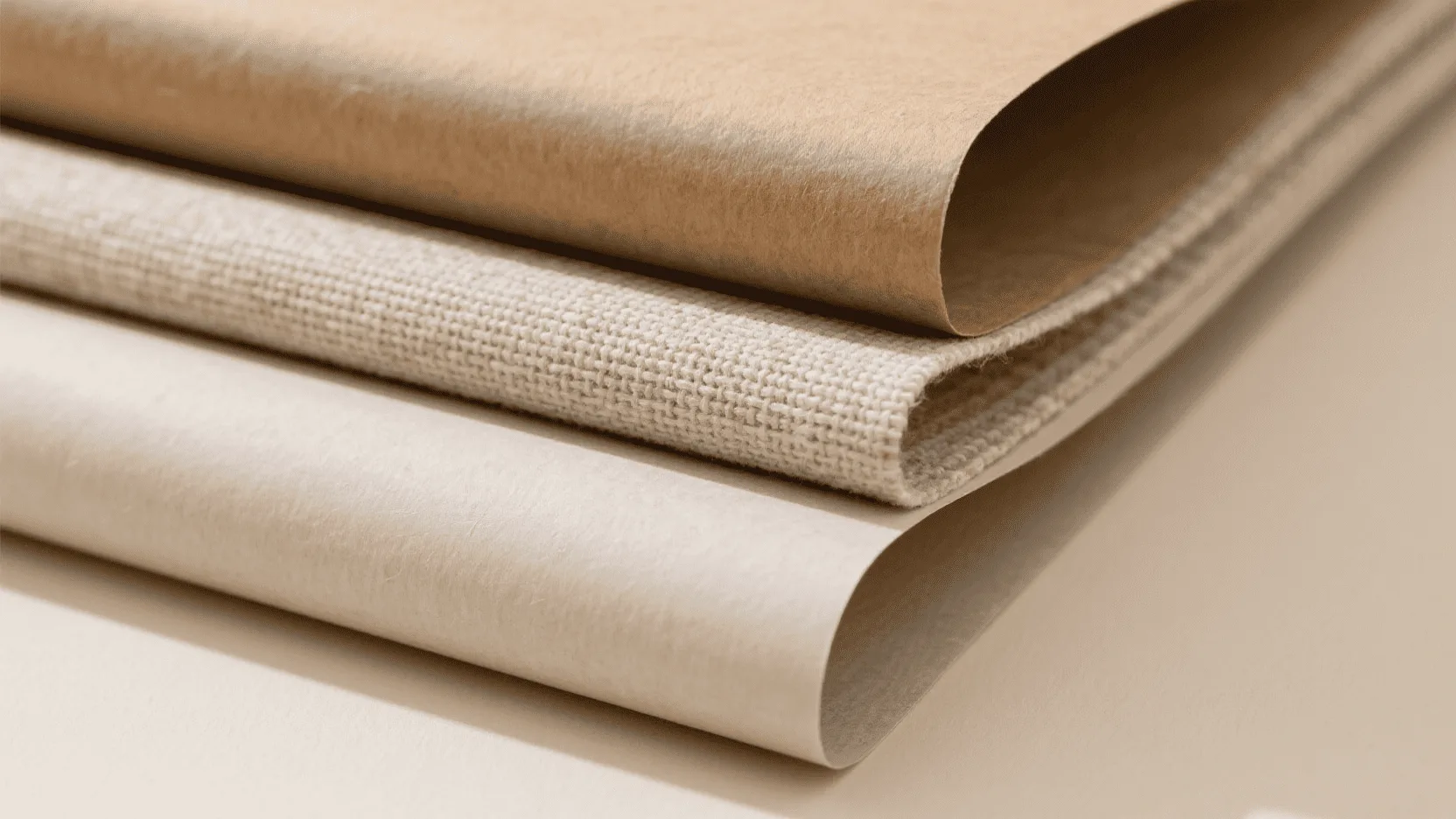
The feel of the paper is the first physical interaction a customer has with your gift presentation. It’s a moment that can either delight or disappoint. I recently worked with an online candle company that was using standard, clay-coated glossy wrap. They switched to a single SKU: an 80 GSM uncoated, matte paper with their logo in a simple step-and-repeat pattern. Their social media mentions immediately lit up with comments about the "luxe feel" of their packaging. Customers weren’t just excited about the candle; they were taking pictures of the wrapping paper. This proves that substrate choice is not a minor detail—it’s a critical brand messenger. It communicates a commitment to quality that customers can literally feel in their hands.
Kraft paper is particularly powerful because its natural brown surface is no longer associated only with low-cost or rustic packaging. With the right design, it can communicate authenticity, minimalism, and even conscious luxury. It also provides a natural canvas for high-contrast printing, making a simple white snowflake, black logo, red pattern, or subtle tonal design look intentional rather than basic.
For retailers considering the next step in sustainability, 100% recycled kraft paper deserves special attention. Its raw material comes from recovered paper rather than virgin timber, reducing dependence on new forest resources and diverting waste from landfill. The material can sometimes carry a higher or more volatile price because collection, sorting, de-inking, and re-pulping are more complex than virgin-paper production. However, at scale, the difference should be evaluated against printing efficiency, waste reduction, brand value, and future regulatory requirements rather than judged solely by the initial per-roll price.
For e-commerce brands, the substrate also has a functional role. During the holiday rush, packages are dropped, stacked, and jostled, and products can be damaged by abrasion and movement inside the shipping carton. A flimsy 50-60 GSM paper tears easily and offers little resistance. By contrast, 80-90 GSM paper provides a more durable protective layer that can help reduce scuffs and minor damage. For luxury goods, 100+ GSM paper offers even greater durability and a substantial premium feel. This means the right wrapping paper can contribute not only to a better unboxing experience, but also to fewer damage-related returns.
Substrates That Signal Quality
- Uncoated Kraft Paper1: This is no longer just a rustic choice. It’s a versatile, sustainable powerhouse. Its natural texture provides a perfect canvas for simple one or two-color designs, creating a look that is both modern and earthy. It’s sturdy, easy to wrap with, and fully recyclable when produced without problematic plastic components. Its popularity stems from its authenticity and clear connection to eco-friendly values.
- 100% Recycled Kraft Paper: For retailers that want to go further than simply using an uncoated substrate, recycled kraft incorporates recovered paper into the material supply chain. It can support a strong sustainability story while retaining the natural aesthetic customers associate with kraft. When purchasing at scale, compare the material premium with savings from efficient printing, reduced waste, operational consistency, and the marketing value of a credible recycled-content claim.
- Textured and Laid Papers: For a truly premium offering, nothing beats texture. Papers with a subtle linen, felt, or "laid" (faint ribbed lines) finish elevate the sensory experience. They feel substantial and expensive, justifying a higher price point. These substrates pair beautifully with the "Quiet Luxury" design trend, as the texture itself becomes a key part of the design. They make a gift feel incredibly special before it’s even opened.
- Premium Matte Paper (80+ GSM)2: If you’re using a standard paper substrate, upgrading the weight makes a world of difference. An 80 GSM (grams per square meter) or higher matte paper offers excellent opacity (no seeing the gift through the paper), provides a smooth, high-end feel, and allows for crisp, vibrant printing. It also provides more resistance to tearing and abrasion, making it a practical choice for e-commerce shipments and premium products.
A useful rule of thumb is to match GSM to the product and sales channel:
| Paper Weight (GSM) | Protective Qualities | Typical Use Case | Return Risk |
|---|---|---|---|
| 50-60 GSM | Very Low. Tears easily, offers little protection. | Budget, bulk wrapping. | High |
| 80-90 GSM | Good. Resists tearing and provides a buffer against scuffs and minor impacts. | Quality gift wrap, e-commerce. | Low |
| 100+ GSM | Excellent. Very durable, feels luxurious, adds structural integrity. | Luxury goods, premium brands. | Very Low |
How Does Your Choice of Wrapping Paper Impact Landfill Waste?
Your brand promotes sustainability, but your holiday wrapping paper is covered in glitter and foil. This sends a mixed message to eco-conscious customers, undermining your brand’s credibility right at the point of purchase.
Paper with glitter, foil, or plastic lamination can create problems in recycling streams. By choosing simple, uncoated paper—especially FSC-certified or recycled kraft—retailers can offer a genuinely recyclable option and reduce post-holiday landfill waste. The key is to look beyond the word "paper" and consider the complete material and finishing specification.
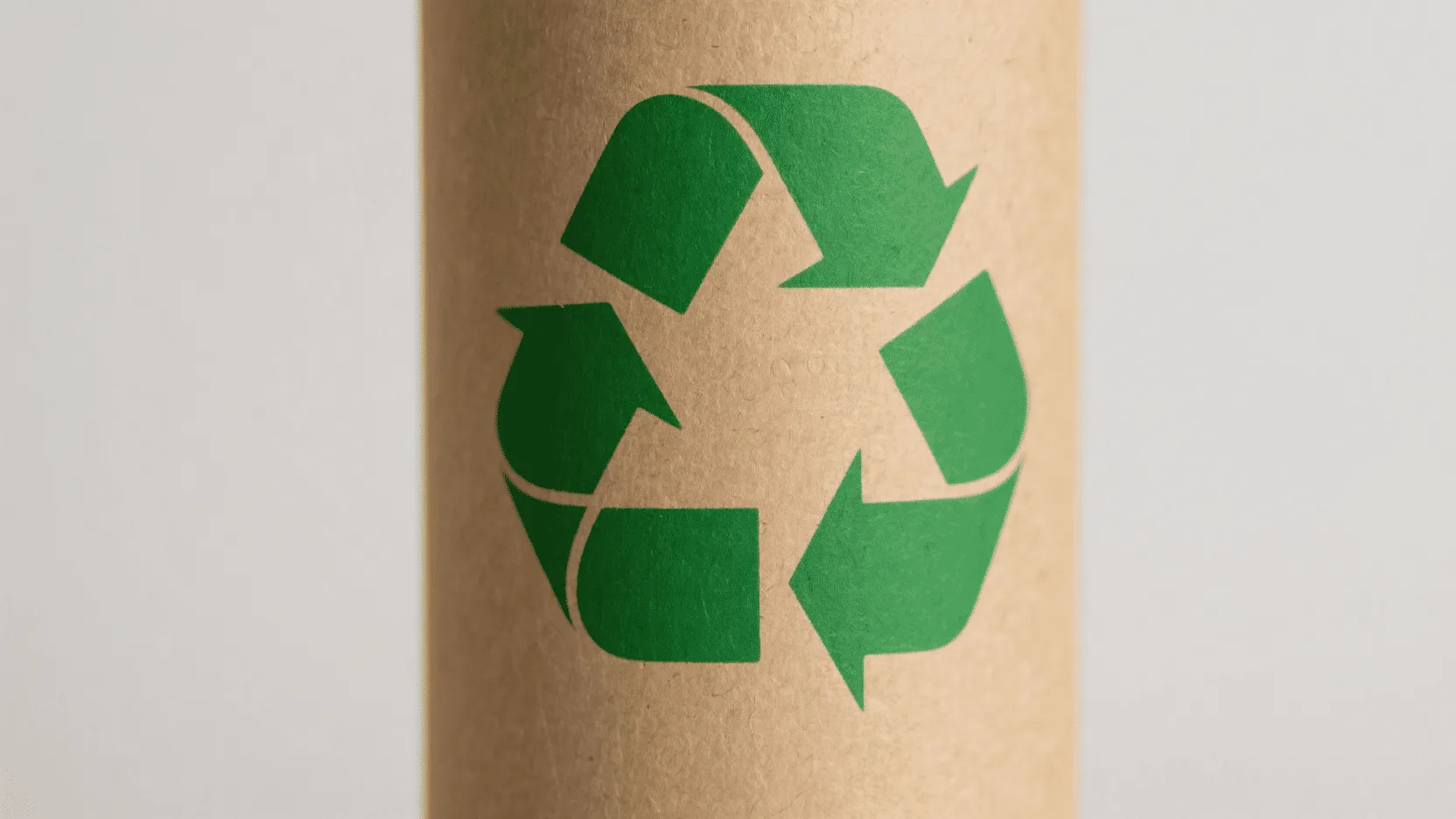
The term "recyclable" is often misused in marketing. The reality on the floor of a recycling facility is blunt: if it’s not clean, simple paper, it can cause problems. Glitter can introduce plastic contamination, foil is a different material, and plastic lamination adds a film layer that can prevent conventional paper recycling. Consumers are more educated about this than ever. They know that "wish-cycling"—tossing these items in the blue bin hoping for the best—only makes the problem worse.
As a manufacturer, we have a responsibility to be honest about this. When we sell a client beautiful, uncoated Christmas gift wrapping paper printed with water-based inks, we’re giving them a product designed to be easier to recycle after use. This isn’t just a feature; it’s a powerful statement that aligns the brand with the values of modern consumers and provides a more responsible holiday experience.
Kraft also makes it easier to create a festive appearance without relying on glitter or plastic-heavy finishes. A natural brown background combined with white, red, or green printing can create a distinctly Christmas look while keeping the design simple. For brands seeking a more premium appearance, the "luxury" can come from texture, typography, carefully selected accessories, or sophisticated composition rather than non-paper decorative layers.
Decoding Recyclability: What Actually Works
The key to reducing landfill waste is to eliminate materials that contaminate the paper recycling process. The beauty of the solution is its simplicity. Focus on pure paper products.
-
The Contaminants:
- Glitter: Plastic-based particles can contaminate recycling streams and are difficult to separate.
- Foil/Metallic Finishes: A different material class that can complicate paper recycling.
- Plastic Lamination (Glossy/Velvet Feel): A layer of plastic film that can make the paper unsuitable for conventional recycling.
-
The Solutions:
- Uncoated Paper1: The gold standard. It breaks down easily and can be recycled multiple times.
- Kraft Paper: A popular uncoated choice known for its strength and natural aesthetic.
- 100% Recycled Kraft Paper: Uses recovered paper as a major raw material and can help reduce demand for virgin fiber while supporting a circular material strategy.
- FSC-Certified Paper2: Guarantees the paper comes from responsibly managed forests, adding another layer of sustainability to your brand story. As I explain in my detailed guide on recyclable wrapping paper, choosing these options is the single most effective way to reduce your packaging’s environmental footprint.
A simple "scrunch test" can also provide a useful first indication: paper that stays scrunched is more likely to be predominantly paper, while paper that immediately springs back may contain plastic film or other coatings. However, retailers should still confirm the actual material specification and local recycling requirements before making absolute recyclability claims.
How Can You Make Kraft Wrapping Paper Look Festive Without Sacrificing Sustainability?
You’ve chosen plain kraft paper to be fully sustainable, but now your gift looks a bit plain and unfinished. How do you add that "wow" factor without resorting to plastic bows, glitter, or heavily laminated finishes?
The answer is smart minimalist design. Use negative space, high-contrast sustainable inks, and timeless Christmas motifs such as stars, snowflakes, pine trees, and reindeer. Then add natural or reusable accessories such as jute twine, fabric ribbons, paper tags, wax seals, or botanical sprigs to create a premium holiday presentation without turning the wrapping into a mixed-material waste problem.

The magic of designing for kraft paper lies in the "less is more" philosophy. The natural, earthy texture of the paper itself is part of the design. Instead of covering it up with heavy layers of ink, smart design uses this background to make simple elements pop. A repeating pattern of small white stars, delicate red snowflakes, or even a simple pinstripe can transform the paper from plain to premium.
White ink on brown kraft creates a clean, Scandinavian-inspired appearance, while red and green provide a more traditional Christmas feeling. You can also use metallic-colored ink to suggest gold or silver without necessarily applying physical foil. The goal is to create the visual impression of luxury through contrast, typography, texture, and restraint.
Design Principles for Festive Kraft Paper
- Embrace Negative Space1: The unprinted brown paper is not empty space; it’s a design element. Use it to make your printed patterns breathe and feel more intentional. A sparse pattern often looks more elegant than a dense, busy one.
- High-Contrast Colors2: White ink on brown kraft paper creates a stunning, rustic-chic look reminiscent of a snowy landscape. Red or green offers a classic Christmas feel, while a metallic-colored ink can add a touch of luxury without relying on real foil.
- Pattern Choice: Stick to timeless, simple motifs. Think stars, snowflakes, pine trees, reindeer silhouettes, or even a subtle repeating pattern of your brand’s logo. These designs evoke the holiday spirit without feeling overwhelming.
- Keep Ink Coverage Controlled: Simple one- or two-color patterns are not only visually consistent with the minimalist trend; they can also reduce ink consumption and printing complexity, making custom recycled kraft paper more cost-effective at scale.
How Can Accessories Elevate Plain Kraft Wrapping Paper for Christmas?
You’ve chosen plain kraft paper to be fully sustainable, but now your gift looks a bit plain and unfinished. How do you add that "wow" factor without resorting to plastic bows and ribbons?
Accessories are the key to transforming plain kraft paper into a luxurious gift wrap. Elements like natural twine, fabric ribbons, custom paper tags, wax seals, or botanical sprigs add color, texture, and a personal, handcrafted feel that mass-produced wrap cannot replicate.
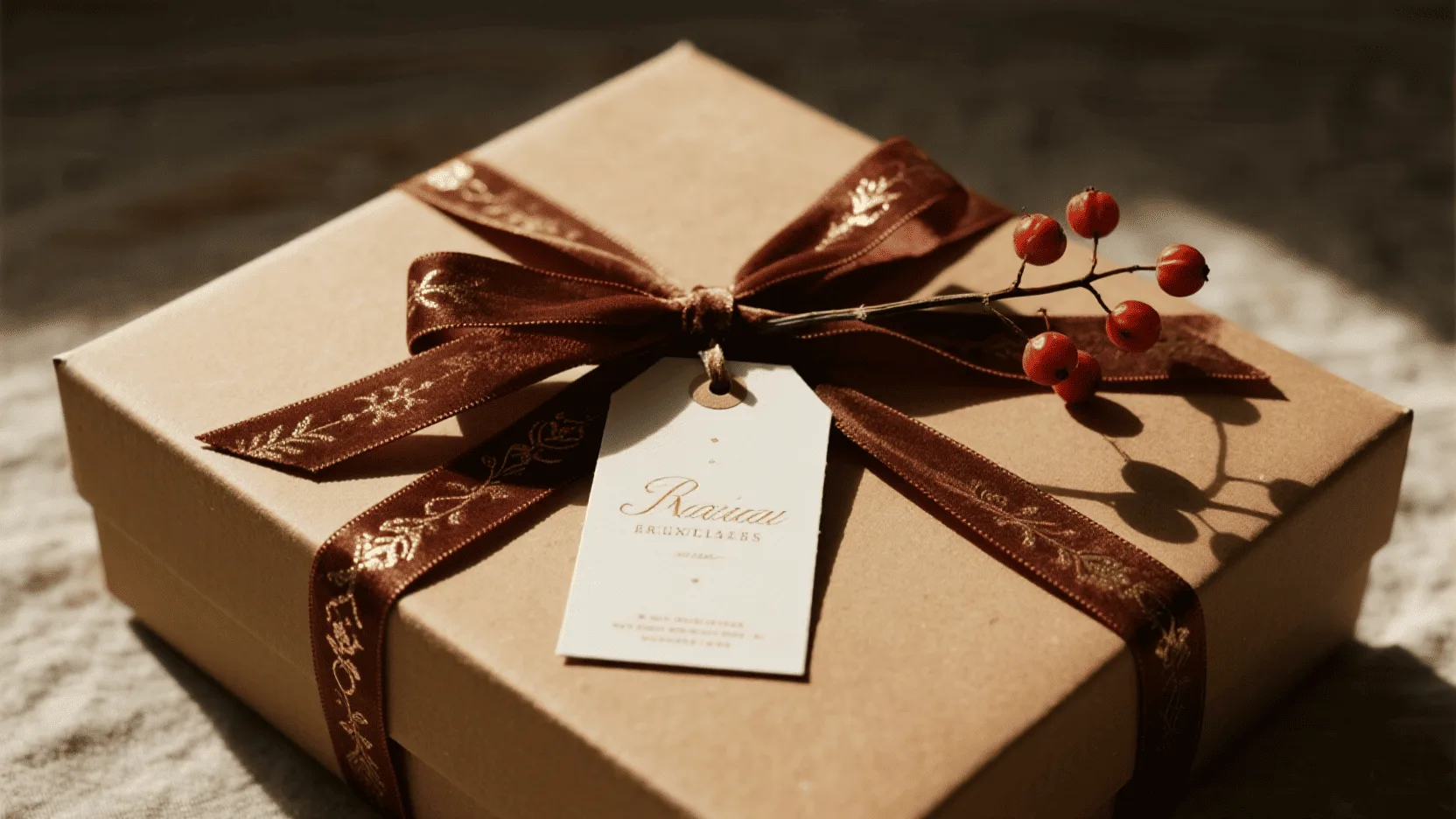
Think of plain kraft paper as the perfect canvas. The accessories are your brushstrokes, allowing you to customize the look for any occasion. This is where you can truly let your brand’s personality shine. For an organic, farm-to-table brand, pairing kraft wrap with natural jute twine and a sprig of dried rosemary is perfect. For a luxury cosmetic brand, a wide, deep green velvet ribbon and a gold wax seal with the company’s initial would feel incredibly opulent.
At Omet Packaging, we often create entire "finishing kits" for our clients, including custom-printed tags and stickers that coordinate with their wrapping paper. This creates a cohesive and memorable unboxing experience. The tactile sensation of untying a real fabric ribbon or seeing a sprig of fresh pine creates a sensory experience that connects with the recipient on an emotional level, making the gift inside feel even more special.
The important distinction is that not every accessory needs to be disposable. Reusable fabric ribbons, removable tags, and natural decorative elements can extend the life of the packaging experience while reducing reliance on plastic decorations.
A Guide to Accessorizing Kraft Gift Wrap
| Accessory Type | Aesthetic | Sustainability | Perceived Value |
|---|---|---|---|
| Natural Twine/Jute1 | Rustic, Earthy, Minimalist | High (Compostable) | Authentic, Thoughtful |
| Fabric Ribbons (Cotton/Velvet) | Luxurious, Classic, Soft | Medium (Reusable) | Premium, Elegant |
| Dried Botanicals (Pine, Holly)2 | Natural, Festive, Aromatic | High (Compostable) | Unique, Handcrafted |
| Custom Paper Tags | Branded, Cohesive, Informative | High (Recyclable) | Professional, Detailed |
| Wax Seals | Vintage, Opulent, Personal | Medium (Removable) | High-end, Special |
Does Custom Printing on Kraft Paper Compromise Its Recyclability?
You’re ready to put your logo on your Christmas gift wrap but fear the printing process will make it unrecyclable. What’s the point of choosing kraft paper if the customization defeats the purpose?
Custom printing does not have to compromise kraft paper’s recyclability when done correctly. The key is to use water-based or soy-based inks, avoid heavy plastic lamination, keep ink coverage moderate, and use simple designs where possible. This allows brands to create distinctive packaging while maintaining the advantages of a paper-based substrate.
This is a common and valid concern we address with clients every day. The image of recycling contamination is a powerful one, and no brand wants to be responsible for it. The good news is that modern, responsible printing has evolved. At our FSC-certified facility, our default process for printing on kraft paper involves eco-friendly inks. These inks are designed to work effectively with paper-based packaging while avoiding unnecessary plastic finishing layers.
The problems arise when non-paper materials are added. Heavy, full-coverage designs, glossy UV coatings, or plastic laminations can undermine the recyclability advantages of a simple paper substrate. But a tasteful, repeating logo pattern or a festive design that leaves much of the natural paper exposed can create a strong visual identity without overwhelming the material.
Custom printing can also be one of the most cost-effective ways to brand recycled kraft paper at scale. The biggest expense in many print jobs is the initial setup, including printing plates and machine calibration. Once that setup is complete, ink consumption and machine time become important cost drivers. A one-color repeating logo requires less ink and fewer plates than a full-color photographic design, making minimalist branding particularly efficient for large production runs.
Best Practices for Sustainable Customization
- Specify Your Inks: Always request water-based or soy-based inks1 from your packaging supplier. This should be a key part of your sustainable packaging strategy.
- Avoid Lamination and Coatings: Resist the temptation to add a glossy or matte plastic finish. The natural texture of kraft paper is part of its charm and a key signal of its eco-friendliness.
- Keep Designs Simple: One- or two-color repeating patterns can reduce printing complexity and ink consumption while fitting perfectly with the minimalist aesthetic.
- Consider Branded Alternatives: If you are still concerned about ink coverage, consider a branded belly band2—a strip of printed paper that wraps around a plainly wrapped box. Another great option is a high-quality custom sticker used to seal the paper. Both options concentrate the branding in one spot while leaving the main wrap clean and simple.
How Should You Strategize Your SKUs for Maximum Sell-Through?
With a limited budget and shelf space, deciding how many different wrapping paper designs to stock is a major challenge. Too few options and you seem boring; too many and you’re left with a mountain of marked-down rolls in January.
Implement a "60/40 Core & Explore" strategy. Dedicate 60% of your wrapping paper SKUs to proven "Core" sellers like kraft and simple metallics. Use the other 40% to "Explore" the top trends of 2026, like botanicals and nostalgic prints. Within your sustainable assortment, consider making recycled kraft a core substrate and using simple, efficient designs to control production costs. This balances reliable sales with trend-driven excitement while allowing you to prioritize quality substrates that reduce waste and returns.
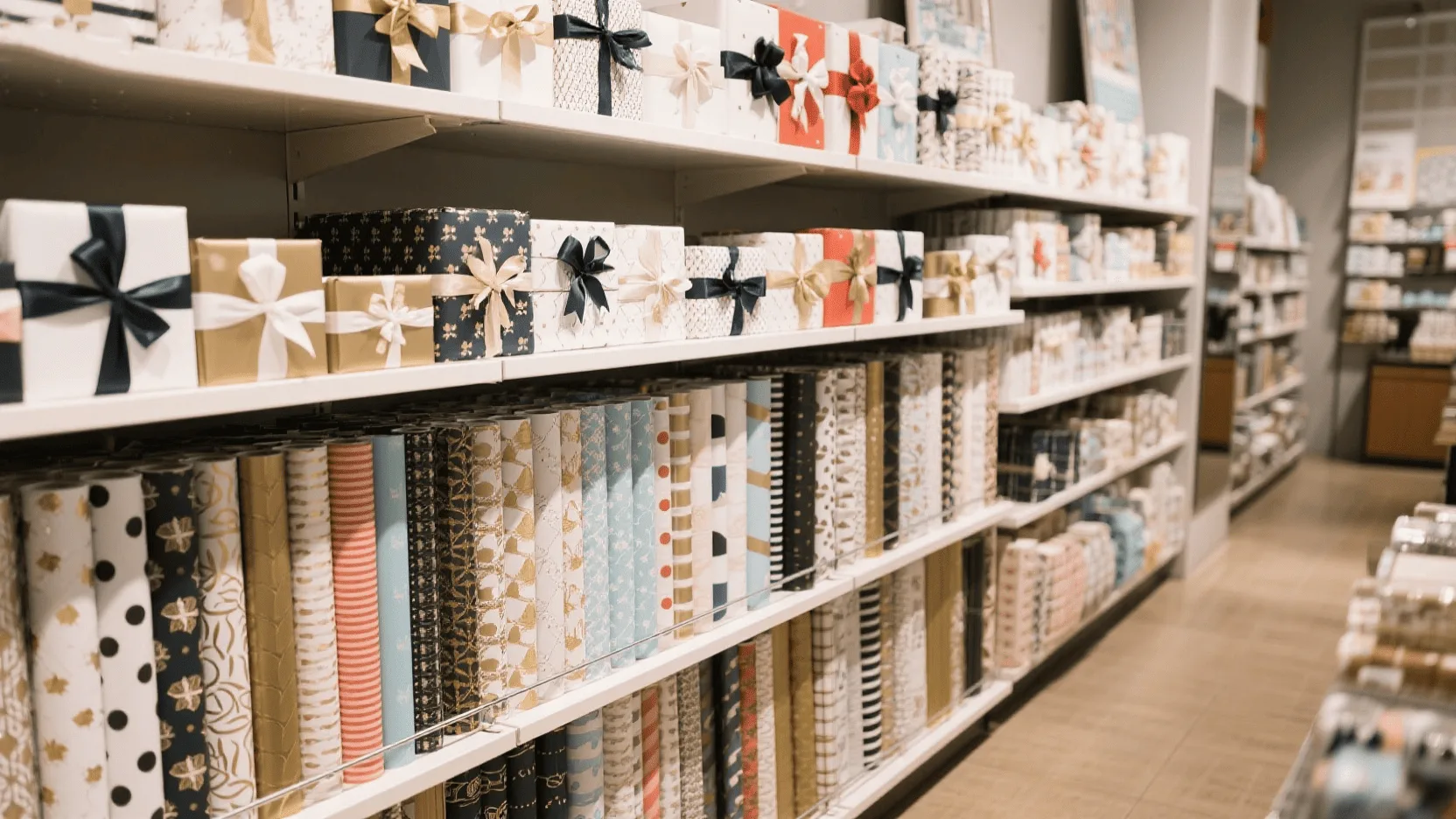
One of the most common mistakes I see buyers make is going all-in on a single trend. It’s a high-risk, high-reward strategy that rarely pays off. A much safer and more profitable approach is portfolio management, just like with stocks. Your "Core" SKUs are your blue-chip stocks: reliable, steady performers. Your "Explore" SKUs are your growth stocks: they have the potential for high returns but also carry more risk.
There’s another reason to keep the assortment focused: fewer, better-selected SKUs can reduce material waste and make inventory easier to manage. Choosing durable paper for the right products also helps minimize damage-related returns, while recyclable and recycled substrates reduce the amount of packaging that ends up in landfill.
For large-scale buyers, SKU strategy should also be connected to purchasing strategy. If recycled kraft prices are somewhat higher or more volatile than virgin paper, committing to well-planned volumes and longer-term purchasing arrangements can help reduce exposure to market fluctuations. At the same time, using one versatile kraft substrate across several designs can simplify procurement, production, and inventory management.
The goal isn’t simply to offer more designs; it’s to build a balanced collection that performs commercially and supports your brand’s sustainability positioning.
I worked with a retail chain to implement this exact strategy for their gift packaging program. They reduced their overall number of SKUs but focused on a stronger core offering. The result? Their sell-through rate before Christmas increased by 30%, and their post-holiday markdowns were the lowest they’d been in years. It’s about being strategic, not just reactive.
Building Your 2026 SKU Plan
This model provides a clear framework for inventory planning that minimizes risk and maximizes appeal.
-
The 60% "Core" Collection: These are the designs that sell year after year. They are timeless and have broad appeal.
- 2 SKUs: Solid Kraft Paper and/or a simple print on kraft (e.g., white snowflakes).
- 2 SKUs: Elegant, non-seasonal metallic-inspired designs. Think fine gold or silver-colored geometric lines on a white, navy, or black background, without necessarily relying on physical foil.
- 2 SKUs: Classic solid colors in a matte finish, like a deep forest green and a rich burgundy.
-
The 40% "Explore" Collection: This is where you capture the attention of trend-focused shoppers.
- 2 SKUs: Biophilic Botanicals. Choose one with a lighter background and one with a darker, moodier feel.
- 1 SKU: Nostalgic Whimsy. Select a charming, artistic illustration that will appeal to families.
- 1 SKU: Quiet Luxury. Opt for a textured paper with a very subtle, sophisticated pattern.
Is Recycled Kraft Paper More Expensive at Scale?
You’re looking at your holiday budget, and a quote for 100% recycled kraft paper is slightly higher than virgin paper. With margins already under pressure, that price difference can make sustainability seem like an unnecessary expense.
Recycled kraft paper can carry a higher or more volatile raw material cost because collecting, sorting, de-inking, and repulping recovered paper is more complex than sourcing virgin fiber. However, the real cost should be evaluated across the entire packaging lifecycle. Efficient one- or two-color printing, reduced waste, stronger brand value, operational efficiencies, and preparation for future environmental regulations can offset some or all of the initial material premium.
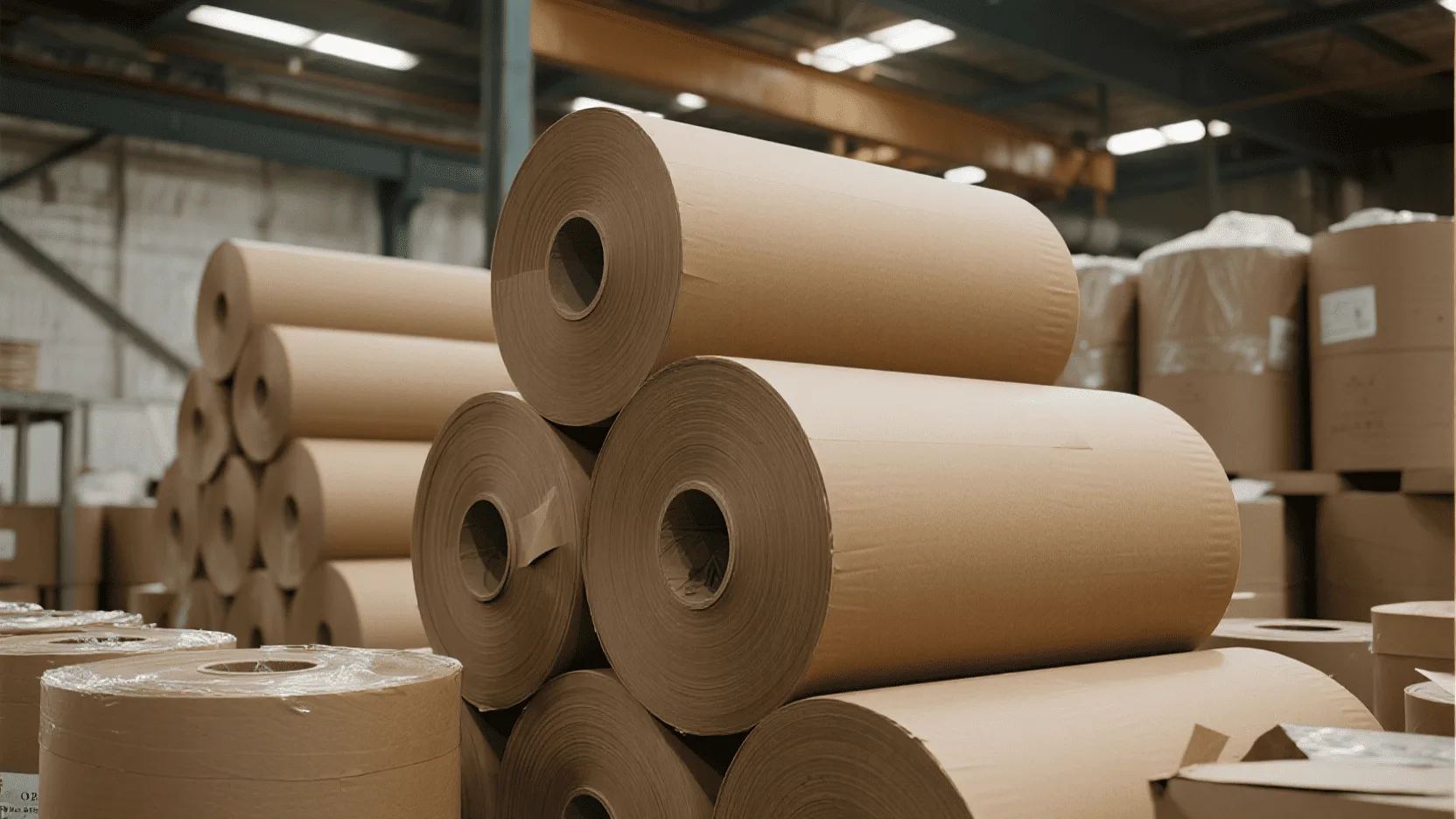
It’s a mistake to evaluate sustainable paper using only the supplier’s per-unit price. Virgin paper has a relatively predictable supply chain, while recycled paper depends on the collection and quality of post-consumer material. This can make recycled paper prices fluctuate according to waste-paper availability and processing costs.
At the same time, virgin paper is not immune to price volatility. Timber prices, transportation, forestry requirements, and broader market conditions can all affect costs. For buyers purchasing large quantities of custom wrapping paper, longer-term contracts and well-planned production schedules can help reduce exposure to fluctuations.
Factors Influencing Paper Material Costs
| Factor | Virgin Kraft Paper1 | 100% Recycled Kraft Paper2 |
|---|---|---|
| Raw Material Source | Timber from forests | Post-consumer waste paper |
| Primary Cost Driver | Logging, timber prices, transportation | Collection, sorting, de-inking processes |
| Price Stability | Subject to timber market volatility | Subject to waste supply and quality |
| Environmental Impact | Higher (deforestation, water use) | Lower (reduces landfill, saves trees) |
| Consumer Perception | Neutral / increasingly negative | Highly positive |
The printing stage can also make a significant difference. The initial setup for custom printing is often a fixed cost, while the ongoing costs depend on ink usage and machine time. A simple one-color repeating logo or seasonal pattern can therefore be much more economical than a full-color photographic design, particularly for high-volume production.
This is one reason the 2026 trend toward minimalist packaging is commercially useful as well as aesthetically attractive. A crisp white, black, red, or green print on recycled kraft paper can look premium while keeping production relatively straightforward.
What’s the Business Case for Investing in Better Gift Wrap?
You’re looking at your budget, and upgrading your gift wrap feels like a luxury you can’t afford. The cheaper option seems like the only sensible choice to protect your tight holiday margins.
The business case is clear: a small upfront investment in quality, recyclable, or recycled paper can reduce damage-related returns, strengthen the unboxing experience, support a premium brand image, and meet strong consumer demand for sustainability. At scale, efficient printing and thoughtful purchasing can further narrow the apparent cost gap. The result is less waste and a stronger customer relationship long after the holidays.

Thinking of quality gift wrap as a "cost" is a classic mistake. It’s an investment with a measurable return. Let’s do some simple math. Say a cheap roll of paper costs you $1.00 and a premium, durable, recyclable roll costs $1.50. That 50-cent difference seems like an easy place to save money. But what if that cheap paper contributes to just one extra product return, valued at $50? The "savings" are instantly erased. Now multiply that across hundreds or thousands of shipments. The hidden costs of returns—shipping fees, labor, lost product—can dwarf the initial savings on paper.
Furthermore, a premium wrap enhances the unboxing experience, making customers feel valued. Durable paper is less likely to tear during handling, while an attractive, tactile substrate makes the package feel more considered and premium. At the same time, choosing an uncoated, recyclable paper helps prevent your sustainability message from being undermined by unnecessary packaging waste.
There are also less visible benefits when making a sustainable material switch at scale. A recycled paper program can become part of your brand story, reinforce sustainability campaigns, and help prepare the business for packaging regulations such as Extended Producer Responsibility requirements. Standardizing on a durable paper substrate can also simplify fulfillment operations and reduce packaging-related variability.
Choosing the right paper isn’t about spending more; it’s about spending smarter.
Calculating the True Return on Investment (ROI)
The argument becomes undeniable when you lay out the hidden costs versus the visible investment. The initial spend on better paper is a form of insurance against the much larger, unpredictable costs associated with poor packaging.
| Cost/Benefit Factor | Scenario A: Cheap Wrap (60 GSM) | Scenario B: Quality Wrap (80 GSM, Recyclable) |
|---|---|---|
| Upfront Paper Cost | Low | Moderate (+ $0.50/unit) |
| Return Rate (Damage)1 | High (e.g., 5%) | Low (e.g., 2%) |
| Return Processing Cost | High | Low |
| Brand Perception2 | Neutral / Negative (cheap feel, wasteful) | Positive (premium feel, sustainable) |
| Customer Loyalty | Neutral | High |
| Net Financial Impact | Negative (returns outweigh savings) | Positive (brand lift and fewer returns) |
Conclusion
For a successful 2026 holiday season, focus your gift wrap selection on what customers truly want: sophisticated designs, quality materials, and a sense of thoughtful curation. By embracing biophilic and minimalist trends, investing in tactile, durable, recyclable, and recycled substrates, using sustainable printing and natural accessories, and implementing a smart "Core and Explore" SKU strategy, you’ll be better positioned to maximize sell-through, reduce product damage and returns, and minimize post-holiday packaging waste.
The biggest opportunity is not simply to replace conventional wrapping paper with brown kraft. It is to rethink the entire packaging experience. A well-designed recycled kraft paper with minimalist printing, reusable fabric ribbon, natural twine, or a custom paper tag can feel more premium than heavily decorated conventional wrap while creating a stronger and more credible sustainability story.
Ready to stock the wrapping paper that will sell out in 2026? Contact us at Omet Pack to get a head start on your holiday collection.
Explore our other articles for more packaging insights, like our comparison of Present Wrapping Paper vs. Gift Bags.
FAQ
What are the most important colors for Christmas wrapping paper in 2026?
The key colors are moving away from bright primary red and green. Instead, focus on sophisticated and nature-inspired hues: deep forest green, burgundy, navy blue, earthy tones like terracotta and brown, and classic, elegant metallic-inspired colors like soft gold and silver. On kraft paper, white, red, and green provide particularly strong contrast while maintaining a clean, festive appearance.
Is glitter wrapping paper completely out of style?
Yes, for the most part. Due to significant environmental concerns about microplastics, both consumers and major retailers are actively moving away from glitter. Stocking it can make your brand appear dated and less eco-conscious. If recyclability is a priority, uncoated paper without glitter, foil, or plastic lamination is a safer choice.
Should my store sell wrapping paper in rolls or flat sheets?
Rolls are the standard for mass-market retail and offer the best value. However, offering curated packs of folded flat sheets can appeal to a boutique customer segment. They are often seen as more artisanal, are easier to store, and are great for wrapping smaller gifts.
What is the ideal GSM for good quality wrapping paper?
Look for paper that is at least 80 GSM (Grams per Square Meter). Anything less (like 60-70 GSM) can feel thin and tear easily. 80 GSM provides a great balance of durability and flexibility, while 90-100 GSM offers a distinct luxury feel and better resistance to handling and shipping damage.
Is 100% recycled kraft paper more expensive than virgin kraft paper?
It can be. Recycled paper may have a higher raw material cost because of collection, sorting, de-inking, and re-pulping requirements. However, buyers should evaluate the total cost rather than the material price alone. Large production volumes, simple one- or two-color printing, reduced waste, brand value, and longer-term purchasing arrangements can help offset the difference.
How far in advance should I place my wholesale Christmas paper order?
For custom designs, you should plan for a 12-16 week lead time. This means placing your order in late spring or early summer (May-July) to ensure delivery well before the holiday rush. You can learn more in our guide to wholesale ordering in peak season.
Can better wrapping paper really reduce product returns?
It can help reduce damage-related returns, particularly when wrapping paper is used as an additional protective layer around boxed products. 80-90 GSM paper offers substantially better tear and abrasion resistance than very thin 50-60 GSM paper, while 100+ GSM is suitable for premium and luxury applications.
Is all uncoated wrapping paper recyclable?
Uncoated paper is generally easier to recycle than paper with glitter, foil, or plastic lamination. However, actual recyclability depends on the exact material composition, printing and finishing specifications, as well as local recycling facilities and collection rules. Retailers should avoid making blanket claims without checking the requirements of their target market.
Can I get a custom design printed on recyclable or recycled paper?
Absolutely. We specialize in printing high-quality, custom designs on a wide range of recyclable papers, including kraft and other uncoated stocks. Water-based and soy-based inks can be used for minimalist branding and seasonal patterns, while avoiding unnecessary plastic coatings helps preserve the paper’s recycling advantages.
Will using better paper slow down my gift-wrapping service in-store?
On the contrary, higher quality paper is often easier to work with. It’s less likely to tear while folding and creates crisper, cleaner edges, which can actually speed up the wrapping process for your staff and result in a more professional-looking gift.
Can kraft wrapping paper really look luxurious enough for premium brands?
Yes. The natural kraft surface works particularly well with Quiet Luxury principles. Minimalist patterns, high-contrast printing, premium typography, textured stocks, fabric ribbons, custom paper tags, wax seals, and natural botanical elements can create a sophisticated presentation without relying on glitter or plastic-heavy finishes.
What is the most cost-effective way to customize recycled kraft wrapping paper?
For large-volume orders, simple one- or two-color repeating patterns are usually more efficient than complex full-color photographic artwork. They require fewer printing plates, use less ink, and align naturally with the minimalist aesthetic that is trending for 2026.
What accessories can I use with kraft wrapping paper to make it more festive?
Natural jute twine, cotton or velvet ribbons, dried pine or holly, custom paper tags, stickers, and removable wax seals can all add color, texture, and perceived value. Reusable or paper-based accessories are especially suitable when sustainability is a core part of the brand story.