

Are you losing money from products damaged during shipping? Worried that negative customer experiences are tarnishing your brand? Whether you’re shipping domestically or expanding your brand globally, professional packaging and careful shipping preparation are essential to ensuring your products arrive safely, on time, and without unexpected costs.
Professionally packing involves selecting the right-sized, durable box, using at least two inches of appropriate cushioning, and securely sealing it with quality tape. For international shipping, you must also prepare accurate customs documentation, calculate duties and taxes, and choose a reliable carrier that matches your budget, speed, and tracking needs.

Following these steps is the baseline, but the real art and science come from optimizing each stage. From my decade in the packaging industry, I’ve seen countless businesses struggle with returns, damage claims, customs delays, and unexpected shipping costs, all because of small, avoidable mistakes in their packing and shipping process. The way you package and ship is a direct reflection of your brand’s commitment to quality. It is the final handshake with your customer. Let’s explore how we, as packaging professionals, approach this critical part of the business to save costs, prevent damage, and build customer loyalty.
How Do You Choose the Right Box and Cushioning?
Are you just grabbing any old box? Worried that one-size-fits-all packaging isn’t protecting your unique products, especially during long-distance or international transportation? I’ll guide you to the perfect combination for maximum safety.
Choose a new, sturdy corrugated box slightly larger than your item. The strength, or ECT rating, should match the product’s weight and shipping conditions. For cushioning, select a material like bubble wrap, air pillows, or custom inserts that will fill all empty space and prevent movement. For fragile or heavy products traveling internationally, stronger or double-walled corrugated boxes may be appropriate.
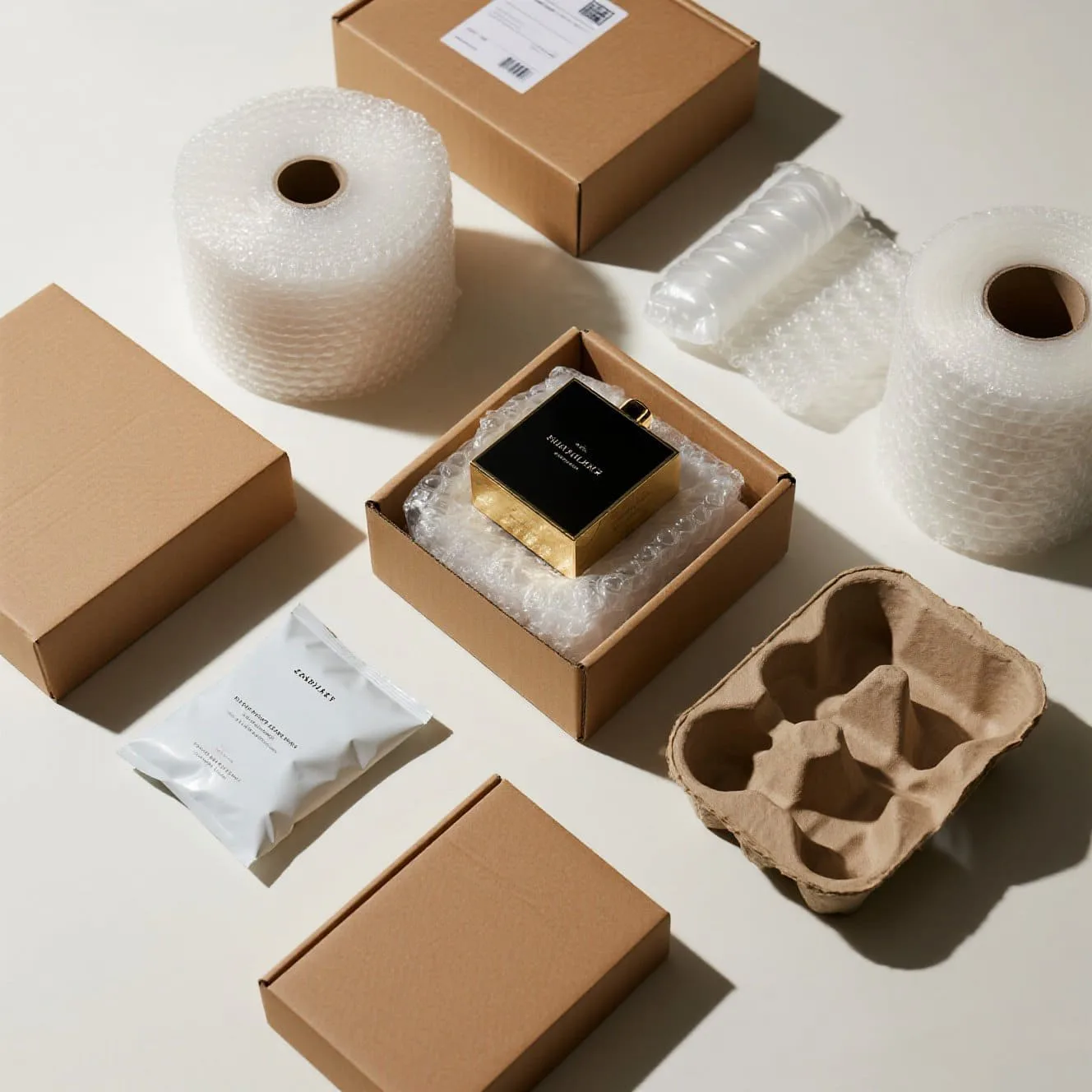
The box is your product’s first line of defense. At Omet Packaging, we always start here. For e-commerce brands, a mailer box often works well for apparel or subscription kits due to its presentable and sturdy design. For heavier or more fragile items like electronics or glass jars, a regular shipping carton with a higher ECT (Edge Crush Test) rating is essential. This rating tells you how much stacking weight the box can withstand.
For international shipments, packaging needs to withstand more handling, stacking, changes in climate, and longer transportation distances. A flimsy box might save a few cents, but a damaged product and an unhappy customer will cost you much more.
A common mistake is reusing old boxes; they can lose significant structural integrity after previous use. We worked with a gourmet food company that was shipping glass jars of sauce in flimsy boxes. Breakage was a huge issue. We switched them to a custom-sized, higher-ECT box with a specific die-cut insert. This insert, made from corrugated board, held each jar perfectly in place. It not only eliminated breakage but also created a beautiful, professional unboxing experience. Their damage claims dropped to nearly zero.
| Cushioning Type | Best For | Pros | Cons |
|---|---|---|---|
| Bubble Wrap | General purpose, fragile items | Versatile, lightweight, good shock absorption | Not eco-friendly, can be bulky |
| Air Pillows | Filling empty voids in the box | Very lightweight, clean, uses less plastic | Can pop, offers less direct cushioning |
| Packing Peanuts | Filling large, irregular spaces | Lightweight, fills gaps well | Messy, static cling, often not recyclable |
| Custom Inserts | High-value or uniquely shaped products | Maximum protection, premium look, secure fit | Higher initial cost, requires design |
What’s the Best Way to Pack Items Inside the Box?
Are your products rattling around inside their package? Do customers complain about disorganized contents? Let’s look at the professional technique for packing items securely.
Wrap each item individually. Place the item in the center of the box, ensuring at least two inches of cushioning on all sides. Fill all remaining empty space completely to prevent any movement during transit. Heavier items should always go at the bottom. For extremely fragile products, consider using a box-in-a-box system or a custom insert.

How you arrange things inside the box is just as important as the box itself. The golden rule is to eliminate movement. Any empty space allows the product to shift, slide, and collide with the box walls, which is how most damage occurs. The "2-inch rule" is our standard practice. It means your product should be suspended in the middle of the box with a protective cushion of at least two inches on the bottom, top, and all four sides.
For extremely fragile items, we often recommend the "box-in-a-box" method. The item is packed in a smaller box with cushioning, and then that box is placed inside a larger shipping box with more cushioning. This extra protection can be particularly valuable for products traveling internationally, where packages may be handled multiple times before reaching the final customer.
I remember a client selling delicate ceramic mugs. Their products were beautiful, but their shipping was a nightmare. We helped them implement a simple system: wrap the mug in bubble wrap, place it inside a small custom insert we designed, and then place that into the shipping mailer. It added seconds to their packing time but saved them thousands in returns and customer service hours.
Professional Packing Steps:
- Cushion the Bottom1: Add a 2-inch layer of your chosen cushioning material at the bottom of the box.
- Wrap Items2: Wrap each item individually, especially if you are shipping multiple items in one box.
- Position and Fill: Place the item in the center. Fill the surrounding sides and the top with more cushioning until the box is completely full and nothing can move when you gently shake it.
- Add Paperwork: Place the packing slip or any thank-you notes on top before sealing.
- Check for Movement: Gently shake the sealed box. If you can hear or feel the product moving, add more cushioning before shipping.
How Do You Properly Seal and Label Your Packages?
Is your tape coming loose in transit? Are shipping labels causing delays because they can’t be scanned? Let’s secure the final, crucial steps of the process.
Use strong, 2-to-3-inch wide packing tape, not masking or cellophane tape. Apply it using the H-tape method, sealing the center seam and both edge seams. Place the shipping label on the box’s largest flat surface, making sure it is clear, unwrinkled, and easy to scan.
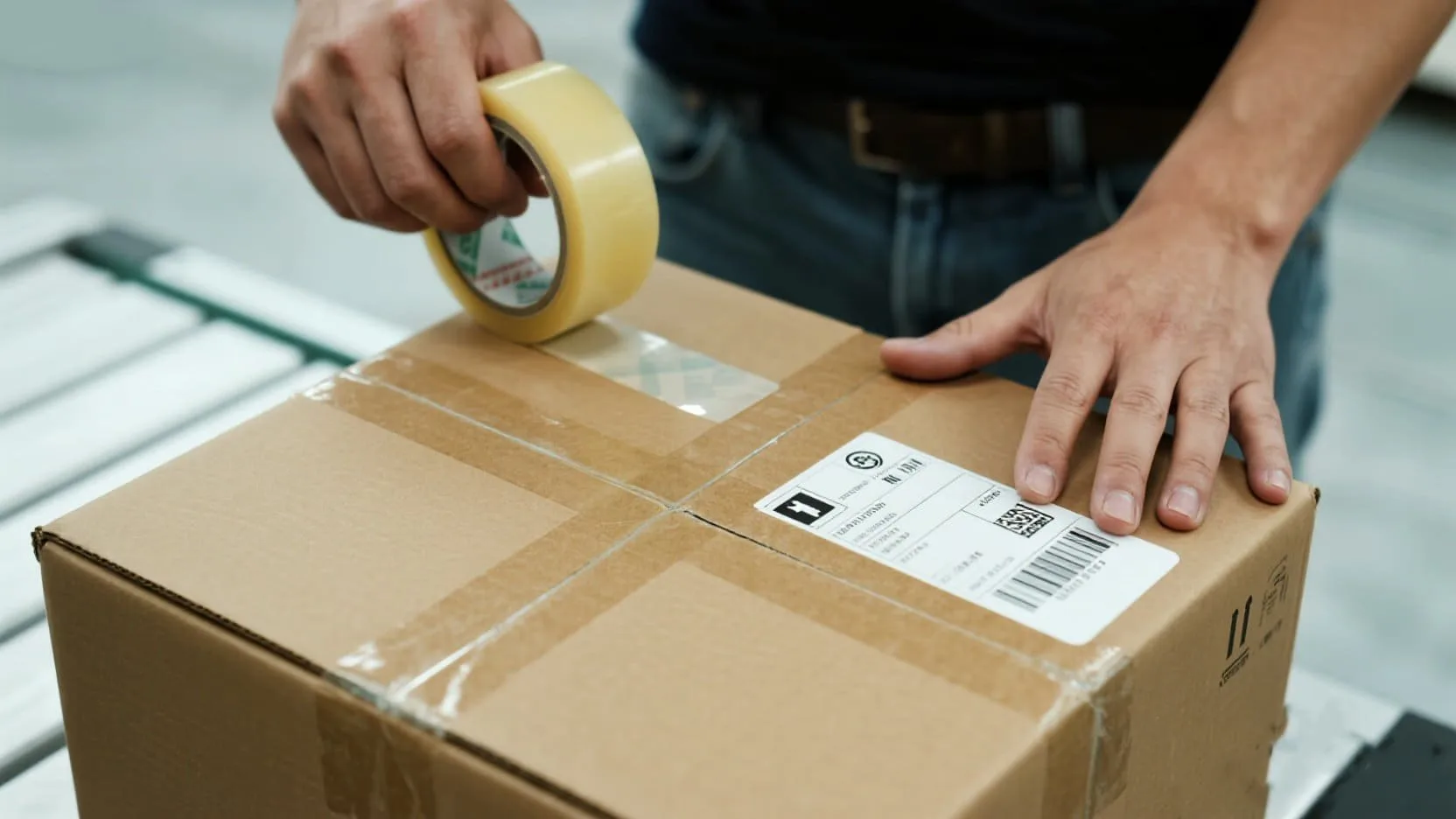
Sealing the box is not the time to cut corners. A cheap tape can fail in extreme temperatures or humidity, exposing your product. We always recommend a high-quality, pressure-sensitive plastic tape or water-activated tape for our clients.
The H-taping method is the industry standard. You run a strip of tape along the main center seam where the flaps meet, and then you run two more strips along the shorter edge seams. This forms a capital "H" and provides the most secure seal.
When it comes to labeling, clarity is everything. The label should be flat, fully visible, and placed on the top or largest flat surface of the box. Avoid putting it over a seam or on the side, as automated sorting machines may not be able to scan it. Make sure the barcode is crisp and clear.
As a BSCI-certified company, we believe in standardized, reliable processes. Adopting these simple sealing and labeling standards in your own warehouse is a small change that prevents huge logistical headaches down the line.
How Do You Prepare Your Package and Paperwork for International Shipping?
Planning to ship your products internationally? Worried about customs delays, incorrect documentation, or unexpected import charges? Proper preparation before the package leaves your warehouse can prevent many of these problems.
For international shipments, accurately complete the required customs documentation, including a customs declaration or Commercial Invoice. Provide a detailed description of the goods, their quantity, value, country of origin, and correct Harmonized System (HS) code.

This is where many businesses get into trouble. Customs officials need clear and accurate information to identify the goods and determine the applicable duties and taxes. Any ambiguity can lead to delays, additional inspections, fines, or even the return of a package.
As a packaging expert who helps brands ship from China to the world, I can’t stress this enough: be precise. Your package is on an international journey, and its paperwork is an important part of that journey. If the information is incomplete or inaccurate, the shipment can be delayed.
I once helped a client who sold artisanal leather wallets. Their shipments were getting held up because their product description simply said "gifts." We worked with them to change it to a more specific description, such as "Men’s bifold wallet, cowhide leather," and the problem disappeared. Details matter.
The Commercial Invoice3
The Commercial Invoice is one of the primary documents used for international shipments. It should generally include the seller, buyer, detailed description of each item, quantity, value, and country of origin. Be honest about the declared value; deliberately undervaluing goods to avoid taxes is illegal and can cause serious customs problems.
The HS Code
The Harmonized System (HS) code4 is a standardized classification system used to identify products in international trade. You need to determine the correct code for your goods because the classification can affect customs clearance, duties, and taxes.
For example, a cotton t-shirt and a silk shirt have different classifications. Incorrect classification is a common source of customs problems, so businesses should verify the appropriate HS code before shipping.
How Do You Calculate and Handle International Shipping Costs?
Are surprise fees eating into your profits? Do customers abandon carts because of high shipping costs? Understanding the total cost of an international shipment helps you price your products and shipping correctly.
The total shipping cost can include the carrier’s fee, fuel surcharges, insurance, duties, and taxes. Import fees are determined by the destination country and the applicable customs rules. Depending on the shipping arrangement, these charges may be paid by the recipient or the seller.

Nobody likes surprise costs, especially your customer. Understanding the full cost breakdown is crucial for your business model. The price you see on a carrier’s website is often just the beginning.
For our e-commerce clients, we always advise them to think about the total "landed cost." This is the grand total cost of getting a product from your warehouse into your customer’s hands. Failing to account for this can destroy your profit margins or lead to customers receiving an unexpected bill from their local customs office.
A transparent, all-inclusive price can be a powerful tool for building international customer trust. Before launching a product in a new market, calculate the likely shipping, customs, and tax costs so you can decide how much of the expense should be included in your product price or shipping fee.
Understanding Duties and Taxes
Duties are tariffs imposed on imported goods, while taxes may include Value Added Tax (VAT) or Goods and Services Tax (GST), depending on the destination country.
The applicable rates and thresholds vary by country. Businesses should research the destination country’s current customs rules and any applicable de minimis5 threshold, which may determine whether duties or taxes apply to lower-value shipments.
DDP vs. DDU
You may encounter different arrangements for handling import charges, including DDU and DDP.
- Delivered Duty Unpaid (DDU)6: The customer is responsible for applicable import fees upon arrival. This can create an unexpected cost for the customer if the charges were not clearly communicated.
- Delivered Duty Paid (DDP)7: The seller arranges and pays applicable import duties and taxes according to the agreed shipping terms. This can provide customers with a clearer, more predictable delivered price.
The right option depends on your market, product, carrier, and business model. For many e-commerce brands, a predictable landed cost can make the international buying experience much easier.
How Do You Choose the Right Carrier for Domestic or International Shipping?
Worried your products will arrive broken after a long journey? Unsure whether an express courier, postal service, or freight forwarder is best for you? The right carrier depends on your shipment size, destination, urgency, budget, and tracking requirements.
Choose a carrier based on speed, cost, tracking capabilities, shipment size, and destination. For international shipments, also consider customs support and available delivery terms.
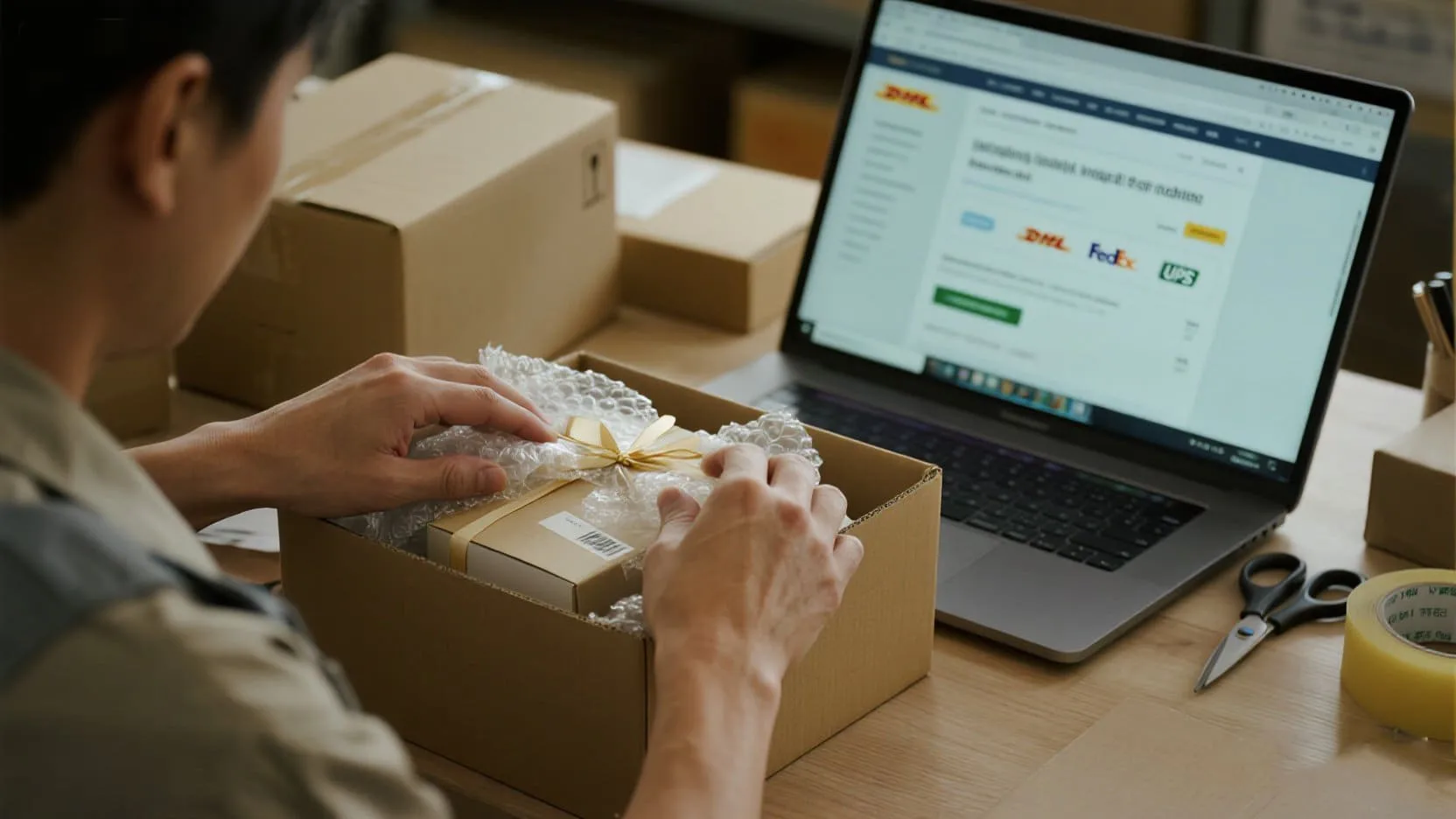
For international shipping, the package itself is your product’s first line of defense. Your box may be dropped, stacked, transported between different facilities, and exposed to different climates. This is why packaging quality and carrier selection need to work together.
At Yiwu Omet Packaging, this is our specialty. We provide clients with BSCI and FSC-certified packaging that’s not just beautiful but incredibly durable. A strong, properly sized box combined with appropriate internal cushioning can significantly reduce the risk of damage during long-distance transportation.
Choosing a Carrier
| Carrier Type | Best For | Pros | Cons |
|---|---|---|---|
| Express Couriers (DHL, FedEx, UPS)8 | Speed, valuable items, tracking | Fast, excellent tracking, DDP options | Most expensive |
| Postal Services (e.g., USPS, EMS) | Low-cost, non-urgent items | Affordable, good for small parcels | Slower, tracking can be less reliable |
| Freight Forwarders9 | Bulk shipments, B2B | Cost-effective for large volume | More complex, not for single packages |
For most e-commerce brands, express couriers can offer a good balance of reliability, speed, and tracking. For larger B2B shipments, freight forwarders may be more economical. The best choice depends on your specific shipping requirements.
Conclusion
Mastering professional packaging and shipping requires more than simply putting a product in a box. The right box, appropriate cushioning, secure sealing, accurate labeling, and careful internal packing all help protect your products during transportation.
For international shipments, you also need to consider customs documentation, HS codes, duties and taxes, landed costs, and the right carrier or delivery terms. By preparing each stage carefully, you can reduce damage, avoid unnecessary delays and costs, improve the customer experience, and reinforce the quality and care of your brand.
Omet Packaging offers a wide range of custom packaging solutions to help businesses properly pack and ship their products to destinations near or far. If you have questions about packaging, shipping costs, or shipping methods to your country, you can contact us and we will be happy to help.
-
Explore this link to discover effective cushioning materials that ensure your items are well-protected during shipping. ↩
-
Check out this resource for expert tips on wrapping items securely to prevent damage during transit. ↩
-
Understanding the Commercial Invoice is crucial for smooth international transactions and compliance with trade regulations. ↩
-
Understanding the HS code is crucial for international trade compliance and avoiding delays. ↩
-
Understanding the de minimis value is crucial for avoiding unexpected duties and taxes when shipping internationally. ↩
-
Understanding the drawbacks of DDU can help you improve customer satisfaction and avoid potential issues. ↩
-
Exploring the benefits of DDP can guide you in making better shipping decisions that enhance your brand’s reputation. ↩
-
Explore this link to understand how Express Couriers can enhance your shipping experience with speed and reliability. ↩
-
Learn about Freight Forwarders to see how they can save costs on large shipments and streamline your logistics. ↩