Struggling with paper bags that tear, leak, or crush your beautiful bouquets? A flimsy bag isn’t just a nuisance; it’s a public brand failure that undermines your quality and can lead to customer complaints. This guide provides a spec-first approach to solve this.
The best paper bag for a flower shop is typically a tall, gusseted kraft paper carrier (120-250 GSM) with a reinforced bottom and handle patches. This construction manages moisture and prevents tear-outs, ensuring your bouquets arrive in perfect condition.
Key Takeaways / TL;DR:
- For bouquets, choose a tall, gusseted paper bag to keep flowers upright. For boxed arrangements, a wide, square-bottom tote is better.
- The ideal material is uncoated kraft paper (120-250 GSM) for its balance of durability, cost, and recyclability.
- Prevent handle tear-outs by insisting on an inner reinforcement patch—this is more critical than the handle material itself.
- Control moisture with targeted solutions like a water-based coating or a bottom insert, instead of full plastic lamination which harms recyclability.
- Lock in your final specifications with a Pre-Production Sample (PPS) to ensure consistent quality for every reorder.
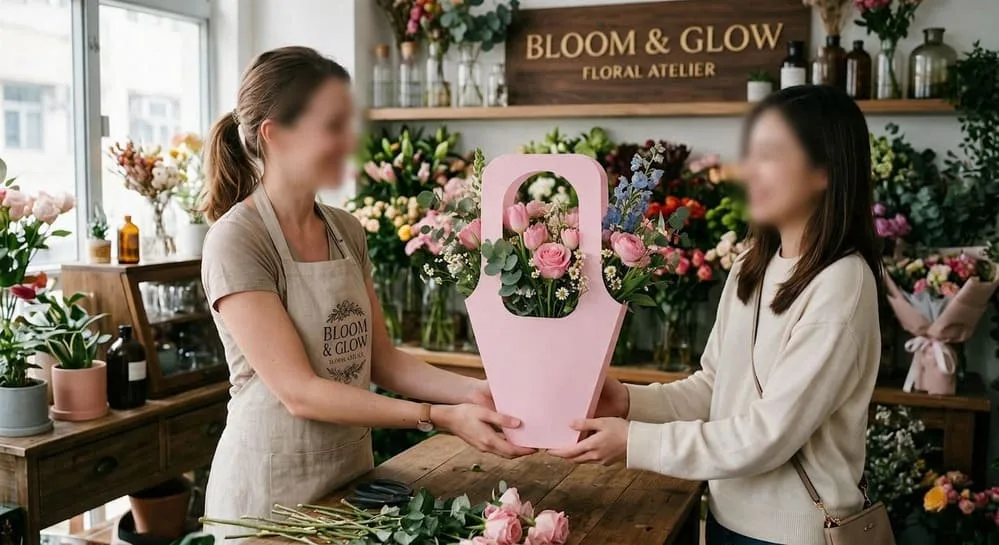
As the founder of a packaging factory, I’ve seen how the wrong bag can ruin a perfect product. I remember a boutique florist who came to us in a panic after Mother’s Day. Their previous supplier’s bags had failed spectacularly; handles ripped and bottoms gave way to moisture. This experience solidified my belief: for a flower shop, the bag is part of the product’s integrity. It must be engineered for the specific challenges of carrying bouquets—weight, moisture, and geometry.
Which paper bag style is best for bouquets vs. boxed flower gifts?
Your flowers are collapsing inside the bag, and boxed gifts are tipping over. Are you using the right bag structure for the right product?
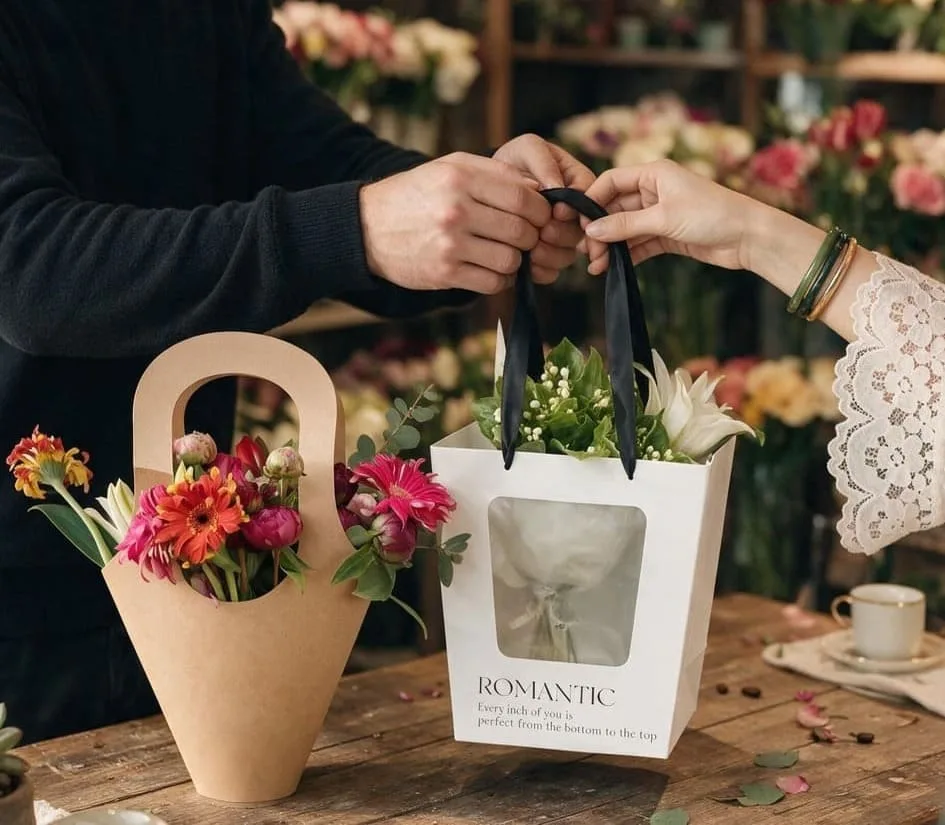
For flower shops, the best paper bag style depends on product geometry. Hand-tied bouquets usually need a taller, gusseted carrier bag that protects stems and keeps the bouquet upright. Boxed arrangements and add-on gifts perform better in a square-bottom tote with a reinforced base for stable carrying.
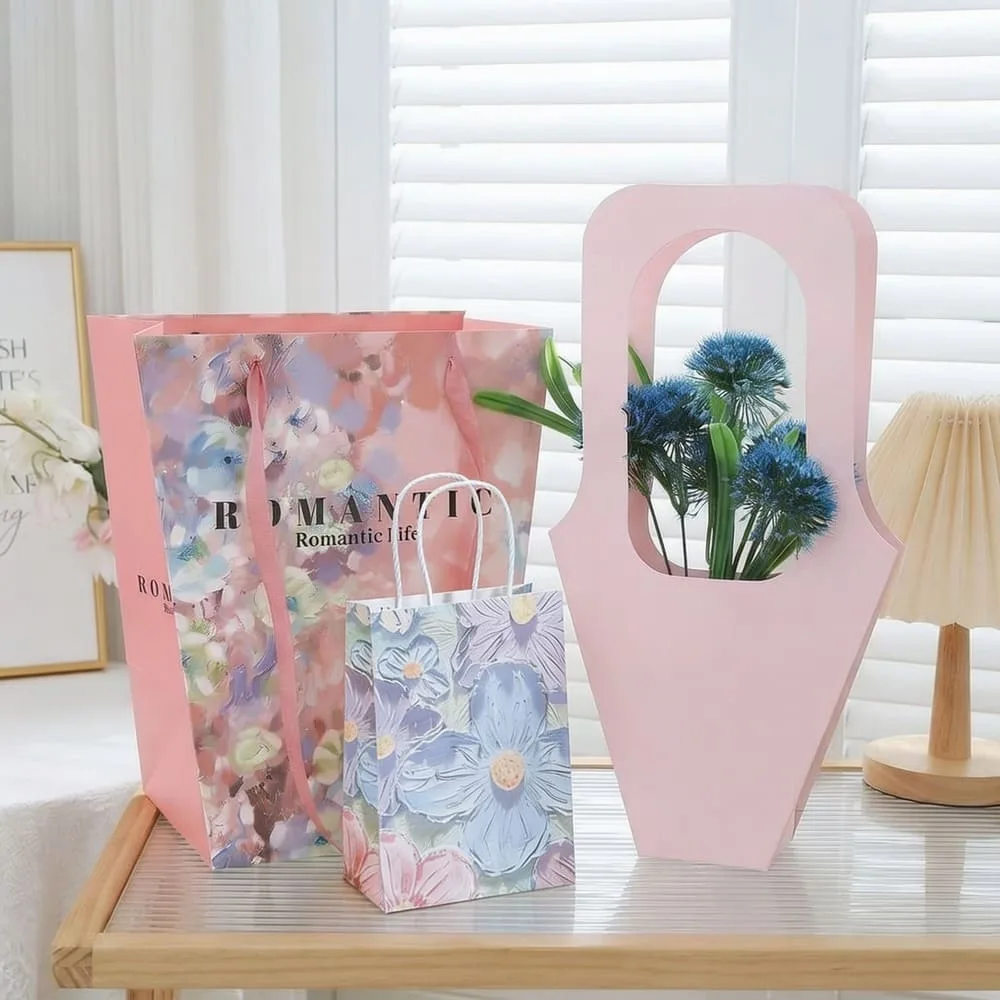
The "best" bag matches its form to its function. A hand-tied bouquet is top-heavy, so a tall profile with expanding gussets is critical to cradle the stems and prevent tipping. For heavier items like vases or boxed arrangements, a wide, square-bottom tote provides a stable platform and prevents items from falling over.
My advice: Before committing to a large order, always request a "white sample" (an unprinted bag made to your specs) to test with your actual products. It’s the cheapest insurance policy against a costly mistake.
Kraft vs. coated (art paper) vs. laminated: what should flower shops choose?
Confused by paper options? Choosing the wrong one can impact your budget, brand image, and environmental claims.
Kraft paper bags are the best default for most flower shops, offering durability, cost-efficiency, and strong recyclability credentials. Coated/art paper delivers sharper printing for a premium feel. Laminated bags provide maximum moisture resistance but create recycling challenges, so use them cautiously.
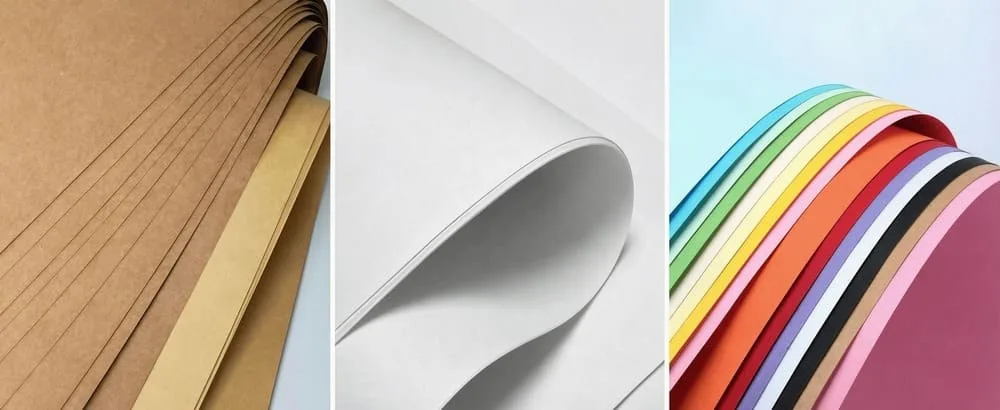
Here’s a quick comparison to guide your choice for a flower packaging solution.
| Feature | Uncoated Kraft Paper | Coated (Art) Paper | Laminated Paper |
|---|---|---|---|
| Best For | Everyday carry, natural/eco-focused brands. | Premium bouquets, luxury branding, vibrant logos. | Rainy climates, heavy-duty use. |
| Feel | Natural, textured, rustic. | Smooth, bright, allows for sharp printing. | Very smooth, plastic feel (gloss or matte). |
| Recyclability Risk | Low. Widely recycled. | Low to Medium. Generally recyclable. | High. Mixed material, contaminates paper recycling. |
| "Safe" Claim | "Recyclable Paper Bag" | "Paper Bag Designed for Recyclability" | "Durable, Reusable Bag" |
From my experience, default to kraft paper. If you need sharper printing, choose coated paper with a water-based (aqueous) varnish, which largely preserves recyclability. I only recommend lamination as a last resort for consistent, heavy moisture exposure, and even then, we advise clients to be transparent in their environmental messaging.
How do you engineer a bag for strength and durability?
Are you paying for thicker paper when a smarter design would be more effective and cheaper?
A strong bag relies on smart construction, not just heavy paper. While GSM (grams per square meter) is a factor, the real strength comes from a reinforced top fold (top turn), correctly placed handle patches, and a well-chosen handle system. These features prevent tearing and help the bag stand upright.
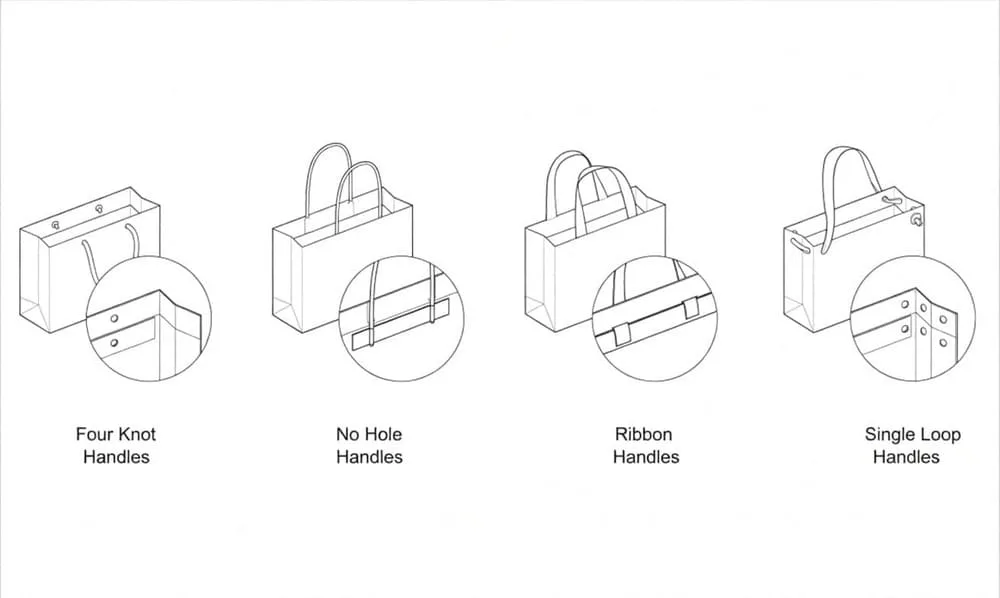
A common mistake is asking for a high GSM (e.g., 250) thinking it’s the only way to get a sturdy bag. At Ometpack, we focus on engineering first. A well-constructed 150 GSM bag will outperform a poorly designed 250 GSM bag every time.
Here are the elements that truly matter:
- The Reinforced Top Turn: The folded-over section at the top provides rigidity and prevents the bag opening from collapsing.
- Handle Reinforcement Patch: This is the unsung hero. It’s a piece of card glued inside where the handle attaches, distributing weight and preventing the handle from tearing through the paper. This is non-negotiable for a quality bag.
- Handle System: For most florists, twisted paper handles offer the best balance of strength, cost, and recyclability. Ribbon or rope handles add a luxury feel but increase cost and QC complexity. The key is always pairing them with a reinforcement patch.
Before you approve your next order, flip the top turn open and look for that reinforcement patch. If it’s not there, your bag is designed to fail.
What size should a flower shop specify (W×G×H) for common bouquet formats?
Ordering 5,000 bags only to find they are too short for your best-selling bouquet is a costly and entirely avoidable mistake.
To size a paper bag correctly, physically measure your most common bouquet formats first. The goal is to specify a Width x Gusset x Height (W×G×H) that allows the bouquet to sit securely without crushing petals. Always confirm the size with a physical white sample before placing a full production order.
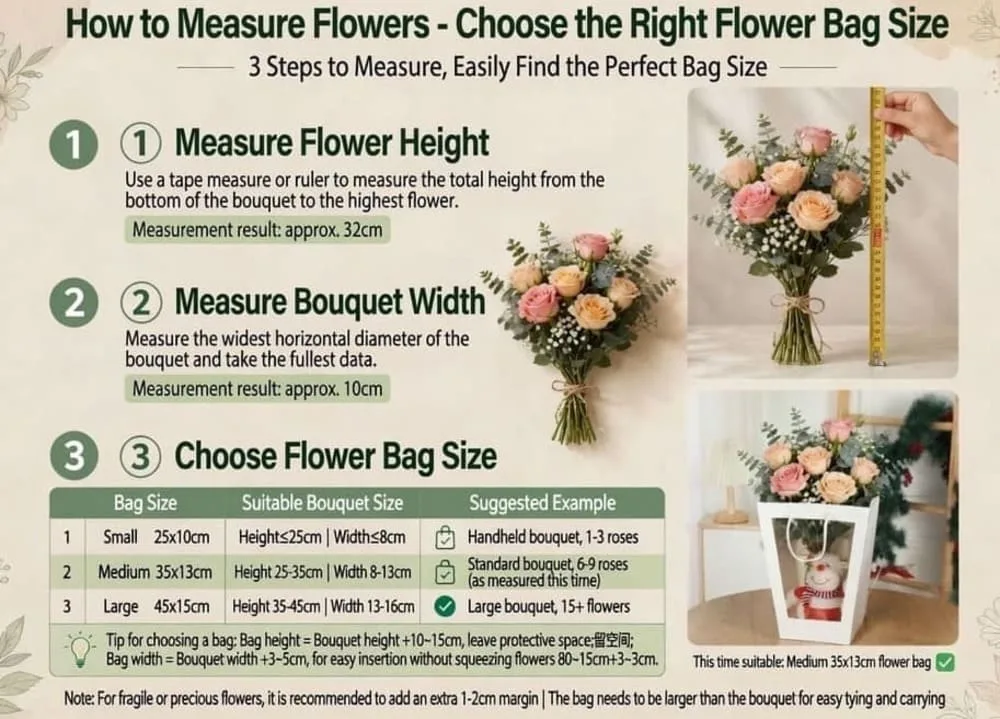
"What size bag should I get?" is a question I hear daily. My answer is always: "Let’s measure your product." Digital mockups and guesswork are the enemies of good packaging.
Here is a simple workflow:
- Gather Physical References: Take your small, best-selling, and premium bouquets.
- Measure for the Fit (W×G×H):
- Width (W): Widest part of the bouquet head, plus a small buffer.
- Gusset (G): Diameter of the stem bundle. This is crucial for stability.
- Height (H): Tall enough to support the stems, but not so tall it hides your flowers.
- Request & Test a White Sample: Send these dimensions to your supplier for an unprinted sample. Test it in the real world: put a bouquet in it, walk around, place it on a car seat.
- Approve & Lock: Once you’re happy, approve this sample. It becomes the "Golden Sample" to which all future production must conform.
This process saves thousands of dollars and ensures you get packaging that works.
How do you source reliably? (Compliance, MOQ, and QC)
The cheap quote you got just cost you a fortune in damaged goods. How do you choose a reliable supplier and manage the process?
A reliable supplier proves their value through a transparent process, not just a low price. This means clear communication on MOQs and lead times, readiness to provide compliance documentation (like FSC certifications), and a robust Quality Control (QC) system based on AQL standards.
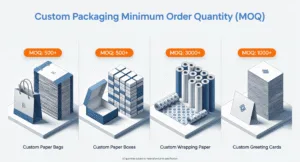
For seasonal peaks like Valentine’s Day, planning is everything. Work backward from your in-store date, allowing at least 6-11 weeks for sampling, production, and shipping. At Ometpack, our flexible production allows custom orders to start from 500 pieces with a 7-15 day lead time after sample approval. The key is to lock in your specs early.
To guarantee quality, write QC into your purchase order:
- Reference the Golden Sample: State that all units must match the approved sample.
- Specify AQL Levels: Use industry standards (e.g., AQL 2.5 for major defects) to define acceptable quality.
- Define Key Tests: Mandate a handle pull test (e.g., 5kg for 60 seconds) and glue adhesion checks.
- Demand a Final QC Report: Require a report with photos before final payment and shipment.
A good partner will welcome this clarity. You can learn more about our commitment to this on our Quality Control & Testing page.
Your Next Step to Better Flower Bags
Choosing the right paper bag is an engineering decision. By focusing on structure, material, and a robust QC process, you can get a bag that protects your products, enhances your brand, and prevents costly failures.
Ready to put these principles into practice?
- View our Flower Packaging Catalog: See examples of bags we’ve engineered for florists in our Flower Packaging Catalog.
- Get a Custom Quote: Have a design in mind? Send us your specifications, and my team at Ometpack will provide a factory-direct quote within 24 hours.
For more in-depth information, explore our Paper Bags Resources Hub.
FAQs (Frequently Asked Questions)
What type of paper bag is best for carrying bouquets?
A tall, gusseted paper bag made from 120-250 GSM kraft paper is best. This structure keeps the bouquet upright, while the gussets provide space for the stems and prevent the flowers from being crushed during transport. A reinforced bottom and handles are crucial.
Kraft vs. laminated paper bags: which is better for florists?
Kraft paper is better for most florists due to its balance of strength, cost, and recyclability. Laminated bags offer superior moisture resistance but are harder to recycle and can create issues with "eco-friendly" branding claims. Use lamination only when absolutely necessary.
How do you make paper bags water-resistant for fresh flowers?
Targeted solutions are best. Use a water-based (aqueous) coating for mild resistance, or specify a reinforced bottom insert to catch drips. These methods protect the bag’s weakest point without compromising the recyclability of the entire bag like full plastic lamination does.
What size paper bag fits a bouquet (W×G×H)?
There is no standard size; you must measure your own bouquets. Measure the width of the flower head, the diameter of the stem bundle (for the gusset), and your desired presentation height. Always test the fit with a physical sample before ordering in bulk.
What QC tests prevent paper bag handle tear-outs?
The most important test is a handle pull-force test (e.g., holding a 5-6 kg weight for 60 seconds). Also, visually inspect that every bag includes an internal reinforcement patch where the handle is attached. This patch distributes the load and prevents tearing.
Note: Please ensure FAQPage Schema markup is applied to the FAQs section above. If the article contains step-by-step instructions, consider adding HowTo Schema.