You tell a supplier you need "custom paper bags," but the conversation stalls when they ask for specifics. You’re bombarded with terms like "Euro tote," "twisted handle," and "die-cut," leaving you unsure of what you actually need. This confusion leads to inaccurate quotes and the risk of ordering a bag that doesn’t fit your product, brand, or budget.
The main types of custom paper bags are defined by their handle and construction, including machine-made twisted and flat handle bags, premium hand-finished Euro totes, and specialty bags like those with die-cut handles or handle-less SOS bags.
Key Takeaways / TL;DR:
- Twisted Handle & Flat Handle Bags: These are the most common, cost-effective options for retail and takeout. They are fully machine-made, typically from Kraft or white paper, and designed for high-volume orders.
- Euro Totes: Considered the luxury standard, these bags are made from heavy-weight art paper (200+ GSM), feature soft rope or ribbon handles, and are often hand-finished. They are ideal for high-end retail, boutiques, and gift packaging.
- Die-Cut Handle Bags: These offer a sleek, modern look with a handle cut directly out of the bag’s top section. They are best for lighter items and are often used for marketing events or boutique purchases where style is paramount.
- SOS (Stand-on-Shelf) Bags: These are handle-less, flat-bottomed bags, common in the grocery and food service industries. Their simple, machine-made construction makes them highly economical for disposable use.
- The choice of bag directly impacts cost, perceived brand value, and functionality. Machine-made bags prioritize cost-efficiency for large quantities, while hand-finished bags prioritize a premium feel and durability.
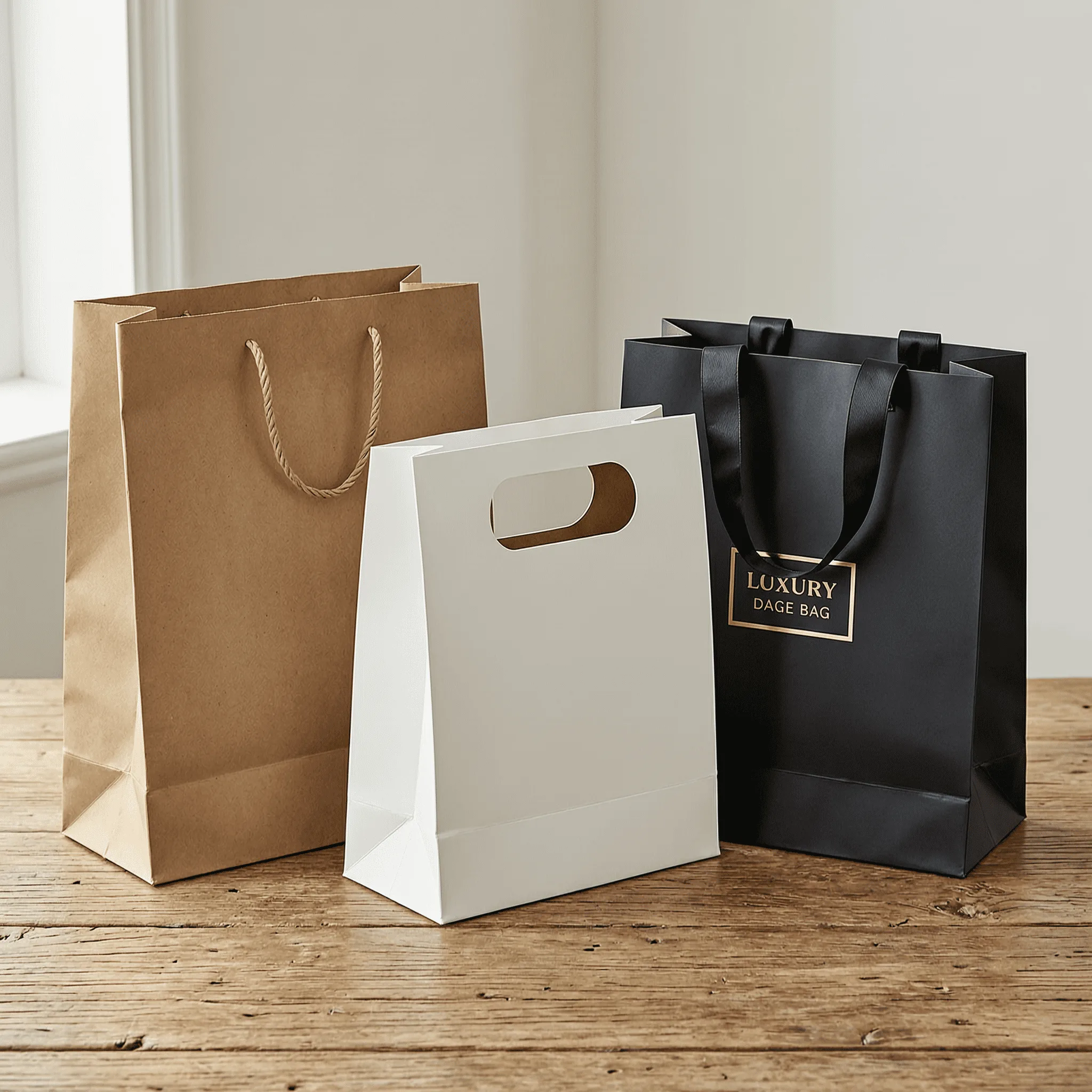
When a new client approaches me at Ometpack, they often start by saying, "I need a paper bag." My first response is always a smile and a follow-up question: "What kind of shirt are you looking for?" They’ll look at me, a bit confused, until I explain. If you walk into a clothing store and just ask for "a shirt," the salesperson needs to know if you mean a t-shirt for the gym, a polo for a casual Friday, or a formal dress shirt for a wedding. Each has a different fabric, construction, purpose, and price tag. Paper bags are exactly the same. The humble paper bag has a whole wardrobe of styles, from the everyday "t-shirt" to the custom-tailored "tuxedo." Understanding this wardrobe is the key to unlocking the perfect packaging for your brand. Let’s open the closet doors and explore the options together.
What Are Twisted Handle and Flat Handle Bags?
You need a reliable, affordable bag for everyday use—for your retail store, restaurant, or event—but you’re confused by the most common options and which is right for your volume needs.
Twisted handle and flat handle bags are the workhorses of the paper bag world; they are fully machine-made, cost-effective solutions ideal for high-volume applications where efficiency and affordability are key.
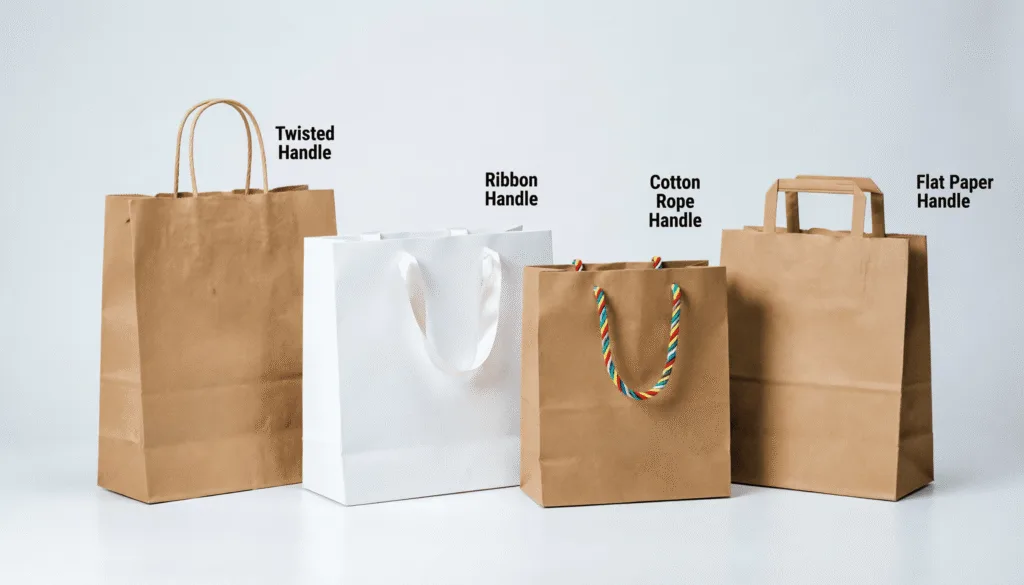
These are the bags you encounter most frequently in your daily life. They are produced on massive, fully automated production lines in my factory. A giant roll of paper is fed into one end of a machine, and a complete, printed, folded, and glued bag with handles attached comes out the other end at incredible speeds. This automation is what makes them so affordable, especially at high quantities (typically a 1,000-2,000 unit MOQ). The primary difference is the handle itself. A twisted handle is made from twisted paper cords, offering more strength and a slightly more upscale look. A flat handle is a loop of flat paper, which is less expensive to produce but can be less comfortable to hold with heavy items.
Comparison: Twisted Handle vs. Flat Handle
| Feature | Twisted Handle Bag | Flat Handle Bag |
|---|---|---|
| Handle Style | A sturdy cord made of twisted paper, attached to the interior of the bag. | A flat loop of folded paper, glued to the exterior of the bag. |
| Cost | Low-Medium. Slightly more expensive than flat handle due to the handle’s complexity. | Lowest. The most economical handle option available for machine-made bags. |
| Strength & Comfort | More durable and comfortable to hold, making it suitable for heavier items. | Less strong and can be uncomfortable with heavy loads. Best for light items. |
| Common Materials | White or Brown Kraft Paper (80-150 GSM). | White or Brown Kraft Paper (80-120 GSM). |
| Best For… | General retail, boutiques, gift shops, heavier takeout orders. | Takeout food, pharmacies, trade show giveaways, high-volume promotional use. |
What Defines a Luxury "Euro Tote" Paper Bag?
Your brand represents premium quality, and a standard Kraft paper bag simply won’t do. You need packaging that feels as luxurious as the product inside it, but you’re not sure what components create that high-end feel.
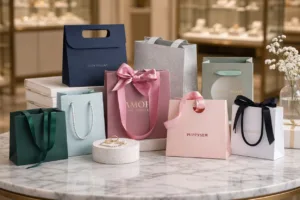
A Euro tote is a high-end, hand-finished paper bag characterized by its use of heavy-weight art paper, lamination, reinforced fold-over top, and soft-textile handles (like rope or ribbon) threaded through eyelets.
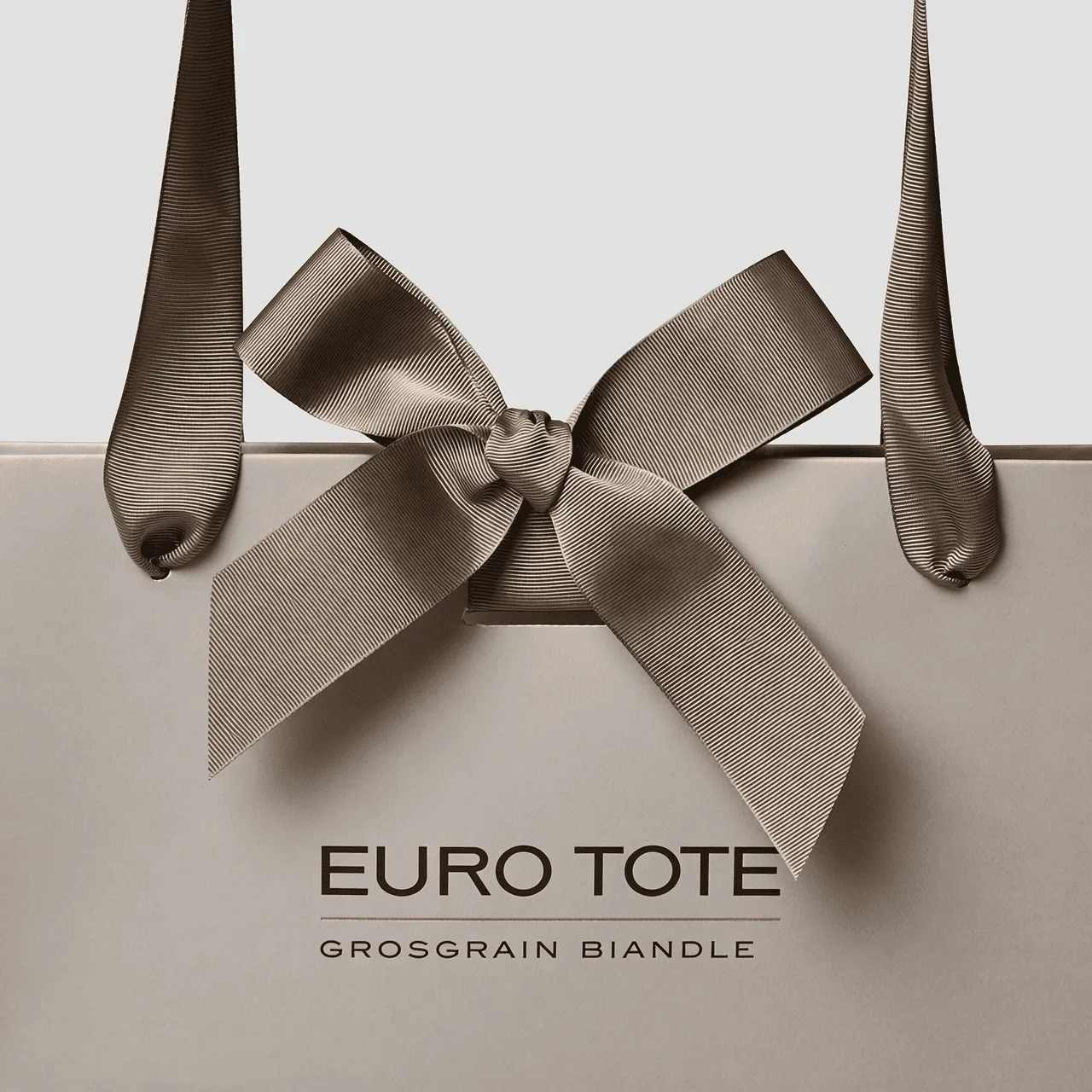
This is the "dress shirt" of the paper bag world. Unlike its machine-made cousins, the Euro tote is a testament to craftsmanship and detail. The process starts with a much thicker, higher-quality paper—typically a 200 GSM or heavier coated art paper that allows for crisp, vibrant, photo-quality printing. After printing, the bags are laminated (in matte or gloss) for durability and a smooth feel. Here’s the key difference I see on my factory floor: a significant portion of the assembly is done by hand. Workers manually fold and glue the heavy paper, insert reinforcing cardboard pieces into the top and bottom, and then hand-thread each individual handle. This meticulous, semi-manual process is why Euro totes have a higher price point and often a lower MOQ (around 500 units) than machine-made bags. They are not just containers; they are part of the product experience.
Key Features of a Euro Tote:
- Heavy-Weight Paper: Typically 190 GSM to 300 GSM art paper or specialty paper.
- Premium Printing: Crisp offset printing with full-bleed CMYK or Pantone colors.
- Lamination: Standard matte or gloss finish for protection and a premium feel.
- Reinforcements: A fold-over top and a bottom cardboard insert provide exceptional strength and a rigid structure.
- Luxe Handles: Handles are typically soft cotton rope, polyester rope, grosgrain ribbon, or satin ribbon, offering a comfortable and elegant touch.
When Should You Choose Die-Cut Handle or SOS Bags?
Your packaging needs are more specific; you either want a very sleek, modern design or a simple, functional bag for food items, and the standard options don’t seem quite right.
Choose a die-cut handle bag for a modern aesthetic with light products, and opt for a handle-less SOS (Stand-on-Shelf) bag for a highly economical, functional solution for food service or groceries.
This category covers the more specialized "shirts" in our wardrobe analogy. They are designed to solve very specific problems. The die-cut handle bag is all about aesthetics. The handle is not an add-on; it’s an integrated part of the bag’s structure, cut out by the same die that shapes the bag. This creates a clean, uninterrupted profile that is very popular with fashion and cosmetic brands. The drawback is strength; without reinforcement, the handle area can tear with heavy items.
On the other end of the spectrum is the SOS bag. The name "Stand-on-Shelf" tells you its main feature: a wide, flat bottom that allows it to stand upright on its own. These are the classic grocery bags or lunch bags. They are produced with extreme efficiency, have no handles, and are designed for pure function. At Ometpack, we produce these using food-grade certified Kraft paper for many of our bakery and fast-food clients, often with a simple one or two-color print.
Conclusion
From the economical twisted handle to the luxurious Euro tote, your choice of paper bag is a critical brand decision. By understanding the core types and their construction, you can move beyond asking for just "a paper bag" and start a productive conversation about function, brand identity, and budget.
Now that you can identify the perfect style for your needs, you’re ready to bring your vision to life. Explore our custom paper bag options and request a detailed quote from Ometpack today.
Before you place your order, make sure you understand the volume requirements by reading our comprehensive guide: Custom Packaging MOQ Explained.
FAQs
1. What is the strongest type of paper bag?
The strongest paper bag is typically a Euro tote. Its construction from heavy-weight paper (200+ GSM), combined with a laminated finish and reinforced cardboard inserts at the top and bottom, gives it superior strength and durability to hold heavy luxury items like shoe boxes or wine bottles.
2. What is the most eco-friendly paper bag option?
The most eco-friendly option is an unbleached bag made from 100% recycled Kraft paper with paper-based handles (twisted or flat) and printed with water-based inks. This combination is recyclable, biodegradable, and compostable, minimizing its environmental impact from production to disposal.
3. What does GSM mean for paper bags, and why is it important?
GSM stands for "Grams per Square Meter" and it measures the weight and thickness of the paper. A higher GSM means a thicker, more durable, and more expensive paper. A lightweight takeout bag might be 80 GSM, while a luxury Euro tote is often 200 GSM or more.
4. Can I get a paper bag with a window?
Yes, this is a popular customization, especially for food packaging like bread or pastries. A die-cut window with a clear polypropylene (PP) or PLA (a compostable plastic) film can be added to many bag styles, including SOS bags and some smaller retail bags, to showcase the product inside.